Bundeswehr: The Structure and Evolution of Germany's Federal Defence Forces
The Bundeswehr, the unified armed forces of the Federal Republic of Germany, operates under the motto "Wir. Dienen. Deutschland." ("We. Serve. Germany."). Established in the mid-20th century, the organization has evolved from a Cold War defensive force into a modern military integrated into European and global security frameworks.
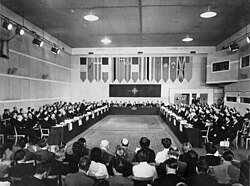
Founded on November 12, 1955, the Bundeswehr was designed with specific founding principles influenced by 19th-century military reformers such as Scharnhorst, Gneisenau, and Clausewitz. Its current organizational form was solidified on October 3, 1990, following the reunification of Germany.
Key Facts
- Founded: November 12, 1955.
- Active Personnel: 266,918 (as of May 31, 2026).
- Reserve Personnel: Approximately 860,000 (2025).
- 2026 Budget: €108.2 billion (approximately 2.69% of GDP).
- Conscription: Suspended by law since July 2011.
- NATO Membership: Joined in 1955.
Organizational Structure and Leadership
The Bundeswehr is headquartered across Berlin, Bonn, and Potsdam. Its leadership structure varies depending on the state of the nation: during peacetime, the Federal Minister of Defence serves as the Commander-in-Chief, while the Chancellor of Germany assumes this role during wartime.
The military is divided into four primary service branches:
- German Army (Heer): The land-based combat force.
- German Navy (Marine): Responsible for maritime security and operations.
- German Air Force (Luftwaffe): Managing aerial defense and transport.
- Cyber and Information Domain Service: A specialized branch focusing on digital warfare and information security.
Command and Personnel
The current leadership includes Chancellor Friedrich Merz, Defence Minister Boris Pistorius, and Inspector General Carsten Breuer. The military age for recruitment begins at 17. While conscription is no longer active, the force maintains a significant reserve of roughly 860,000 personnel.
Historical Evolution and Strategic Reorientation
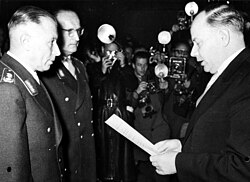
The trajectory of the Bundeswehr has been shaped by major geopolitical shifts. After joining NATO in 1955, the force focused on Cold War containment. The 1990 reunification brought the integration of the former East German armed forces, a transition marked by the takeover of command by Federal Defense Minister Gerhard Stoltenberg.
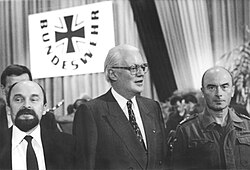
In recent years, the 2022 Russian invasion of Ukraine triggered a significant strategic reorientation. This shift has led to increased coordination with European partners and a substantial increase in military expenditure to enhance deterrence and readiness.
Military Spending and Investment
Germany has seen a dramatic increase in its defense budget. In 2020, spending was approximately $52.8 billion (1.3% of GDP). By 2026, the budget is projected to reach €108.2 billion, including the 4th tranche of special assets, representing 2.69% of the GDP.
The government has outlined aggressive planned investments to modernize its capabilities:
- Munitions: €70.3 billion
- Combat vehicles: €52.5 billion
- Naval vessels and equipment: €36.6 billion
- Aircraft and missiles: €34.2 billion
- Field and logistics material: €20.9 billion
- Vehicles and accessories: €20.8 billion
- Communications equipment: €15.9 billion
- Satellite communications: €13.3 billion
Equipment and Operational Capabilities
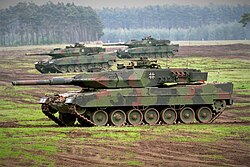
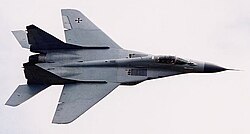
The Bundeswehr utilizes a mix of domestic and foreign technology. Notable equipment includes the Leopard 2 main battle tank and the Sachsen-class frigate. Interestingly, the Bundeswehr was the first NATO member to operate the Soviet-built MiG 29 jet, acquired from the former East German Air Force.
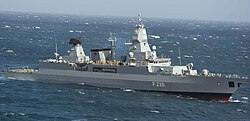
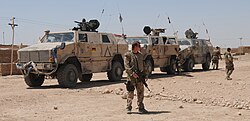
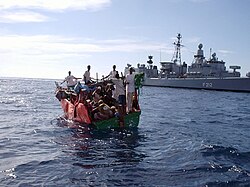
Operational deployments have varied from combat support in Afghanistan to humanitarian and security patrols. For example, the frigate Karlsruhe has been utilized for rescuing shipwrecked individuals off the coast of Somalia.
Summary of Bundeswehr Specifications
| Category | Detail |
|---|---|
| Active Personnel | 266,918 |
| Reserve Personnel | ≈ 860,000 |
| 2026 Budget | €108.2 Billion |
| GDP Percentage (2026) | 2.69% |
| Service Branches | Army, Navy, Air Force, Cyber and Information Domain Service |
Frequently Asked Questions
Who is the Commander-in-Chief of the Bundeswehr?
During peacetime, the Federal Minister of Defence holds the role of Commander-in-Chief. In the event of war, this authority transfers to the Chancellor of Germany.
Is military service compulsory in Germany?
No, conscription has been suspended by law since July 2011. Recruitment is currently based on a voluntary professional model.
How has the 2022 invasion of Ukraine affected the Bundeswehr?
The invasion led to a strategic reorientation, resulting in significantly increased military spending and a stronger focus on European partner coordination to ensure regional security.
What are the primary branches of the German military?
The Bundeswehr consists of the German Army (Heer), the German Navy (Marine), the German Air Force (Luftwaffe), and the Cyber and Information Domain Service.
What is the current budget trend for the German military?
There is a strong upward trend in spending, moving from roughly 1.3% of GDP in 2020 to a projected 2.69% in 2026, with budgets expected to potentially exceed 3.5% in future years.