The Ultimate Guide to Bulgogi: Exploring Korea's Iconic "Fire Meat"
If you have ever stepped into a Korean barbecue restaurant, you have likely encountered the irresistible aroma of bulgogi. This beloved dish, which translates literally to "fire meat" (bul meaning fire and gogi meaning meat), is a cornerstone of Korean cuisine. Whether it is being grilled over hot coals at a social gathering or quickly stir-fried in a home kitchen, bulgogi offers a perfect balance of savory, sweet, and tender flavors that have captivated food lovers worldwide.
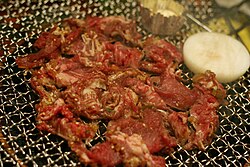
What is Bulgogi?
Bulgogi is a gui—a Korean-style grilled or roasted dish—consisting of thin, marinated slices of meat. While beef is the most traditional and common protein used, the dish is highly versatile and can also be prepared with pork or chicken. The meat is typically cooked on a barbecue grill, a stove-top griddle, or simply pan-fried in a skillet.
In South Korea, bulgogi is ubiquitous. You can find it served in high-end, upscale restaurants or purchased as convenient, pan-ready kits in local supermarkets. Its popularity has even crossed borders into global fast food, appearing in various bulgogi-flavored hamburger patties.
A Journey Through History
The roots of bulgogi stretch back centuries, with origins believed to date to the Goguryeo era (37 BCE–668 CE). In those ancient times, the dish was known as maekjeok and consisted of beef grilled on skewers. As Korean history progressed through the Joseon period, the dish evolved into neobiani, meaning "thinly spread" meat, a delicacy traditionally reserved for the nobility and the wealthy.
The modern name and style of the dish are linked to the Pyongan Province in North Korea. It was introduced to Seoul and other parts of South Korea by refugees from the Pyongan region. By 1947, the term was officially recognized in the Dictionary of the Korean Language, describing meat grilled directly over a charcoal fire.
Evolution of Names and Styles
- Maekjeok: The ancient ancestor, grilled on skewers.
- Neobiani: A Joseon-era version of thinly spread meat for the elite.
- Yeomjeok: A medieval term recorded in the Dongguksesi, meaning "fire meat."
- Bulgogi Sanjeok: The modern name for the traditional skewered style of bulgogi.
The Art of Preparation
The secret to exceptional bulgogi lies in the quality of the meat and the complexity of the marinade. For beef, chefs typically select prime cuts like sirloin or ribeye due to their tenderness and ease of slicing.
The Marinade and Tenderization
To enhance flavor and ensure the meat is tender, it is soaked in a marinade typically composed of:
- Soy sauce and sugar (or honey/corn syrup)
- Sesame oil and garlic
- Ground black pepper
- Aromatics such as scallions, ginger, onions, or mushrooms (like white button or matsutake)
To achieve a melt-in-your-mouth texture, many recipes include natural tenderizers such as pureed pears, pineapple, kiwi, or onions. While some cooks marinate the meat for less than an hour, others prefer to let it rest in the refrigerator overnight to allow the flavors to penetrate deeply.
Variations and Serving Styles
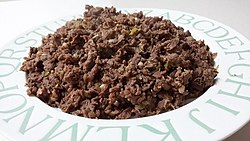
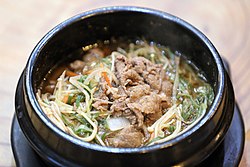
Bulgogi is not a one-size-fits-all dish. Depending on the region and personal preference, you may encounter several variations:
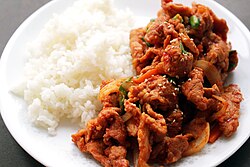
- Spicy Bulgogi: Often made with pork, this version uses gochujang (a fermented chili paste made from chili powder, rice, fermented soybeans, barley, and salt) to add heat.
- Pork Bulgogi: Frequently uses samgyeopsal (pork belly), which is prized for its tender, fatty texture.
- Specialty Variations: Including Kongnamul-bulgogi (with soybean sprouts) and Osam-bulgogi.
When served, bulgogi is often accompanied by rice, egg soup, and kimchi (fermented cabbage). A popular way to eat it is by using lettuce or other leafy vegetables as wraps. You place a piece of meat inside the leaf, add a dab of ssamjang (a savory soybean paste), and eat it all together in one bite.
Key Facts
- Literal Meaning: "Fire meat" (bul = fire, gogi = meat).
- Primary Protein: Most commonly beef (sirloin or ribeye), but also pork and chicken.
- Core Flavors: A savory and sweet profile driven by soy sauce, sugar, and sesame oil.
- Natural Tenderizers: Pears, pineapple, kiwi, and onions are often used in the marinade.
- Energy Content: Approximately 150 kcal per 150g (5 oz) serving.
| Feature | Details |
|---|---|
| Origin | Pyongan Province, Korea |
| Common Cuts | Beef sirloin, ribeye, or pork belly |
| Cooking Methods | Grilling, pan-frying, or stir-frying |
| Key Ingredients | Soy sauce, garlic, sesame oil, sugar |
| Similar Dishes | Neobiani, Galbi, Yakiniku |
Frequently Asked Questions
What is the difference between bulgogi and galbi?
While both are iconic Korean meat dishes, bulgogi is typically made from thinly sliced meat (often sirloin or ribeye) marinated in a sweet and savory sauce, whereas galbi refers to marinated ribs.
Can I make bulgogi at home without a grill?
Yes. While traditional bulgogi is grilled over charcoal, it is very common to prepare it by stir-frying the marinated meat in a pan or on a stove-top griddle.
Is bulgogi spicy?
The standard beef bulgogi is savory and sweet rather than spicy. However, spicy variations exist, particularly when using pork and adding gochujang (chili paste) to the marinade.
What are the best side dishes to eat with bulgogi?
Bulgogi is traditionally served with rice, kimchi, and egg soup. Many people also enjoy eating it as "ssam" (wraps) using fresh lettuce leaves and ssamjang.
Why is fruit added to the marinade?
Fruits like pear, pineapple, and kiwi contain natural enzymes that act as tenderizers, helping to break down the meat fibers for a more tender texture.