British Nationality Law: Classes, Rights, and Legislation
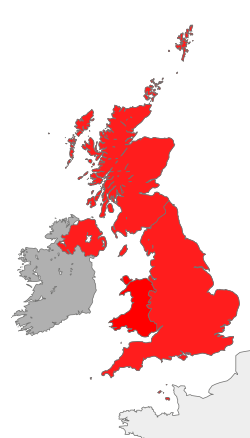
The legal framework governing who is considered a national of the United Kingdom is a complex system shaped by centuries of imperial history and evolving political boundaries. At its core, the British Nationality Act 1981, which took effect on January 1, 1983, serves as the primary legislation. This law applies across the British Islands—which include the United Kingdom (England, Wales, Scotland, and Northern Ireland) and the Crown dependencies of Jersey, Guernsey, and the Isle of Man—as well as 14 British Overseas Territories.
Because of the UK's legacy as a colonial power, nationality is not a single status but is divided into six distinct classes. These categories determine an individual's civil and political rights, as well as their right of abode (the legal right to live and work permanently) in the United Kingdom.
Key Facts
- Primary Law: The British Nationality Act 1981 is the governing legislation.
- Six Classes: Nationality is split into British citizen, British Overseas Territories citizen (BOTC), British Overseas citizen (BOC), British National (Overseas) (BN(O)), British subject, and British protected person.
- Right of Abode: Only certain classes, primarily British citizens, have an automatic right of abode in the UK.
- Irish Citizens: The British Nationality (Irish Citizens) Act 2024 simplifies the naturalisation process for Irish citizens.
- Deprivation: The government can strip citizenship from dual nationals if it is deemed conducive to the public good or obtained via fraud.
The Six Types of British Nationality
The distinction between nationality classes reflects the transition from a global empire to a modern state. While some statuses provide full rights, others are residual categories largely closed to new applicants.
British Citizen
This is the primary form of nationality, linked to the British Islands. It confers full civil and political rights, including the right of abode in the UK.
British Overseas Territories Citizen (BOTC)
This status applies to individuals connected to current overseas territories. Since May 21, 2002, nearly all BOTCs—except those associated solely with Akrotiri and Dhekelia—have also been granted British citizenship.
Residual Categories
The following statuses are generally linked to former colonies and offer limited entitlements without providing an automatic right of abode:
- British Overseas citizen (BOC): Individuals who were previously Citizens of the UK and Colonies (CUKC) but have no remaining connection to a British territory.
- British National (Overseas) (BN(O)): A specific status for those connected to former colonial territories.
- British subject: A limited category including people with connections to former British India or Ireland before 1949.
- British protected person: A status for individuals connected to former protectorates or protected states.
Acquisition of British Citizenship
Citizenship can be acquired through various legal routes, categorized primarily by whether the status is held by descent (inherited from a parent) or otherwise than by descent (usually acquired by birth in the territory or through naturalisation).
Historically, anyone born in the British Islands before January 1, 1983, was automatically granted citizenship via jus soli (right of the soil), regardless of their parents' nationality. Under the 1981 Act, those who held CUKC status and the right of abode on December 31, 1982, became British citizens.
| Route | Legal Basis | Status Type |
|---|---|---|
| Birth in the UK | Section 1 | Otherwise than by descent |
| Birth outside UK to British parent | Section 2(1) | By descent |
| Naturalisation | Section 6 | Otherwise than by descent |
| Registration (Overseas Territory) | Section 4A | Otherwise than by descent |
| Correcting historical unfairness | Sections 4F-4K | Varies |
Special Provisions and Recent Legislation
The British Nationality (Irish Citizens) Act 2024
This Act of Parliament, which came into force on July 22, 2025, provides specific exemptions for Irish citizens seeking British citizenship. Eligible individuals are no longer required to demonstrate English language proficiency or pass the "Life in the UK" test, and they benefit from lower application fees. It is estimated that this legislation affects approximately 260,000 people, including 31,000 in Northern Ireland.
EU Membership and the Common Travel Area
Prior to January 31, 2020, only certain British nationals (British citizens, BOTCs connected to Gibraltar, and certain British subjects) were considered EU citizens. Following the UK's withdrawal from the European Union, British nationals no longer hold EU citizenship. However, British citizens maintain free movement in Ireland through the preexisting Common Travel Area arrangement.
Loss and Deprivation of Nationality
British nationality can be lost through renunciation or automatic loss. Additionally, the Immigration, Asylum and Nationality Act 2006 expanded the government's power to strip citizenship. The Secretary of State may deprive a dual national of their citizenship if it is deemed "conducive to the public good" or if the status was obtained through fraud or concealment of material facts.
Between 2006 and the end of 2021, at least 464 people were deprived of their citizenship. The law prohibits the government from stripping citizenship if it would leave a person stateless, unless the nationality was obtained via fraud.
Citizenship Ceremonies
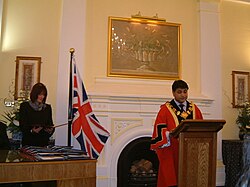
Most individuals granted British citizenship must attend a formal ceremony. These are typically organized by local councils in England, Scotland, and Wales, the Northern Ireland Office, or the governments of the Crown dependencies and Overseas Territories.
Frequently Asked Questions
What is the difference between a British citizen and a British Overseas citizen?
A British citizen has the full right of abode in the United Kingdom and full political rights. A British Overseas citizen (BOC) is a residual status that does not confer an automatic right of abode or the same level of entitlements in the UK.
Can the UK government take away someone's citizenship?
Yes, but primarily for dual nationals. Under the 2006 Act, citizenship can be revoked if the Secretary of State believes it is in the public interest or if the citizenship was obtained fraudulently. It cannot be revoked if it would make the person stateless, unless fraud was involved.
How does the 2024 Act affect Irish citizens?
The British Nationality (Irish Citizens) Act 2024 exempts Irish citizens from the Life in the UK test and English language requirements when applying for naturalisation, and provides them with reduced application fees.
What happened to British nationality after Brexit?
Since January 31, 2020, British nationals are no longer citizens of the European Union. However, the Common Travel Area ensures that British citizens still have free movement between the UK and Ireland.
Who is a British Overseas Territories citizen (BOTC)?
A BOTC is a person connected to one of the 14 British Overseas Territories. Since 2002, most BOTCs have also been granted full British citizenship, with the exception of those solely connected to Akrotiri and Dhekelia.