Bird Evolution: From Theropod Dinosaurs to Modern Avian Diversity
The story of birds is one of the most fascinating journeys in evolutionary biology. Classified as the biological class Aves, birds are not merely descendants of dinosaurs—they are, in a phylogenetic sense, living dinosaurs. Emerging during the Jurassic Period, birds evolved from a specific clade of theropod dinosaurs known as Paraves.
For over a century, the Late Jurassic species Archaeopteryx lithographica was viewed as the definitive earliest bird. However, modern science has refined this view, placing birds within the broader dinosaur clade Theropoda. Today, the consensus is that Aves and their sister group, the order Crocodilia, are the only surviving members of the Archosauria, an unranked reptile clade.
Key Facts
- Ancestry: Birds evolved from Maniraptora, a group of theropod dinosaurs that includes dromaeosaurs and oviraptorids.
- Survival: Four primary lineages survived the Cretaceous–Paleogene (K-Pg) extinction 66 million years ago: Palaeognathae, Anseriformes, Galliformes, and Neoaves.
- Flight Origins: Evidence suggests powered flight may have developed in early dromaeosaurids before the emergence of Aves.
- Modern Trends: Recent data indicates some North American birds are shrinking in body size due to climate change.
The Origins of Flight and Feathers
The transition from ground-dwelling reptiles to airborne birds is marked by a blurring of lines. Paleontologists have found significant evidence that birds emerged within the Maniraptora. Discoveries in China's Liaoning Province have revealed that many small theropods, such as Sinosauropteryx and Sinornithosaurus, possessed feathers long before the appearance of modern birds.
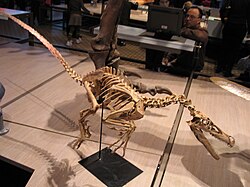
One particularly striking example is Cryptovolans, a dromaeosaurid discovered in 2002. This creature possessed a sternal keel and uncinate processes (small bony projections on the ribs), features essential for powered flight. This suggests that some basal dromaeosaurids were capable of flying, and that larger members of the group may have secondarily lost the ability to fly, similar to the evolution of the modern ostrich.
The Hip Structure Paradox
Interestingly, while birds share a hip structure similar to "bird-hipped" (ornithischian) dinosaurs, they actually evolved from "lizard-hipped" (saurischian) dinosaurs. This means birds arrived at their specific hip configuration independently through convergent evolution. A similar hip structure also appeared a third time in the Therizinosauridae group of theropods.
Mesozoic Birds and the "Missing Link"
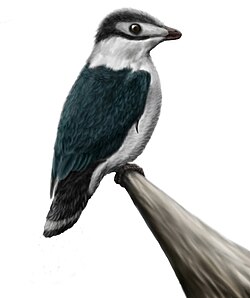
Archaeopteryx remains a landmark fossil, serving as a representation of how flight first evolved. While it is not considered a direct ancestor of all modern birds, its skeleton—featuring long, clawed hands and a body covered in feathers—bridges the gap between dinosaurs and birds. Though likely more competent as gliders than high-performance fliers, these early avian candidates set the stage for life on the wing.
The Radiation of Modern Birds
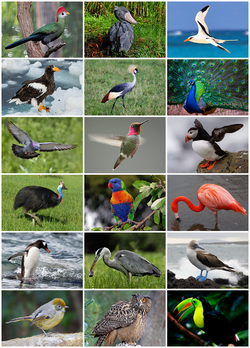
The diversification of modern birds, or Neornithes, is divided into two primary groups: the Palaeognathae (ostriches and relatives) and the Neognathae. The Neognathes further split into Galloanserae (waterfowl and ground-living fowl) and Neoaves (the vast majority of modern bird species).
There is an ongoing scientific debate regarding when this radiation occurred. Some molecular evidence suggests a Cretaceous radiation, while the fossil record points toward the Paleogene. A 2015 study estimated the common ancestor of modern birds existed 95 million years ago. Conversely, a 2024 genomic study suggests that most terrestrial neoavian orders diverged during the Late Cretaceous, coinciding with the rise of flowering plants, meaning many survived the K-Pg extinction.
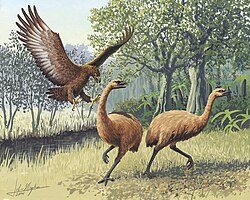
It is widely believed that the birds which survived the K-Pg extinction were ground-dwelling rather than arboreal, allowing them to persist despite the global collapse of forests.
| Lineage | Common Examples | Key Characteristics |
|---|---|---|
| Palaeognathae | Ostriches, Moas, Tinamous | Often flightless; ancient palate structure |
| Anseriformes | Ducks, Geese, Swans | Waterfowl; specialized for aquatic environments |
| Galliformes | Chickens, Turkeys, Pheasants | Ground-living fowl |
| Neoaves | Parrots, Eagles, Sparrows | The most diverse group of "modern birds" |
Current Evolutionary Trends
While evolution is typically a slow process, humans are currently witnessing rapid changes in avian populations. Unfortunately, many species are going extinct faster than new ones can evolve, leading to a permanent loss of genetic diversity.
Beyond extinction, environmental pressures are driving morphological changes. A study published in Ecology Letters analyzed over 70,000 bird specimens in Chicago from 1978 to 2016. The results showed that the length of lower leg bones decreased by an average of 2.4%, while wings lengthened by 1.3%. These changes are attributed to climate change, following Bergmann's rule, which suggests that body size varies with environmental temperature.
Frequently Asked Questions
Are birds still considered dinosaurs?
Yes. Phylogenetically, birds are members of the Theropoda clade. They are the only surviving lineage of dinosaurs, making them living dinosaurs.
What was the role of Archaeopteryx in evolution?
Archaeopteryx serves as a critical example of a transitional form, possessing both dinosaurian features (teeth, long bony tail) and avian features (feathers, wings), illustrating the evolution of flight.
How did birds survive the mass extinction 66 million years ago?
Evidence suggests that the surviving lineages were likely ground-dwelling birds. This allowed them to survive the worldwide destruction of forests that occurred during the Cretaceous–Paleogene event.
Why are some modern birds shrinking?
Recent research suggests that warming climates are causing some bird species to decrease in overall body size (specifically leg bone length) while increasing wing length, a response to changing environmental conditions.