Bird Colonies: The Science of Social Nesting and Survival
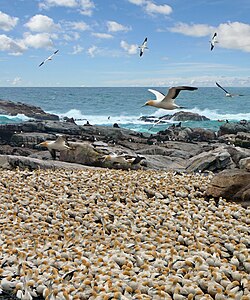
In the natural world, some birds prefer the solitude of a hidden nest, while others thrive in the bustling environment of a bird colony. A bird colony is a large congregation of one or more species that nest or roost in close proximity. When these gatherings are specifically for reproduction, they are known as breeding colonies; when they gather simply for rest, the group is called a communal roost.
This social behavior is not a modern phenomenon. Evidence of colonial nesting has been found in non-neornithine birds (Enantiornithes) within Late Cretaceous sediments from Romania, proving that birds have been congregating for millions of years.
Key Facts
- Approximately 13% of all bird species nest colonially.
- Nearly 95% of seabirds are colonial nesters.
- Colonies can serve as information centers to help birds locate food.
- Synchronized breeding helps protect offspring through predator satiation.
- Human over-exploitation of colonies led to the extinction of the great auk and passenger pigeon.
Variations in Colonial Nesting
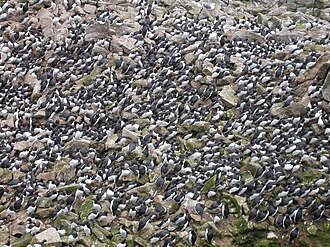
Colonial nesting manifests in diverse ways depending on the species and their environment. While seabirds on cliffs and islands are the most prominent examples—often referred to as rookeries—other groups like herons, egrets, and storks form communal nesting sites known as heronries. Even some passerines, such as weaverbirds and certain swallows, exhibit this behavior.
Diverse Nesting Structures
The definition of a colony varies by species. For Tufted puffins, a colony consists of a congregation of individual burrows excavated into coastal cliffs. In contrast, the sociable weaver of southern Africa builds massive, multi-family structures of twigs and grass that can accommodate up to a hundred nesting pairs, resembling avian "apartment buildings."
Site Fidelity and Social Dynamics
Many colonial birds exhibit site fidelity, the tendency to return to the exact same nest or burrow for many years. This behavior reduces the energy cost of searching for new sites and helps mates reunite. Young adults typically return to their natal colony, often nesting near where they first hatched.
While some species are obligate colonial nesters, others are facultative. The white-winged dove of North America once formed massive colonies of millions when food was abundant, but shifted to nesting singly as urbanization and agriculture fragmented their habitat.
Ecological Functions: Benefits and Costs
Birds nest in groups primarily to increase survival rates. One major advantage is predator satiation: by hatching chicks simultaneously, the colony provides more prey than a predator can possibly consume, ensuring more individuals survive.
Defense and Information
Safety is often found in numbers. More eyes and ears allow for quicker alarm calls, and many species engage in mobbing—cooperatively attacking an invader to drive it away. Some birds even seek strategic locations; for example, yellow-rumped caciques nest near wasp nests to deter monkeys.
Additionally, colonies may act as information centers. Birds that have failed to find food can follow successful foragers to locally abundant food sources. This explains why the insect-eating lesser kestrel nests colonially, while the larger-prey-hunting common kestrel does not.
The Downside of Density
Social nesting is not without risk. High density increases the prevalence of haematozoa (blood parasites), which may force birds to evolve larger immune organs. Other costs include increased competition for food and the risk of brood parasitism. Furthermore, while colonies can deter some predators, they can attract others; for instance, avian predators are often drawn to the conspicuous nature of a large colony.
Human Impact and Exploitation
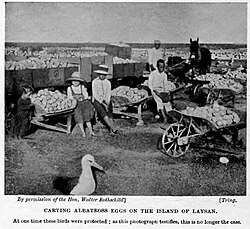
Throughout history, humans have viewed bird colonies as convenient resources for meat, eggs, feathers, and guano (seabird droppings used as high-quality fertilizer). However, this accessibility often led to catastrophic population collapses.
| Species | Region | Outcome | Primary Cause |
|---|---|---|---|
| Great Auk | North Atlantic | Extinct | Over-harvesting for food and materials |
| Passenger Pigeon | North America | Extinct | Massive commercial hunting |
| Short-tailed Albatross | North Pacific | Endangered | Heavy harvesting on Torishima Island |
| Various Seabirds | South America | Depleted | Industrial guano collection |
Frequently Asked Questions
What is the difference between a rookery and a heronry?
A rookery is a general term often used for seabird colonies, while a heronry specifically refers to a communal nesting site used by herons, egrets, and storks.
Why do some birds hatch their eggs at the same time?
This is called synchronized breeding. It employs a strategy called predator satiation, where the sheer volume of offspring available at once ensures that some will survive even if predators are present.
How does site fidelity benefit a bird?
Site fidelity allows birds to avoid the risks and energy costs of prospecting for new nesting locations, provides a reliable meeting point for mates, and often increases overall breeding success.
Do all colonial birds live in the same type of nest?
No. Depending on the species, colonial birds may nest in trees, on the open ground, in rocky crevices, or in underground burrows.
Can colonial nesting actually make birds more vulnerable?
Yes. While it provides defense against some predators, the high visibility of a colony can attract specialized avian or terrestrial predators, and the density increases the spread of parasites.