Biology: The Scientific Study of Life and Living Organisms
Biology is the vast natural science dedicated to the study of life. It seeks to explain the structure, function, growth, origin, evolution, and distribution of all living things. From the microscopic workings of a single cell to the complex interactions within entire ecosystems, biology provides the framework for understanding how life persists and thrives on Earth.
To make sense of this complexity, biologists focus on five fundamental themes: the cell as the basic unit of life, genes and heredity as the mechanism of inheritance, evolution as the driver of biological diversity, energy transformation to sustain life processes, and homeostasis, which is the maintenance of internal stability within an organism.
![In 1842, Charles Darwin penned his first sketch of On the Origin of Species.[20]](/images/c9/ac/c9ac15e1f64bd3be5cfc91cefc072e2efb23f939f9d0ef9b3008cb010d23d070.jpg)
Key Facts
- Core Themes: Cells, heredity, evolution, energy transformation, and homeostasis.
- Foundational Theory: Modern biology is grounded in the theory of evolution by natural selection.
- Genetic Basis: Life is governed by genes encoded in DNA.
- Levels of Study: Biology ranges from molecular structures to global ecosystems.
- Classification: Organisms are categorized via taxonomy and phylogenetics based on evolutionary relationships.
The History of Biological Thought
The roots of biological science can be traced back to ancient Egypt and Mesopotamia between 3000 and 1200 BCE. These early observations laid the groundwork for ancient Greek natural philosophy. Aristotle (384–322 BCE) was a pivotal figure who explored biological causation and the diversity of life, while his successor, Theophrastus, pioneered the scientific study of plants.
During the medieval period, scholars in the Islamic world, such as al-Jahiz and Al-Dīnawarī, made significant contributions to biological knowledge, including botany. However, the field underwent a massive transformation with the improvement of the microscope by Anton van Leeuwenhoek, which allowed scientists to discover bacteria, spermatozoa, and other microscopic life forms.
The Rise of Cell Theory and Taxonomy
In the 19th century, the importance of the cell became central to biological thought. In 1838, Matthias Schleiden and Theodor Schwann proposed that the cell is the basic unit of organisms and that individual cells possess all characteristics of life. While they initially struggled with the concept of cell division, the work of Robert Remak and Rudolf Virchow eventually solidified cell theory—the principle that all cells arise from pre-existing cells.
Simultaneously, the science of classification was evolving. Carl Linnaeus revolutionized the field in the 1730s and 1750s by introducing a basic taxonomy and scientific names for species. Later, Georges-Louis Leclerc, Comte de Buffon, suggested that species might be malleable, hinting at the possibility of common descent.
The Genetic Revolution and Molecular Biology
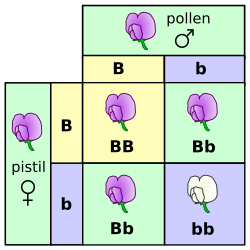
The modern era of biology was shaped by Gregor Mendel, whose 1865 work established the principles of biological inheritance. Although his significance was not fully realized until the 20th century, his work became a cornerstone of the modern synthesis, which reconciled Darwinian evolution with classical genetics.
The mid-20th century brought a shift toward the molecular level. In 1953, James Watson and Francis Crick discovered the double-helical structure of DNA. This discovery, combined with experiments by Alfred Hershey and Martha Chase that identified DNA as the carrier of genetic traits, launched the era of molecular genetics. Subsequent breakthroughs, such as cracking the genetic code by Har Gobind Khorana, Robert W. Holley, and Marshall Warren Nirenberg, and the launch of the Human Genome Project in 1990, have further transformed the field.
Major Subdisciplines of Biology
Because life is studied at so many different scales, biology is divided into numerous specialized fields:
- Biochemistry: The study of chemical processes within and relating to living organisms.
- Molecular Biology: The study of biological activity at the molecular level, specifically the interactions between DNA, RNA, and protein biosynthesis.
- Cell Biology: The study of cell structure and function.
- Genetics: The study of genes, genetic variation, and heredity in organisms.
- Ecology: The study of how organisms interact with one another and their physical environment.
- Evolutionary Biology: The study of the origins and changes in the diversity of life over time.
- Systematics and Taxonomy: The science of naming, defining, and classifying groups of biological organisms.
Summary of Biological Concepts
| Concept | Definition | Key Significance |
|---|---|---|
| Cell Theory | The principle that the cell is the basic unit of life. | Provides a universal foundation for all living organisms. |
| Evolution | The process of change in a species over generations. | Explains the diversity and adaptation of life. |
| DNA | The molecule that carries genetic instructions. | The blueprint for all biological functions and inheritance. |
| Homeostasis | The maintenance of a stable internal environment. | Essential for the survival of individual organisms. |
Frequently Asked Questions
What are the five fundamental themes of biology?
The five themes are the cell as the basic unit of life, genes and heredity, evolution as a driver of diversity, energy transformation, and homeostasis.
How do biologists classify living things?
Biologists use taxonomy and phylogenetics to classify organisms—ranging from bacteria to animals—based on their shared characteristics and evolutionary relationships.
What is the difference between molecular biology and genetics?
While closely related, genetics focuses on the principles of heredity and how traits are passed down, whereas molecular biology focuses on the molecular basis of biological activity, such as the interactions between DNA, RNA, and proteins.
Why was the discovery of the DNA structure so important?
The discovery of the double-helical structure of DNA by Watson and Crick in 1953 allowed scientists to understand how genetic information is stored and passed on, marking the transition into the era of molecular genetics.
What is homeostasis?
Homeostasis is the process by which a living organism maintains a stable internal environment despite changes in external conditions.