Biography TV Series: The Evolution of a Media Franchise
From its origins as a syndicated educational program to its transformation into a global media powerhouse, Biography has spent decades documenting the lives of the world's most influential figures. What began as a simple collection of archival footage evolved into a comprehensive franchise spanning television, print, and digital media, redefining how biographical stories are told on screen.
The Early Years: Syndication and Foundation
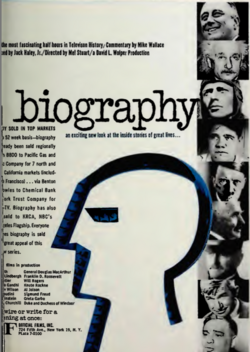
The original Biography series was the creation of David Wolper and Jack Haley Jr. It premiered in February 1962 after production began in 1961, with distribution handled by Official Films. The series was narrated by Mike Wallace, a journalist whose career was significantly bolstered by the show's success.
Unlike modern documentaries, the early episodes featured no interviews. Instead, they relied on a half-hour blend of newsreel footage, film clips, still photographs, and recordings. The series profiled a wide array of 20th-century notables, including world leaders like Winston Churchill, American politicians such as Joseph McCarthy and Fiorello H. La Guardia, and sports icons like Babe Ruth and Knute Rockne. It also covered every modern U.S. President, as well as various scientists, authors, and actors.
The program's commitment to education earned it a Peabody Award in 1962. While new episodes ceased in 1964, the series remained a staple in classrooms and syndication for decades. A brief revival occurred in 1979, hosted by David Janssen, which profiled figures such as Walt Disney and Idi Amin.
The A&E Era and Format Innovation
In 1987, the Arts & Entertainment Network (A&E)—a joint venture between ABC, NBC, the Hearst Corporation, and the Rockefeller Group—acquired the broadcast rights. Hosted by Peter Graves, the show returned to screens on April 6, 1987.
A pivotal shift occurred in 1990 when A&E acquired the Biography trademark and library. This allowed the network to produce original content and evolve the format. The show shifted from merely reporting history to recording it in real-time, expanding its scope to include contemporary celebrities and political leaders. Most notably, A&E introduced on-camera interviews, adding a personal dimension to the narratives.
The show's popularity surged in the mid-1990s. By 1994, it expanded to five nights a week, and by the 1995–96 season, it added Biography This Week, a sixth-night program focusing on current news figures like Yitzak Rabin and Gene Kelly. Journalist Jack Perkins joined Peter Graves as an alternate host during this period of rapid growth.
Expansion into a Global Media Franchise
By the mid-1990s, Biography had transcended the television screen to become a full-scale media franchise. A&E expanded the brand into a diverse ecosystem of products and platforms.
- Print: A monthly Biography magazine was launched in 1997 (replacing A&E Monthly), with circulation growing from 100,000 to 700,000 by 2001. Additionally, the Crown Publishing Group released a line of 200-page paperbacks.
- Digital and Home Media: Biography.com launched in 1996, and Barnes & Noble began selling Biography videos in 400 stores.
- Spin-offs: The network introduced Biography for Kids, Biography International, and Biography: American Justice (hosted by Bill Kurtis).
- Other Media: The franchise produced audio tapes, music CDs via EMI-Capitol Entertainment Properties, and even a board game titled "Who Am I? The Biography Game."
The franchise's success led to the launch of The Biography Channel in November 1998, with subsequent versions appearing in the UK, Ireland, Canada, and Australia.

Peak Success and Transition
The late 1990s and early 2000s marked the franchise's commercial peak. In 1999, an episode profiling Ron Howard reached a record 3.5 million homes. By 2002, the series had profiled 1,000 people and won its third Emmy Award for Outstanding Documentary or Nonfiction Series.
To combat a slight decline in ratings between 2000 and 2002, A&E launched a high-profile marketing campaign featuring photography by Annie Leibovitz, showcasing subjects like Steven Spielberg and Harrison Ford. The production team was also known for its agility; Vice President Didi O'Hearn noted that the team could produce a show on a subject within a week of their death.
However, the brand began to scale back in the mid-2000s. Host Harry Smith departed in 2002, and Neil Ross served as the final host. By 2006, the show moved exclusively to The Biography Channel, which was later rebranded as "Bio."

The original run ended in 2012, and the Bio channel was replaced by The FYI Network in 2014. Digital operations for Biography.com were transitioned to SAY Media.
The 2017 Revival
In 2017, A&E Networks breathed new life into the brand by relaunching it as a series of two-hour specials and mini-series across A&E, History, and Lifetime. This revival focused on high-impact figures, including Vladimir Putin, Mike Tyson, Tupac Shakur, and Elizabeth Smart, with a commitment to produce up to 40 hours of new content.
Key Facts
- Founders: Created by David L. Wolper and Jack Haley Jr.
- First Host/Narrator: Mike Wallace.
- Major Awards: Multiple Peabody Awards and three Emmy Awards.
- Milestone: Reached 1,000 profiles by 2002.
- Franchise Reach: Expanded into magazines, books, a board game, and dedicated cable channels.
- Modern Status: Relaunched in 2017 as a series of specials on A&E, History, and Lifetime.
| Era | Primary Platform | Key Format Feature | Notable Hosts |
|---|---|---|---|
| 1962–1964 | Syndication | Archival footage, no interviews | Mike Wallace |
| 1987–2006 | A&E Network | On-camera interviews, contemporary figures | Peter Graves, Harry Smith, Neil Ross |
| 1998–2014 | The Biography Channel / Bio | Dedicated 24/7 biographical content | Various |
| 2017–Present | A&E, History, Lifetime | Two-hour specials and mini-series | Various |
Frequently Asked Questions
Who created the original Biography series?
The original series was produced by David Wolper and Jack Haley Jr., premiering in February 1962.
How did the format change after A&E acquired the rights?
Under A&E, the show evolved from using only archival footage to incorporating on-camera interviews and expanding its focus from historical figures to contemporary celebrities and leaders.
What other media were part of the Biography franchise?
The franchise included Biography magazine, a line of paperback books from Crown Publishing Group, a website (Biography.com), audiobooks, music CDs, and a board game called "Who Am I? The Biography Game."
When did the Bio channel become the FYI Network?
A&E replaced the underperforming Bio channel with The FYI Network in 2014.
Is Biography still producing content today?
Yes, A&E Networks relaunched the franchise in 2017, producing two-hour specials and mini-series for the A&E, History, and Lifetime channels.