Game of ThronesHBO seriesGeorge R. R. Martinfantasy dramaA Song of Ice and Fire

Game of Thrones: The Epic Legacy of HBO's Fantasy Phenomenon

The Epic Legacy of Game of Thrones: A Complete Overview From its premiere in 2011 to its monumental conclusion in 2019, Game of Thrones redefined the landscape of modern television. An ep...

The Epic Legacy of Game of Thrones: A Complete Overview

From its premiere in 2011 to its monumental conclusion in 2019, Game of Thrones redefined the landscape of modern television. An epic fantasy drama produced by HBO, the series captivated a global audience with its complex political intrigue, high-stakes action, and tragic character arcs. Based on the sprawling A Song of Ice and Fire book series by George R. R. Martin, the show became a cultural phenomenon that transcended the boundaries of the fantasy genre.

Key Facts

  • Total Seasons: 8
  • Total Episodes: 73
  • Original Network: HBO
  • Creators: David Benioff and D. B. Weiss
  • Based on: The works of George R. R. Martin
  • Original Run: April 17, 2011 – May 19, 2019

Production and Creative Vision

The series was brought to life by showrunners David Benioff and D. B. Weiss, who were responsible for creating the series, writing the majority of the episodes, and directing several key installments.
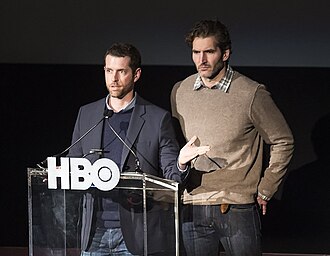
Photograph of two men—D. B. Weiss and David Benioff
Showrunners D. B. Weiss and David Benioff created the series, wrote most of its episodes and directed several.
: Showrunners D. B. Weiss and David Benioff created the series, wrote most of its episodes and directed several.

While Benioff and Weiss led the production, George R. R. Martin remained deeply involved as a co-executive producer. Martin contributed writing for one episode in each of the first four seasons, ensuring the adaptation stayed true to the spirit of his original novels.
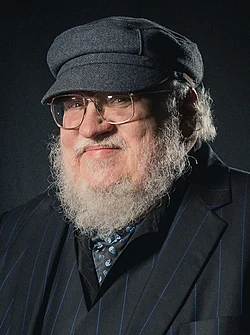
George R. R. Martin
George R. R. Martin, author of A Song of Ice and Fire, is a series co-executive producer and wrote one episode for each of the first four seasons.
: George R. R. Martin, author of A Song of Ice and Fire, is a series co-executive producer and wrote one episode for each of the first four seasons.

Musical Mastery

A defining element of the show's atmosphere was its haunting and powerful score. Composed by Ramin Djawadi, the music—including the iconic "Main Title" opening theme—became as recognizable as the characters themselves.
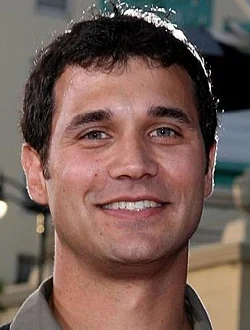
Ramin Djawadi
Ramin Djawadi composed the Game of Thrones score.
: Ramin Djawadi composed the Game of Thrones score.

A World of Immersive Locations

To capture the vastness of Westeros and Essos, the production utilized diverse filming locations across the globe. The series traveled through the United Kingdom, Croatia, Iceland, Spain, Malta, Morocco, and Canada, turning real-world landscapes into legendary settings.

The Azure Window at Ras-id-Dwerja on the island of Gozo served as the stunning backdrop for the Dothraki wedding in the first season.

The Azure Window at Ras-id-Dwerja
The Azure Window at Ras-id-Dwerja, on Gozo, was the site of the Dothraki wedding in season one.
: The Azure Window at Ras-id-Dwerja, on Gozo, was the site of the Dothraki wedding in season one.

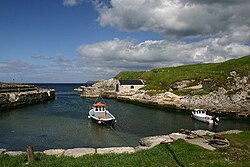
The historic walled city of Dubrovnik was utilized to represent the capital, King's Landing, starting in the second season, while Ballintoy Harbour provided the rugged scenery for Lordsport on the Iron Islands.
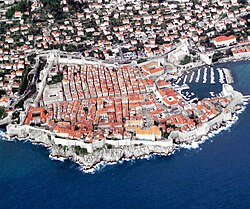
The walled city of Dubrovnik
The walled city of Dubrovnik stood in for King's Landing in season two.
: The walled city of Dubrovnik stood in for King's Landing in season two.
Ballintoy Harbour
Ballintoy Harbour was Lordsport on the Iron Islands.
: Ballintoy Harbour was Lordsport on the Iron Islands.

Cast and Character Dynamics

The success of the series relied heavily on its ensemble cast, who portrayed the complex web of noble houses and outcasts. Key performances included:

  • Peter Dinklage as Tyrion Lannister
  • Emilia Clarke as Daenerys Targaryen
  • Kit Harington as Jon Snow
  • Lena Headey as Cersei Lannister
  • Nikolaj Coster-Waldau as Jaime Lannister
  • Sophie Turner as Sansa Stark
  • Maisie Williams as Arya Stark
  • Alfie Allen as Theon Greyjoy
  • Isaac Hempstead Wright as Bran Stark
  • Iain Glen as Jorah Mormont

Global Impact and Viewership

Game of Thrones was not just a television show; it was a global event. Its viewership grew steadily throughout its run, peaking in the final seasons. Even political figures became part of the conversation, such as former U.S. President Barack Obama, who was a known fan of the series.
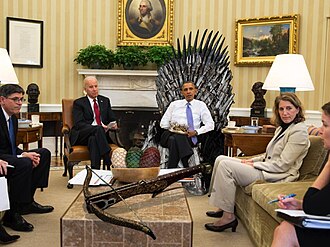
President Obama sits on a digitally-added Iron Throne in the Oval Office of the White House, surrounded by other people
In this manipulated image published by the White House in 2014, then American president Barack Obama (a fan of the series) sits on the Iron Throne in the Oval Office with the king's crown on his lap.
: In this manipulated image published by the White House in 2014, then American president Barack Obama (a fan of the series) sits on the Iron Throne in the Oval Office with the king's crown on his lap.

Viewership Trends

The following table illustrates the average number of U.S. viewers (in millions) per episode across the eight seasons, as measured by Nielsen Media Research.

Average U.S. Viewership per Episode (in millions)
Season Avg. Viewers (Millions)
Season 1 2.52
Season 2 3.80
Season 3 4.97
Season 4 6.84
Season 5 6.88
Season 6 7.69
Season 7 10.26
Season 8 11.99

Frequently Asked Questions

What is Game of Thrones based on?

The series is an adaptation of the A Song of Ice and Fire fantasy novel series written by George R. R. Martin.

Who were the showrunners of the series?

The series was created and led by showrunners David Benioff and D. B. Weiss.

How many seasons of Game of Thrones are there?

There are a total of 8 seasons, consisting of 73 episodes.

Where was the show filmed?

Filming took place in several international locations, including the United Kingdom, Croatia, Iceland, Spain, Malta, Morocco, and Canada.

Who composed the music for the show?

The iconic score and the opening theme "Main Title" were composed by Ramin Djawadi.

References

  1. Noah Harari, Yuval (May 24, 2019). "Game of Thrones: A Battle of Reality Versus Fantasy". Wired. Condé Nast. Archived from the original on June 3, 2019. Retrieved May 19, 2020.
  2. Alsop, Elizabeth (July 8, 2015). "The Unbearable Darkness of Prestige Television". The Atlantic. Emerson Collective. Archived from the original on July 10, 2015. Retrieved May 19, 2020. From the bro-style bloviating (or, broviating) of True Detective's first season, to the ominous proclaiming that punctuates the general whoring and slaying of Game of Thrones, to the unceasing climatological and psychological punishments meted out to the cast of The Killing, it seems as though some of the most celebrated recent examples of serial drama have elected self-seriousness as their default tone.
  3. Arp, Robert (2017). J. Silverman, Eric (ed.). The Ultimate Game of Thrones and Philosophy. Open Court Publishing Company. ISBN 9780812699555. Archived from the original on May 26, 2020. Retrieved May 26, 2020. Like Game of Thrones, the action in those ancient tragedies centered on the stories of four ruling dynasties: House Atreus of Mycenae, House Cadmus in Thebes, House Erichthonius in Athens, and House Minos in Crete.
  4. Marcotte, Amanda (June 9, 2015). "Don't Be So Shocked by the Deaths on Game of Thrones: The Show Is a Classical Tragedy". Slate. The Slate Group. Archived from the original on January 23, 2019. Retrieved May 19, 2020. But while Game of Thrones is in part a rebuttal to traditional fantasy fiction, I'd argue that it's become clear—after five books in A Song of Ice and Fire and five seasons of the TV series—that Martin and showrunners D.B. Weiss and David Benioff are actually playing with a format that isn't so revolutionary at all: They're reviving and updating the classical tragedy as a narrative form.
  5. Fleming, Michael (January 16, 2007). "HBO turns 'Fire' into fantasy series". Variety. Penske Media Corporation. Archived from the original on May 16, 2012. Retrieved March 2, 2010.