Bills and the Legislative Process: How Proposed Laws Become Statutes
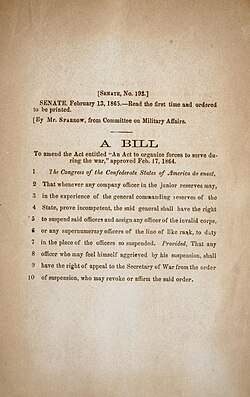
At its core, a bill is a formal proposal for a new law or a significant modification to an existing one. While often used interchangeably with "law" in casual conversation, a bill is merely a draft. It does not possess legal authority until it has been passed by a legislature and, in most jurisdictions, approved by a head of state or executive authority.
Once a bill successfully navigates the legislative process and is enacted, it is referred to as an act of the legislature or a statute. This transition from proposal to law involves a rigorous cycle of introduction, debate, amendment, and final approval.

Key Facts
- Definition: A bill is a legislative proposal; an act or statute is the finalized law.
- Terminology: In common law systems, the parts of a bill are called "clauses," which become "sections" once the bill becomes an act.
- Approval: Most bills require the signature of a head of state (President, Monarch, or Governor) to become law.
- Veto: The power of a head of state to refuse approval of a bill is known as a veto.
- Bilingualism: In Canada, federal bills are always produced in both English ("bill") and French ("projet de loi").
Global Variations in Legal Systems
The terminology and handling of proposed laws vary significantly depending on the legal tradition of the nation.
Common Law Systems
The term "bill" is primarily used in English-speaking nations that inherited the common law of the United Kingdom, such as the United States, Canada, and Australia.
Civil Law Systems
In civil law jurisdictions—including France, Spain, Portugal, Belgium, and Luxembourg—the terminology is more specific. A proposal introduced by the government is called a law project (projet de loi), while a proposal from a private member is a law proposition (proposition de loi). Some nations, like the Netherlands, use these terms interchangeably.
The Preparation and Introduction of Bills
Before a bill reaches the floor of a legislature, it undergoes a preparation phase. Most bills contain specific components: titles, enacting provisions, statements of intent, definitions, substantive provisions, transitional clauses, and effective dates.
In the United Kingdom, pre-legislative scrutiny allows parliamentary committees to review confidential draft bills before they are formally introduced. In India, drafts move from the relevant ministry to the Ministry of Law and Justice, and finally to the Cabinet committee headed by the prime minister.
The method of introduction depends on the political system:
- Westminster System: The executive is part of the legislature. Most bills are government bills introduced by the executive, often outlined in the King's Speech.
- U.S. System: The executive is separate from the legislature. All bills must originate within the legislature itself.
Legislative Stages: From Reading to Enactment
Most legislatures use a system of "readings." This is a vestige of the historical practice where clerical officers read the bill aloud to the members. Today, these readings represent distinct stages of debate and refinement.
The Process in the United Kingdom
The UK follows a seven-stage process: first reading, second reading, committee stage, report stage, third reading, passage through the opposite house, and royal assent. During the committee stage, experts and professionals may be consulted to refine the bill's details. If the House of Commons and House of Lords disagree on amendments, the elected House of Commons typically has the final say.
The Process in India
Indian legislation follows a similar path: a first reading (introduction), a second reading (which includes general discussion, committee scrutiny, and a consideration stage), and a third reading (final vote). Once passed by both houses, the bill is sent to the president, who may assent, withhold assent, or return it for reconsideration.
Approval and Finalization
The final step in the process is enactment. While most bills require a signature from a head of state, there are exceptions. For example, in Israel, bills passed by the Knesset become law immediately, though they are ceremonially signed later.
Some systems provide a check on legislative power through judicial review. In Germany, the Federal Constitutional Court can rule on bills, and in Ireland, the president can refer bills to the Supreme Court under Article 26 of the Constitution. Additionally, some nations require a referendum (a direct vote by the citizens) for specific types of legislation, such as constitutional amendments in Ireland.
Bill Numbering Systems
Legislatures use various methods to track bills as they progress through the system.
| Country | Numbering Method | Key Characteristics |
|---|---|---|
| United States | Sequential (H.R. or S.) | Resets every two years (each Congress). |
| Canada | Sequential (C or S) | C-2 to C-200 for government; C-201 to C-1000 for private members. |
| Brazil | Sequential (PL) | Unified system since 2019; often includes the year (e.g., PL 1234/1988). |
| Philippines | Sequential (R.A.) | Republic Acts are numbered sequentially since 1946. |
| United Kingdom | Session-based | Numbers reset at the start of each parliamentary session. |
| Australia | Short Titles | Bills are not numbered until they receive royal assent. |
Frequently Asked Questions
What is the difference between a bill and an act?
A bill is a proposal for a law that is currently being debated or considered by a legislature. An act (or statute) is a bill that has been passed by the legislature and approved by the necessary authorities, making it legally binding.
What happens if a head of state refuses to sign a bill?
This refusal is called a veto. Depending on the jurisdiction, a veto may kill the bill entirely, or the legislature may be able to override the veto with a higher majority vote.
What is the "committee stage" of a bill?
The committee stage is a detailed review process where a small group of legislators, often aided by outside experts and stakeholders, examines the bill clause by clause to propose specific amendments and improvements.
How does a bill come into force after it is passed?
A law may come into force immediately upon enactment, on a specific date mentioned within the act, or at a later date determined by a ministerial order. It is typically made public through publication in an official government gazette.