Judiciary Systems: Evolution, Structure, and Global Functions
The judiciary—also referred to as the judicial branch, judicial power, or the court system—serves as the essential mechanism for adjudicating legal disputes. Its primary role is to interpret, defend, and apply the law to specific legal cases. Within the framework of the separation of powers, the judiciary operates distinctly from the legislature (which creates statutory law) and the executive (which enforces law). While its main function is application rather than creation, some legal systems allow the judiciary to develop common law through judicial decisions.
Key Facts
- The judiciary interprets and applies laws rather than creating them (except in common law systems).
- Roman law, specifically the Corpus Iuris Civilis, forms a foundational pillar of many modern legal systems.
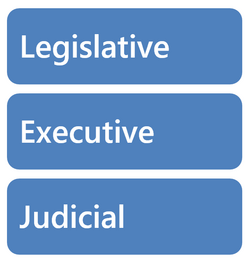
- The separation of powers divides government into legislative, executive, and judicial branches.
- In the United States, the Supreme Court is the final authority on federal constitutional interpretation.
- Legal systems can be inquisitorial (judge-led investigation) or adversarial (party-led evidence).
Historical Foundations of Law
The Roman Legacy
The roots of modern judicial systems can be traced back to ancient Rome. During the Archaic period (650–264 BC), the Ius Civile (civil law) was central, consisting of Mos Maiorum (social norms) and Leges (laws). By 451–449 BC, these norms were codified in the Twelve Tables.
As Rome transitioned into the pre-classical era, the leadership of the judicial system shifted from priests to the praetor. These officials issued edicts that established new legal principles for their term, known as praetorian law.

The most significant milestone in Roman legal history occurred during the Dominate era (284–565 AD) with the Codification by Justinianus. This resulted in the Corpus Iuris Civilis, a comprehensive collection of Roman law divided into four parts:
- Institutiones: An introduction and summary of the law.
- Digesta/Pandectae: A collection of legal edicts.
- Novellae: A record of new laws created.
The Middle Ages and the Rise of Scholasticism
In the late Middle Ages, legal education expanded from monasteries to urban universities. This era saw the rise of two distinct legal traditions: Canon law (ecclesiastical law created by the Pope) and Ius Civile (secular Roman law). The rediscovery of the Corpus Iuris Civilis in 1070 sparked the Scholastics period, characterized by a renewed interest in ancient texts.
Early Scholastics focused on Glossae (translations), Summae (summaries), and Brocardica (mnemonic devices). By the 15th century, the integration of canon law and Roman law resulted in Ius Commune, a systematic legal framework that introduced the possibility of appeals and combined inquisitorial and adversarial elements.

The Development of Canon Law
Canon law was organized through canones (council decisions) and decreta (papal decisions). A pivotal figure, the monk Gratian, organized these laws into the Decretum Gratiani, which became a cornerstone of the Corpus Juris Canonici. This system remained in use until the 1917 Code of Canon Law was promulgated.
Modern Judicial Structures
Today, judicial systems vary significantly by nation, though most follow a hierarchical structure moving from courts of first instance to courts of last resort.
The United States System
The U.S. features a dual system of federal and state courts. The Supreme Court acts as the final authority on the federal Constitution. The federal hierarchy includes 94 district courts, followed by appellate courts and the Supreme Court. It is important to note that immigration courts are not part of the judicial branch; they fall under the Executive Office for Immigration Review within the Department of Justice.

International Comparisons: Japan and Mexico
In Japan, the judicial process is highly structured. Assistant judges must complete training at the Legal Training and Research Institute and serve five years before they can sit alone. The system includes a Supreme Court, eight high courts, and various district, family, and summary courts.
In Mexico, Supreme Court Justices are appointed by the President and approved by the Senate for twelve-year terms. The federal judiciary is composed of the Supreme Court, 32 circuit tribunals, and 98 district courts. Candidates must be between 35 and 65 years of age and hold a law degree.
| Feature | United States (Federal) | Japan | Mexico |
|---|---|---|---|
| Highest Court | Supreme Court | Supreme Court of Japan | Supreme Court of Mexico |
| Selection Method | Presidential appointment / Senate approval | Training and Supreme Court appointment | Presidential appointment / Senate approval |
| Term Length (High Court) | Life term or retirement | Not specified | 12 years (Justices) |
![Lady Justice (Latin: Justicia), symbol of the judiciary.[33][34] Statue at Shelby County Courthouse, Memphis, Tennessee](/images/d4/69/d46924cab3b711b52fb4dc158dd04db3abd9de7214208ad1974b44dfe903ce73.jpg)
Frequently Asked Questions
What is the difference between the judiciary and the legislature?
The legislature is responsible for making statutory law, whereas the judiciary is responsible for interpreting and applying that law to specific cases.
What is the role of the Supreme Court in the United States?
The Supreme Court is the final authority on the interpretation of the federal Constitution, all federal statutes, and the constitutionality of state laws.
What does "separation of powers" mean?
It is a political doctrine that divides government responsibilities into three distinct branches—legislative, executive, and judicial—to prevent any one branch from exercising absolute control.
What is the difference between inquisitorial and adversarial systems?
In an inquisitorial system, the judge actively investigates the evidence. In an adversarial system, the opposing parties are responsible for finding and presenting the evidence to convince the judge.
Are immigration judges part of the U.S. judicial branch?
No, immigration judges are employees of the Executive Office for Immigration Review, which is part of the Department of Justice within the executive branch.