Bengal Engineer Group: The Legacy of the Bengal Sappers
The Bengal Engineer Group (BEG), known informally as the Bengal Sappers or Bengal Engineers, is a distinguished military engineering regiment within the Corps of Engineers of the Indian Army. With a history spanning over two centuries, the BEG has evolved from a colonial pioneer force into a modern technical powerhouse, maintaining its regimental center at the Roorkee Cantonment in Uttarakhand.
Defined by their motto "Sarvatra" (meaning "Everywhere"), the Bengal Sappers are renowned for their "never-say-die" attitude, often symbolized by the phrase "Chak De" and their traditional use of the hamber tool. Their role is critical to the Indian Army's operational success, providing the technical expertise necessary to navigate and manipulate the physical environment of the battlefield.

Key Facts
- Active Since: 1803
- Regimental Centre: Roorkee, Uttarakhand
- Motto: "Sarvatra"
- Major Honors: 80 Battle Honours and 11 Theatre Honours
- Top Decorations: 11 Victoria Crosses and 190 Sena Medals
- Distinction: First engineer group in the Indian Army to receive the President's Colours (1989)
Historical Evolution
The roots of the BEG trace back to the 1740s, when British officers served in presidency-based engineering companies. The formal lineage began in 1803 with the raising of the Corps of Bengal Pioneers from two pioneer companies, one of which was established by Captain T. Wood at Kanpur.
Throughout the 19th century, the unit underwent several reorganizations. In 1819, the Bengal Pioneers merged with the Company of Miners to form the Bengal Sappers and Miners. By 1853, the regiment moved to Roorkee, which remains its home today. The unit survived the Rebellion of 1857 due to its essential role in the recapture of Delhi and other critical operations.
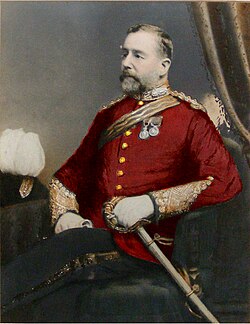
The regiment's name evolved alongside the British monarchy, becoming the 1st Prince of Wales's Own Sappers and Miners in 1906, and later King George V's Own Bengal Sappers and Miners. Following Indian independence and partition in 1947, the group was reorganized as the Bengal Engineer Group and Centre. This transition was particularly challenging, as a significant portion of assets, funds, and British officers were allocated to the Royal Pakistan Engineers.
Combat Record and Battle Honours
The Bengal Sappers have a global operational footprint. During World War I, they served in France, Flanders, Mesopotamia, Egypt, Palestine, and Persia. In World War II, their expertise was utilized across North Africa, Italy, Malaya, and Burma.
In the post-independence era, the BEG played a pivotal role in the 1947-48 Jammu and Kashmir operations, the 1962 Sino-Indian War, and the 1965 Indo-Pakistani War. Their most significant contribution came during the 1971 liberation of Bangladesh. This conflict is often described as an "Engineers War" because victory relied heavily on the Sappers' ability to create passages across complex riverine terrain.
Summary of Major Engagements
| Era | Key Conflicts/Operations | Notable Locations |
|---|---|---|
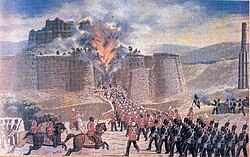
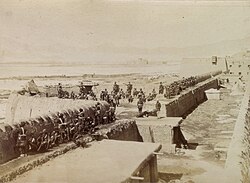
| Colonial India | Anglo-Afghan Wars, Anglo-Sikh Wars, Rebellion of 1857 | Ghazni, Kabul, Delhi, Lucknow |
| World Wars | World War I & World War II | France, Mesopotamia, Italy, Burma |
| Republic of India | Indo-Pakistani Wars (1947, 1965, 1971) | Jammu & Kashmir, East Pakistan, Punjab |
| Modern Era | Op Pawan, Op Meghdoot, Op Snow Leopard | Various strategic borders |
Beyond the Battlefield: Civil Contributions
The Bengal Engineers have left a lasting mark on India's architectural landscape. Military engineers were responsible for designing several landmark structures in Kolkata. Lieutenant James Agg designed St John's Church (consecrated 1787), while William Nairn Forbes designed St Paul's Cathedral (completed 1847) and the "Old Silver Mint" building, the latter of which features a portico inspired by the Parthenon in Athens.
Modern Role and Capabilities
Today, the Bengal Sappers provide essential tactical mobility for the Indian Army. This involves constructing bridges, roads, airfields, and railways, often under enemy fire. Conversely, they employ counter-mobility tactics to impede enemy movement by laying minefields and demolishing strategic infrastructure.
Beyond combat, they manage troop accommodation, water supply, and sanitation in remote areas. They also serve as a primary resource for civilian authorities during natural disasters, providing critical aid during floods and earthquakes.
Frequently Asked Questions
What is the motto of the Bengal Engineer Group?
The motto is "Sarvatra," which translates to "Everywhere," reflecting the group's ability to operate in any terrain or condition.
Where is the regimental center of the Bengal Sappers located?
The regimental center is located at the Roorkee Cantonment in Roorkee, Uttarakhand.
Why was the 1971 war called an "Engineers War"?
It is described as such because the victory in East Pakistan depended largely on the Sappers' skill in executing timely passages across numerous riverine obstacles.
Who was the first Indian Commandant of the BEG?
Colonel J.S. Dhillon was the first Indian Commandant. He is also notable for leading the first Republic Day parade in 1950 and being the first army officer awarded the Padma Bhushan.
What architectural landmarks in Kolkata were designed by Bengal Engineers?
Notable designs include St John's Church (Lt. James Agg), St Paul's Cathedral, and the Old Silver Mint building (William Nairn Forbes).