Battle of Tannenberg: The Decisive German Victory in East Prussia
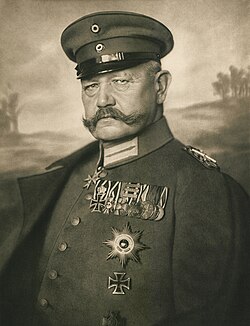
The Battle of Tannenberg, also known as the Second Battle of Tannenberg, was a pivotal engagement fought between the German and Russian Empires from August 26 to 30, 1914. Occurring in the opening month of World War I, this clash resulted in the near-total destruction of the Russian 2nd Army. The battle is remembered not only for its tactical brilliance but for the dramatic suicide of the Russian commanding general, Alexander Samsonov, and the rise of Paul von Hindenburg as a national hero in Germany.
The conflict took place in Allenstein, East Prussia (modern-day Poland), and served as a critical turning point on the Eastern Front, effectively halting the Russian advance into German territory and setting the stage for subsequent operations, including the First Battle of the Masurian Lakes.
Key Facts
- Date: August 26–30, 1914.
- Outcome: Decisive German victory; encirclement of the Russian 2nd Army.
- German Commanders: Paul von Hindenburg, Erich Ludendorff, Max Hoffmann, and Hermann von François.
- Russian Commanders: Alexander Samsonov and Yakov Zhilinsky.
- Russian Losses: Estimated between 70,000 and 120,219 killed, wounded, or captured.
- German Losses: Approximately 12,000 to 30,000 casualties.
Strategic Background
Germany's entry into the war was guided by the Schlieffen Plan, a strategic blueprint designed to avoid a two-front war. The plan prioritized a massive offensive through Belgium to knock France out of the conflict quickly, while leaving limited forces in the east to defend against Russia. The German 8th Army in East Prussia began the campaign with barely 10 percent of Germany's total mobilized strength.
Conversely, Russia possessed a massive army of over 95 divisions, but suffered from slow mobilization due to a sparse and unreliable railway network—roughly 75% of which were single-tracked. Despite these logistical hurdles, Russia promised its French allies an invasion of East Prussia by the 15th day of hostilities.
The Prelude: August 17–22
The road to Tannenberg began with the Battle of Gumbinnen on August 20. German forces initially achieved success through a night march, but the Russian artillery eventually forced a German retreat. This early setback led to a change in leadership; Paul von Hindenburg and Erich Ludendorff were appointed to command the 8th Army, replacing the previous leadership via special train.
The Germans utilized their superior rail network to rapidly redeploy the I Corps over 150 kilometers to reposition their forces, preparing to block the advance of the Russian 2nd Army led by General Samsonov.
The Russian Advance and German Maneuvers
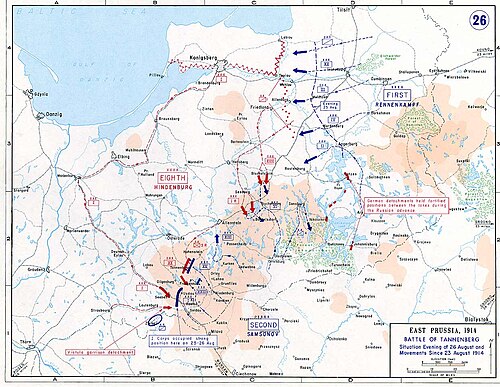
Between August 23 and 26, General Samsonov's 2nd Army pushed westward, separating itself further from General Rennenkampf's 1st Army. The Russian troops were exhausted, having marched an average of 24 kilometers per day in sweltering heat over primitive roads, often outrunning their own supply lines.
As the Russians advanced, Hindenburg and Ludendorff coordinated a defensive-offensive strategy. They passed through the village of Tannenberg, a site of historical significance where the Teutonic Knights had been defeated in 1410, which served as a psychological backdrop for the coming battle.
The Main Engagement: August 27–30
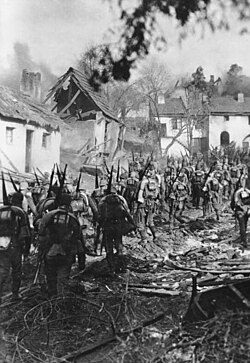
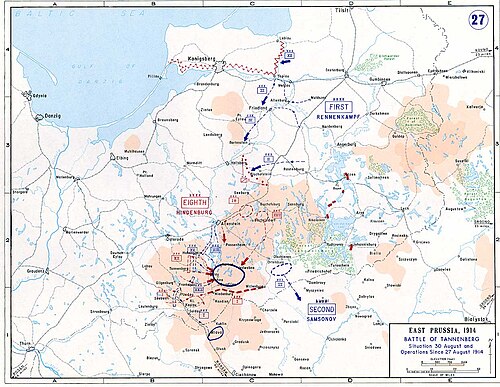
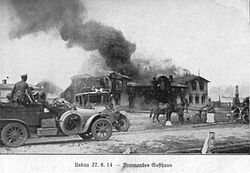
The decisive phase began on August 27. General Hermann von François launched a powerful attack on the Russian left flank, capturing the key town of Usdau. Simultaneously, German forces under Mackensen and von Below pressured the Russian right wing, forcing them into a disorganized retreat.
A critical failure in Russian communication plagued General Samsonov. He often observed the battle from a distance, away from his wireless sets, meaning vital reports regarding his flanks were never relayed to him. By August 28, German aerial observers and radio intercepts confirmed that Rennenkampf's 1st Army was moving slowly and was not in a position to rescue Samsonov.
By the end of August 28, the German encirclement was nearly complete. The Russian 13th, 15th, and 23rd Army Corps were trapped in a "cauldron," leading to their destruction or surrender.
Casualties and Aftermath
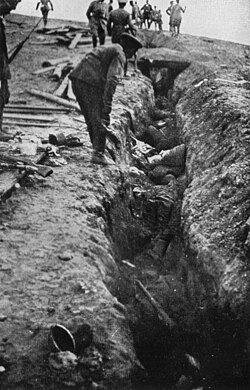
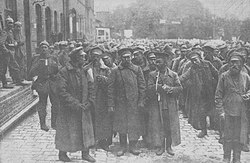
The scale of the Russian defeat was immense. While figures vary among historians, the German 8th Army reported approximately 92,000 prisoners. Some estimates suggest total Russian losses reached 120,219, including thousands killed and missing. The Germans suffered significantly fewer losses, with official records citing around 12,000 casualties, though other estimates suggest up to 30,000.
The victory was so absolute that sixty trains were required to transport captured Russian equipment back to Germany. The battle cemented Hindenburg's reputation and provided a massive morale boost to the German Empire.
| Feature | German Empire (8th Army) | Russian Empire (2nd Army) |
|---|---|---|
| Strength | 150,000 men | 123,000–180,000 men |
| Machine Guns | 294 | 384 |
| Artillery | 728 guns/howitzers | 612 guns/howitzers |
| Casualties | ~12,000 – 30,000 | 70,000 – 120,219 |
| Key Outcome | Strategic Victory | Army destroyed; General's suicide |
Post-War Legacy
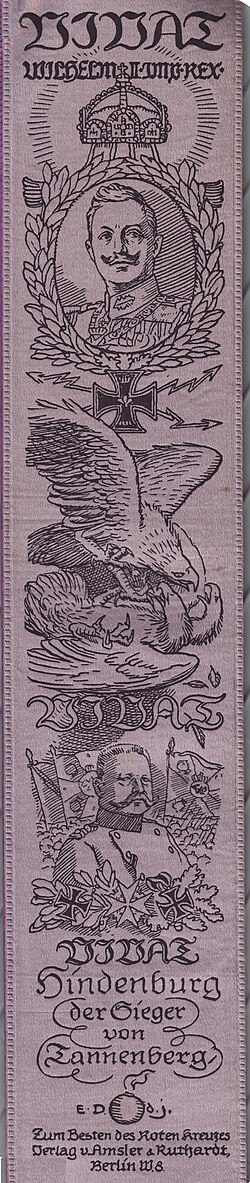
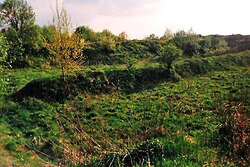
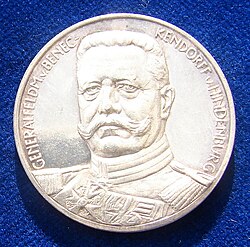
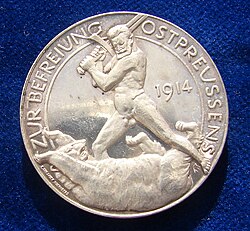
The battle left a lasting mark on German military history. A massive Tannenberg Memorial was later constructed as a burial site for Paul von Hindenburg, though its foundations are all that remain today. The victory was commemorated through various medals and ribbons, often depicting Hindenburg as a savior of East Prussia.
Frequently Asked Questions
Why was the battle called Tannenberg?
The battle took place near the village of Tannenberg. General Hindenburg requested the name as a historical reference to the 1410 battle where the Teutonic Knights were defeated, effectively "avenging" that ancient loss.
What caused the Russian defeat?
The defeat was caused by a combination of poor logistics, slow mobilization, a lack of coordination between the Russian 1st and 2nd Armies, and critical communication failures that left General Samsonov unaware of his encirclement.
Who were the primary German commanders?
The primary commanders were Paul von Hindenburg and Erich Ludendorff, supported by Max Hoffmann and Hermann von François.
What happened to General Alexander Samsonov?
Following the encirclement and near-total destruction of his army, General Samsonov committed suicide.
How did the German rail network influence the battle?
The Germans used their efficient railway system to rapidly move the I Corps over 150 kilometers to the right flank, allowing them to execute the encirclement of the Russian forces far more quickly than the Russians could react.