Balkan Peninsula: Geography, History, and Cultural Diversity
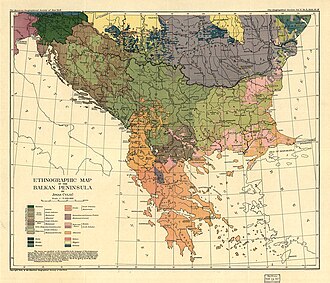
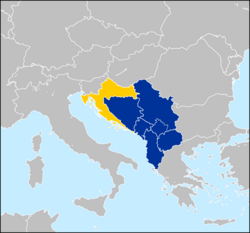
The Balkan Peninsula, located in Southeastern Europe, is a region defined by its complex geography, deep historical roots, and immense cultural diversity. Often referred to simply as the Balkans, this area serves as a vital crossroads between Europe and Asia, shaped by centuries of shifting borders, diverse religious traditions, and varied linguistic landscapes.
Geographical Landscape and Natural Features
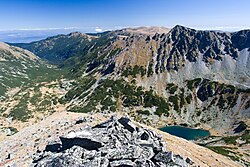
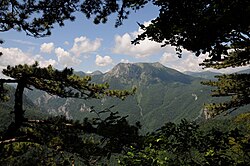
The geography of the Balkans is characterized by rugged terrain and significant natural landmarks. The region's highest elevation is found at Musala in Bulgaria, reaching an impressive 2,925 meters (9,596 ft).
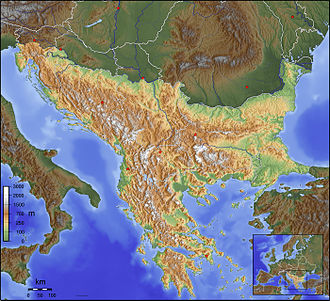
From towering mountain ranges to expansive bodies of water, the natural environment is both diverse and striking. The Rila mountain range stands as the highest in the Balkans and Southeast Europe.
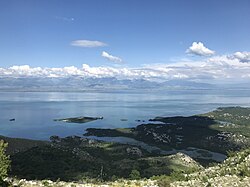
The region is also home to unique ecosystems, such as the Perućica primeval forest within Sutjeska National Park, which remains one of the last large primeval forests in Europe. Water features are equally significant, including Lake Skadar, the largest lake in the Balkans and Southern Europe.
Key Facts
- Location: Southeastern Europe.
- Highest Point: Musala, Bulgaria (2,925 m).
- Major Water Bodies: Lake Skadar (largest in the Balkans).
- Primary Religions: Islam, Eastern Orthodoxy, and Catholicism.
- Key Economic Drivers: Tourism, industry, and agriculture.
Historical Evolution and Geopolitics
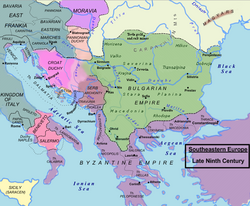
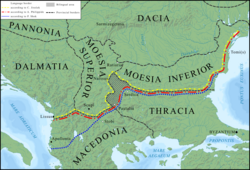
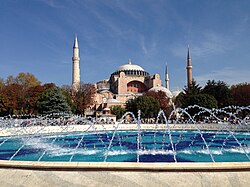
The history of the Balkans spans from antiquity through the Middle Ages and into the modern era. The region has been influenced by various empires, including the Roman and Ottoman Empires, which left behind lasting architectural and cultural imprints.
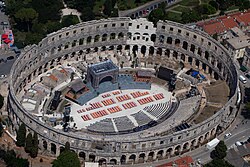
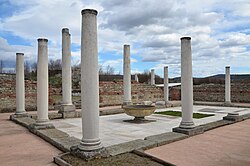
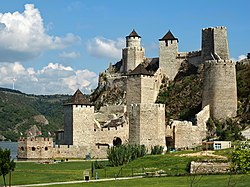
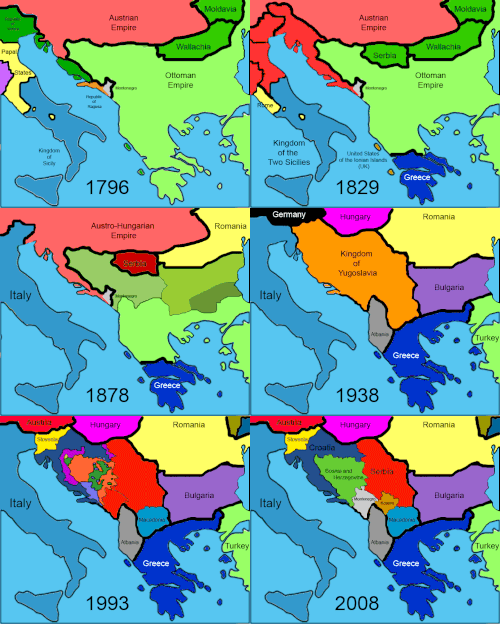
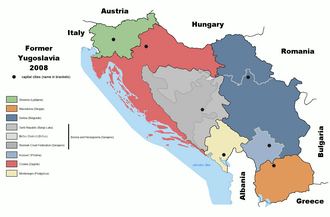
The 19th and 20th centuries saw significant political shifts, including the evolution of national identities and the complex history of the former Yugoslavia. Modern political boundaries continue to reflect these historical transitions.
Religious and Ethnic Diversity
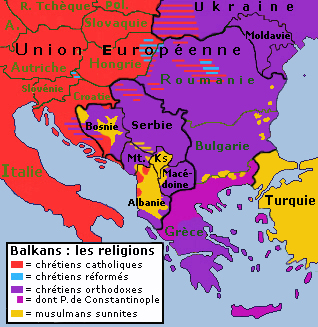
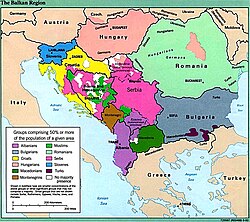
Religion plays a central role in the cultural fabric of the Balkans. The region is divided among several major faiths:
- Eastern Orthodoxy: Predominant in Bulgaria, Greece, Montenegro, North Macedonia, Romania, and Serbia.
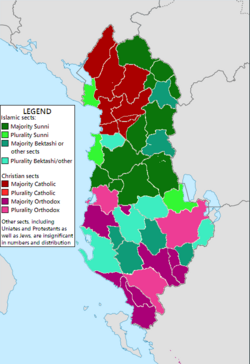
- Islam: The principal religion in Albania, Bosnia and Herzegovina, Kosovo, and Turkey.
- Catholicism: Primarily found in Croatia and Slovenia.
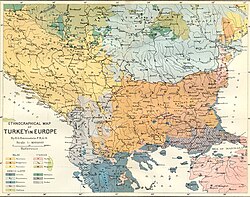
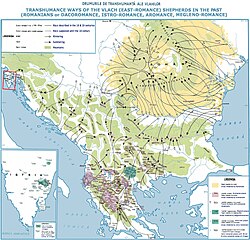
Linguistic diversity is equally prominent, with major languages including Albanian, Bosnian, Bulgarian, Croatian, Greek, Macedonian, Romanian, Serbian, Slovene, and Turkish.
Economic Overview and Urbanization
The economies of the Balkan states vary significantly. While some nations rely heavily on industrial sectors, others have seen tourism become a vital component of their national wealth.
![A view towards Sveti Stefan in Montenegro, tourism makes up a significant portion of the Montenegrin economy[105]](/images/ba/57/ba57b17dd003f925a03b105590dc1ce49e2d561cf6f5ccda6e9be75ae650ff63.jpg)
![A view above Belgrade in Serbia, which is the capital of Serbia and a major industrial city that accounts for a large component of the Serbian economy[106]](/images/8f/ac/8fac1199dec505923b4beadd7db0f38d2628d2eb6fb4c4667577031ccb59cb60.jpg)
![A view towards Parga in Greece; tourism plays a crucial role in the Greek economy[107]](/images/14/7a/147a82778796fd7d0617c3498abc51a6ee2a99b9e2bfedb60a7869b595e19f5c.jpg)
![A view towards Andrićgrad and Mehmed Paša Sokolović Bridge in Bosnia and Herzegovina; tourism is a rapidly growing sector of the Bosnian economy[108]](/images/11/57/11572198a60d7af3f6868babf310ac67aebebd3cb8d51f5b70490c48d0aef296.jpg)
![A view of Dubrovnik in Croatia; tourism contributes substantially to the Croatian economy[109]](/images/ec/11/ec117525f392c213d6d49b9d4f558feb23418090c4d81212d71dfaf6163d1221.jpg)
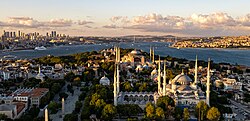
Major urban centers serve as the economic and administrative hearts of their respective countries. Istanbul stands as one of the largest cities in the region, followed by major capitals such as Athens, Bucharest, and Belgrade.
| Country | Capital | Population (2023) | GDP (Nominal 2019) | Primary Religion |
|---|---|---|---|---|
| Albania | Tirana | 2,761,785 | $15.418 bln | Islam |
| Bulgaria | Sofia | 6,447,710 | $66.250 bln | Eastern Orthodoxy |
| Croatia | Zagreb | 3,850,894 | $60.702 bln | Catholicism |
| Greece | Athens | 10,394,055 | $214.012 bln | Eastern Orthodoxy |
| Romania | Bucharest | 19,051,562 | $243.698 bln | Eastern Orthodoxy |
| Turkey | Ankara | 85,279,553 | $774.708 bln | Islam |
Frequently Asked Questions
What is the highest mountain in the Balkans?
The highest point in the Balkan Peninsula is Musala, located in Bulgaria, with an elevation of 2,925 meters.
Which countries are considered part of the Balkans?
The region includes several nations such as Albania, Bosnia and Herzegovina, Bulgaria, Croatia, Greece, Kosovo, Montenegro, North Macedonia, Romania, Serbia, Slovenia, and Turkey.
Is the Balkan Peninsula the same as the Baltics?
No, the Balkan Peninsula is located in Southeastern Europe, whereas the Baltics refers to a different region in Northern Europe.
What are the main religions in the region?
The Balkans are characterized by religious diversity, with Islam, Eastern Orthodoxy, and Catholicism being the most prominent faiths.
How important is tourism to the Balkan economy?
Tourism is a significant economic driver for many Balkan countries, including Montenegro, Greece, Croatia, Bosnia and Herzegovina, and Turkey.