Azaz: A Strategic Gateway in Northwest Syria
Located in the northwest of Syria, Azaz is a city of immense strategic importance. Situated roughly 20 miles (32 kilometres) north-northwest of Aleppo, it serves as a critical link between the Syrian interior and the Turkish border. With a population of 31,623 as of the 2004 census, the city is primarily inhabited by Sunni Muslims, consisting mostly of Arabs and Turkmen.
The city's geography—positioned at an elevation of 560 meters (1,840 ft)—has made it a focal point for military and political control for centuries, from the Crusades to the modern Syrian conflict.
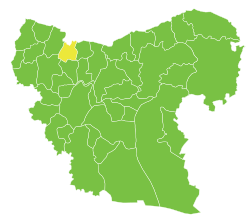
Key Facts
- Location: Aleppo Governorate, Northwest Syria.
- Strategic Value: Proximity to the Öncüpınar border crossing into Turkey.
- Historical Significance: Site of the 1125 Battle of Azaz.
- Climate: Hot-summer Mediterranean (Csa).
- Modern Status: Former headquarters of the Syrian Interim Government.
Ancient and Early Islamic History
Azaz has been known by various names throughout antiquity, reflecting the diverse cultures that passed through the region. In Hurrian, it was called Azazuwa; in Medieval Greek, Azázion; and in Old Aramaic, Ḥzz (which later became Ḫazazu in Neo-Assyrian).
Archaeological excavations at Tell Azaz have uncovered significant ceramics from the early and middle Islamic periods. While rarely mentioned in early Islamic texts, the city's importance during the Abbasid rule is evidenced by a visit from the musician Ishaq al-Mawsili. Later, the Hamdanids of Aleppo constructed a square brick citadel atop a tell, featuring two enclosures.
The 11th century brought conflict with the Byzantine Empire. In 1030, the Mirdasids defeated Emperor Romanos III at Tubbal, near Azaz. However, by December of that year, Byzantine generals Niketas of Mistheia and Symeon captured Azaz and destroyed Tubbal in retaliation.
The Crusader Era and the Battle of Azaz
During the Crusader period, the city was known as Hazart. Its topography made it a vital strategic asset: when held by Muslim forces, it blocked communications between the Crusader states of Edessa and Antioch; when held by Crusaders, it posed a direct threat to Aleppo.
In December 1118, Roger of Antioch and Leo I captured the city from the Turcoman prince Ilghazi of Mardin. The city remained a site of contention for decades. The most notable clash occurred on June 11, 1125, during the Battle of Azaz. A Crusader coalition of 3,000 men, led by King Baldwin II of Jerusalem, defeated a much larger Muslim force of 15,000, successfully lifting the siege of the town.
The Crusader hold on the region weakened after the fall of Edessa in 1144. Despite efforts to reinforce the garrison, the fortress of Azaz eventually fell to Nur ad-Din, the Zengid emir of Aleppo, in June 1150.
From the Ayyubids to the Ottoman Empire
Under the Ayyubid emir al-Aziz Uthman, the citadel was rebuilt using stone. By 1226, the historian Yaqut al-Hamawi described Azaz as a "fine town," noting its role as the center of a district that included several market towns and forts, such as Mannagh and Tubbal.
The region transitioned to Mamluk rule in the 13th century and later to the Ottoman Empire following the Battle of Marj Dabiq in 1516. During the Ottoman era, Azaz remained a center for Turkmen populations and functioned as a sanjak (administrative division) alongside Kilis.
Following the collapse of the Ottoman Empire, the border between the new states of Syria and Turkey was drawn just north of the city. Azaz first became part of the French Mandate for Syria and the Lebanon before joining the independent state of Syria in 1946.
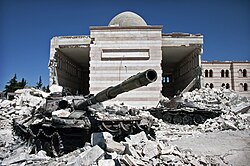
Azaz in the Syrian Civil War
The city's proximity to the Turkish border made it a high-value logistical hub during the Syrian civil war. Rebels captured the town on July 19, 2012. Control shifted several times over the following years:
- ISIS: Took control in October 2013 but withdrew in February 2014.
- Northern Storm Brigade: Managed the city via a Civil Council and a Sharia Committee.
- Al-Nusra Front: Shared control with the Northern Storm Brigade by October 2015.
In 2016, Turkey launched Operation Euphrates Shield to prevent the Kurdish People's Protection Units (YPG) from creating a land bridge between the Afrin and Kobanî Cantons. Turkey declared Azaz a "red line," and the city subsequently came under Turkish occupation. By late 2017, Azaz served as the capital of the opposition's Syrian Interim Government, a status that lasted until the government was incorporated into the Syrian caretaker government in January 2025.
Climate and Geography
Azaz experiences a hot-summer Mediterranean climate (Köppen classification Csa), characterized by hot, dry summers and cool, wet winters.
| Month | Max Temp (°C) | Mean Temp (°C) | Min Temp (°C) | Precipitation (mm) |
|---|---|---|---|---|
| January | 9.1 | 5.3 | 1.3 | 89 |
| April | 20.7 | 14.6 | 8.6 | 44 |
| July | 34.5 | 27.0 | 19.5 | 1 |
| October | 25.5 | 19.1 | 12.8 | 44 |
| Yearly Avg | 22.4 | 16.5 | 10.6 | 469 |
Frequently Asked Questions
Why is Azaz strategically important?
Azaz is critical because of its location near the Syria–Turkey border crossing at Öncüpınar. This makes it a vital logistical supply route for whoever controls the region.
What happened at the Battle of Azaz in 1125?
A Crusader coalition of 3,000 men, led by King Baldwin II of Jerusalem, defeated a Muslim coalition of 15,000 men, successfully lifting the siege of the town.
Who lived in Azaz during the Ottoman era?
The city continued to be inhabited by Turkmen populations during the Ottoman period and was part of a sanjak administrative division.
What is the climate like in Azaz?
The city has a hot-summer Mediterranean climate, with the hottest temperatures occurring in July and August (averaging around 34°C) and the most rainfall occurring in November and January.
What was the role of Azaz in the Syrian Interim Government?
Following the 2016 Turkish intervention, Azaz became the headquarters and capital of the opposition's Syrian Interim Government until January 2025.