Avian Influenza: Virology, Transmission, and Global Impact
Avian influenza, commonly known as bird flu, is a viral disease caused by the influenza A virus. While it primarily affects birds, it is a zoonotic disease—meaning it can jump from animals to humans—and has the potential to affect a wide range of mammals. The virus is enzootic, meaning it is continually present in many wild aquatic bird populations, which serve as the primary natural hosts.
The impact of the virus varies wildly depending on the strain and the species infected. In the poultry industry, the distinction between low and high pathogenicity is critical for management and economic stability.
![A transmission electron micrograph (TEM) of the reconstructed 1918 pandemic influenza virus. The bottom structure represents membrane debris from the cells used to amplify the virus.[15]](/images/9d/7e/9d7e662fbb194626d0e497e6986a01abc4505336116b9d732a40b48bf8378d43.jpg)
Key Facts
- Primary Hosts: Wild aquatic birds are the natural reservoirs for influenza A viruses.
- Pathogenicity: Strains are classified as Low Pathogenic (LPAI) or Highly Pathogenic (HPAI) based on their effect on domestic chickens.
- Transmission: Spread occurs through direct contact, contaminated environments, or the consumption of infected birds.
- Species Barrier: While primarily avian, the virus can infect mammals, including cows, cats, seals, and humans.
- Economic Impact: Outbreaks lead to massive poultry culling and significant disruptions in egg production and pricing.
Understanding Virus Classification and Nomenclature
Influenza A viruses are categorized by their surface proteins, specifically hemagglutinin (H) and neuraminidase (N). Hemagglutinin is the protein that allows the virus to bind to host cells.
The Nomenclature System
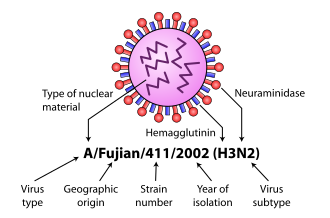
To track and identify specific strains, scientists use a standardized naming convention. For example, a strain labeled A/Nakorn-Patom/Thailand/04 (H5N1) breaks down as follows:
- A: The genus of the influenza virus.
- Nakorn-Patom/Thailand: The geographic location where the virus was isolated.
- 04: The year of isolation (2004).
- H5: The fifth known type of hemagglutinin protein.
LPAI vs. HPAI
The classification of a strain as Low Pathogenic Avian Influenza (LPAI) or Highly Pathogenic Avian Influenza (HPAI) is based specifically on the severity of symptoms observed in domestic chickens. It is important to note that this classification does not necessarily predict how the virus will behave in other species.
- LPAI: Infected chickens may be asymptomatic or show only mild symptoms.
- HPAI: Causes severe respiratory distress, a sharp decline in egg production, and sudden death.
Epidemiology and History
Historically known as "fowl plague," avian influenza was first identified by Edoardo Perroncito in 1878. By 1955, researchers established a close relationship between these avian strains and human influenza. In 1972, it was discovered that many subtypes were endemic to wild bird populations.
The frequency of outbreaks has increased over time. Between 1959 and 1995, there were 15 recorded HPAI outbreaks in poultry. Between 1996 and 2008, at least 11 outbreaks occurred, four of which resulted in the death or culling of millions of birds. More recently, H5 and H7 subtypes have become endemic in wild birds, leading to more frequent spillovers into domestic poultry.
![The eight major flyways used by shorebirds (waders) on migration[41] Pacific Mississippi and Amazon West Atlantic East Atlantic Mediterranean and Black Sea West Asia and Africa Central Asia and India East Asia and Australasia](/images/9b/22/9b22fe89db43f3470a594f97434793d8360589a4fb986b73beb35217ab50f21d.webp)
Transmission and the Species Barrier
The species barrier refers to the biological hurdles that prevent a virus from jumping from one species to another. For avian influenza, this often involves the ability of the virus to bind to specific sialic acids on the host cell surface. Avian viruses typically bind to alpha 2–3 linked sialic acids, while human viruses bind to alpha 2–6 linked sialic acids.
The Role of "Melting Vessels"
Pigs are particularly significant in the evolution of the virus because their tissues express both types of sialic acids. This allows them to be co-infected with human and avian strains, acting as a "melting vessel" where the viruses can reassort and potentially create new strains capable of infecting humans.
Mammalian Spillover
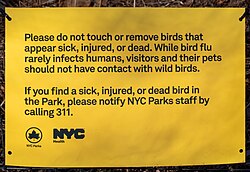
Transmission to other mammals often occurs through the consumption of infected birds. Recent cases highlight the expanding reach of the virus:
- Marine Mammals: Detected in walruses (2023) and seals.
- Arctic Wildlife: Found in arctic foxes (2025) and a polar bear on Svalbard (May 2026).
- Domestic Animals: Recent outbreaks have affected dairy cows and domestic cats.
Global Impact and Prevention
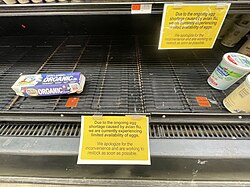
The economic consequences of avian influenza are severe. Beyond the loss of livestock, outbreaks can lead to critical shortages of consumer goods. For instance, the 2020–2025 H5N1 outbreak caused significant egg shortages in various regions, driving prices to record highs.
| Feature | Low Pathogenic (LPAI) | Highly Pathogenic (HPAI) |
|---|---|---|
| Symptoms in Chickens | Mild or asymptomatic | Severe respiratory distress, sudden death |
| Egg Production | Minimal impact | Significant drop |
| Primary Host | Wild aquatic birds | Wild aquatic birds / Domestic poultry |
| Prevention | Biosecurity | Vaccination, culling, biosecurity |
Frequently Asked Questions
What is the difference between LPAI and HPAI?
LPAI (Low Pathogenic Avian Influenza) causes mild or no symptoms in chickens, while HPAI (Highly Pathogenic Avian Influenza) causes severe illness and high mortality rates in domestic poultry.
How does the virus spread to mammals?
Mammals are typically infected by eating birds that carry the virus or through direct contact with contaminated environments. Some animals, like pigs, can be co-infected with different strains, allowing the virus to mutate.
Why are wild aquatic birds important in this cycle?
Wild aquatic birds are the primary natural hosts where the influenza A virus is enzootic, meaning it persists in these populations naturally and can be spread across continents via migration flyways.
Can poultry be protected from bird flu?
Yes, domestic poultry may be protected from specific strains of the virus through the use of vaccinations, alongside strict biosecurity measures.
What is the "species barrier" in the context of bird flu?
The species barrier is the biological limitation that prevents a virus from infecting a different species. In avian flu, this is largely determined by whether the virus's hemagglutinin protein can bind to the specific sialic acid receptors found in the host's cells.