Avenida Corrientes: The Vibrant Heart of Buenos Aires Nightlife
Avenida Corrientes is one of the most iconic thoroughfares in Buenos Aires, Argentina. Known popularly as "La calle que nunca duerme" (The Street that Never Sleeps), this avenue serves as the city's cultural artery. Much like Broadway in New York, it is the epicenter of Argentine theater, cinema, and literature, while remaining deeply intertwined with the porteño (residents of Buenos Aires) sense of identity and the soulful rhythms of tango.
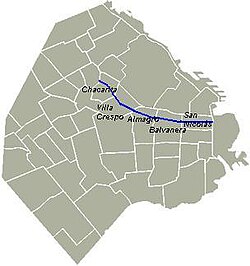
The avenue spans 69 blocks, stretching from Eduardo Madero Avenue in the eastern Puerto Madero neighborhood to Federico Lacroze Avenue in Chacarita. While automobile traffic generally flows from west to east, the street is mirrored underground by Line B of the Buenos Aires Metro, which runs for most of its length.
Key Facts
- Nickname: "The Street that Never Sleeps" due to its 24/7 activity.
- Cultural Hub: The highest concentration of theaters, cinemas, and bookstores in the city.
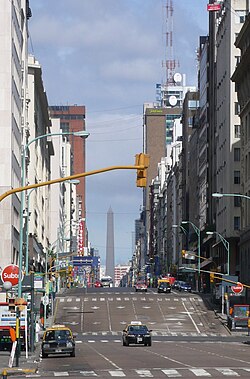
- Landmarks: Home to the Obelisk of Buenos Aires and the Luna Park stadium.
- Tango Heritage: Features 40 commemorative plaques honoring tango figures, placed by the Asociación Amigos de la Calle Corrientes.
- Gastronomy: Famous for its traditional pizzerias and historic cafes.
The Evolution of the Avenue
The street's identity has shifted through various names over the centuries. In the 17th century, it was called Del Sol, followed by San Nicolás (1738–1808) and De Incháurregui (1808–1822), before finally becoming Avenida Corrientes.
Throughout the 19th century, it remained a street of average width. However, as Buenos Aires expanded westward around 1880, traffic surged. Horse-drawn tramways were introduced in 1887, but they soon became insufficient. In 1910, Mayor Joaquín de Anchorena authorized a widening project. This plan faced fierce opposition from intellectuals like Roberto Arlt and local landowners because it required the demolition of many buildings on the north side.
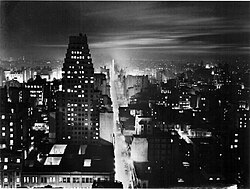
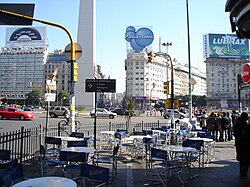
The widening was eventually pushed through following a 1930 coup d'état and was completed in 1936. To this day, locals use the term "Corrientes Angosta" (Narrow Corrientes) to refer to the street as it existed before this transformation. The completion of the avenue coincided with the construction of the Obelisk of Buenos Aires and the Plaza de la República, creating a landmark roundabout at the intersection with 9 de Julio Avenue.
A Hub of Entertainment and Intellectualism
For much of the 20th century, Corrientes was the undisputed symbol of nightlife. The ten-block stretch between Maipu Street and Callao Avenue remains the center of commercial theater in Argentina. This area features stunning Art Deco architecture from the 1930s and 40s, seen in venues like Teatro Gran Rex, Teatro Opera, and Teatro Premier.
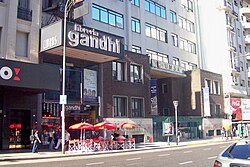
The avenue is also a sanctuary for book lovers, boasting a massive concentration of bookstores. This literary tradition culminates in "Bookstore Night," an annual event since 2007 where the stretch between Avenida Callao and Uruguay Street transforms into an expansive outdoor reading room.
Beyond the arts, the avenue is famous for its culinary staples. Generations of porteños have followed the tradition of "pizza and cinema," frequenting legendary pizzerias such as Güerrín and Los Inmortales. For intellectuals, spots like Café La Paz became historic meeting grounds for activists and thinkers during the mid-20th century.
The street has also seen various urban archetypes over the years: from the cabaret dancers of the 1920s to the valijeros (briefcase-carrying office workers) of the 60s who visited X-rated cinemas, and the psico-bolches (leftist students) of the 1980s.
Neighborhoods and Points of Interest
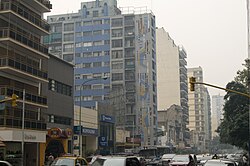
As Avenida Corrientes moves away from the city center, it traverses several distinct neighborhoods:
- La City: The financial district, located between Leandro N. Alem and Florida Street.
- Once: A traditionally Jewish neighborhood known for synagogues and clothing wholesale.
- Abasto: Home to the legendary tango singer Carlos Gardel and the Abasto Shopping Center, a former Art Deco fruit and vegetable market.
- Almagro: A quieter residential area centered around the intersection of Medrano and Rivadavia Avenues.
- Villa Crespo: Another traditionally Jewish neighborhood and the home of the Atlanta football club.
- Chacarita: The avenue's terminus, ending at Estación Federico Lacroze near the Chacarita Cemetery, the largest in Argentina.
| Category | Key Examples / Locations |
|---|---|
| Theaters | Teatro Gran Rex, Teatro Opera, Teatro Broadway, General San Martín Theater |
| Dining | Güerrín, Los Inmortales, Café La Paz, La Giralda |
| Landmarks | The Obelisk, Luna Park, Abasto Shopping Center |
| Culture | Bookstore Night, "Off-Corrientes" alternative theater scene |
Corrientes in Tango Culture
The avenue is a recurring character in tango music, symbolizing both the allure and the heartbreak of the city. Famous lyrics mention the street in songs such as "A media luz", "Calle Corrientes", and "Corrientes angosta", cementing its place in the musical folklore of Argentina.
Frequently Asked Questions
Why is it called "The Street that Never Sleeps"?
It earned this nickname because of its high concentration of 24-hour cafes, pizzerias, theaters, and cinemas that keep the area bustling throughout the night.
What is "Off-Corrientes"?
Similar to "Off-Broadway," this term refers to the alternative and experimental theater scene located in the smaller playhouses on the streets surrounding the main avenue.
What is the significance of the Obelisk?
The Obelisk is one of Buenos Aires' most recognizable landmarks, built in 1936 to coincide with the widening of the avenue and the creation of the Plaza de la República.
Which neighborhoods does the avenue pass through?
It travels through Puerto Madero, the financial district (La City), Balvanera (Once), Abasto, Almagro, Villa Crespo, and ends in Chacarita.
What is the tradition of "pizza and cinema"?
This is a classic porteño weekend activity involving a visit to one of the avenue's famous pizzerias (like Güerrín) followed by a movie or theater performance.