Audubon Nature Institute: Preserving Wildlife and History in New Orleans
The Audubon Nature Institute is a comprehensive family of museums and parks based in New Orleans, Louisiana, dedicated to the study and preservation of nature. From sprawling urban parks to cutting-edge conservation centers, the institute provides a vital link between the public and the natural world. Before the impact of the COVID-19 pandemic, these facilities collectively welcomed approximately 2 million annual visitors.
The institute manages a diverse portfolio of sites, including the Audubon Zoo, Audubon Aquarium, Audubon Louisiana Nature Center, Audubon Park, Woldenberg Riverfront Park, and the Audubon Wilderness Park. It also leads critical scientific efforts through the Freeport-McMoRan Audubon Species Survival Center, the Audubon Center for Research of Endangered Species (ACRES), and the Audubon Coastal Wildlife Network (CWN).
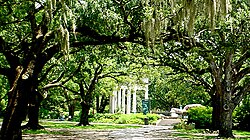
Key Facts
- Location: New Orleans, Louisiana.
- Core Facilities: Includes a zoo, aquarium, nature center, and multiple public parks.
- Historical Roots: Audubon Park was once the site of the nation's first commercial sugar plantation.
- Conservation Focus: Operates specialized centers for endangered species research and survival.
- Resilience: Successfully recovered from devastating physical and financial losses following Hurricane Katrina in 2005.
The Evolution of Audubon Park
The origins of the institute began with Audubon Park. Long before it became a public sanctuary, the land was home to Native Americans and later served as the site of the first commercial sugar plantation in the United States, founded by New Orleans' first mayor, Étienne de Boré. This plantation utilized a granulated sugar process invented by Norbert Rillieux, a local free man of color.
The property transitioned to public ownership in 1850 via a philanthropic will. Throughout the US Civil War, the land served as both a Union hospital and a Confederate military camp. In 1866, it became the activation site for the 9th Cavalry Regiment, known as the Buffalo Soldiers, who played a significant role in defending the western frontier.
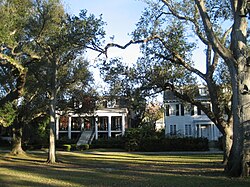
The park's modern identity began to take shape during the World's Industrial and Cotton Centennial Exposition of 1884. Originally called Upper City Park, it was renamed Audubon Park in 1886 to honor John James Audubon, the naturalist and artist famous for his Birds of America series. By the turn of the century, the landscape was transformed from swamp land into a scenic retreat by John Charles Olmsted, whose family firm designed New York City's Central Park.
From a Community Zoo to a Global Conservation Hub
The transition toward animal care began in 1914 with the establishment of the Audubon Commission. Following the success of a flight cage added in 1916, the New Orleans Zoological Society was formed to build a full-scale zoo. Early additions included mammal and monkey cages, and in 1924, Louisiana schoolchildren funded the purchase of the zoo's first elephant.
During the Great Depression, the Works Progress Administration (WPA)—a federal agency providing employment and infrastructure—funded new buildings. This era saw the 1938 opening of the Merz Memorial Zoo, thanks to a $50,000 bequest from Valentine Merz.
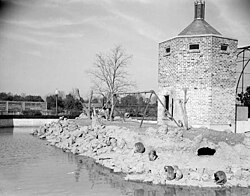
Despite early growth, the zoo faced a period of decline between the 1950s and 1970s due to dwindling funds and deteriorating facilities. However, a 1972 referendum generated nearly $2 million in bonds for restoration. Under the vision of Ron Forman, the zoo expanded to 58 acres, replacing cages with sweeping natural habitats that mirror the African Savanna, North American Grasslands, and South American Pampas.
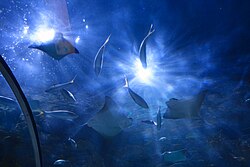
The institute continued to grow with the opening of Woldenberg Park in 1989 and the Audubon Aquarium in 1990. In the following decade, the aquarium added a theater and a Changing Exhibits Gallery.
Overcoming Adversity and Modern Conservation
The 2005 landfall of Hurricane Katrina brought unprecedented challenges. The storm caused massive physical destruction and eliminated all operating revenues, leading to the layoff of nearly 600 employees. Despite the crisis, aquarium staff remained on-site during the flooding to care for the animals.
In the aftermath, the institute remained active in public education, serving as the executive producer for the 2006 IMAX film Hurricane on the Bayou. Today, while no longer part of the National Wetlands Coalition, the institute maintains a role as a cooperating organization with America's Wetland Campaign, supported by various energy companies including Shell Oil, Citgo, ConocoPhillips, and British Gas.
Summary of Audubon Nature Institute Facilities
| Facility Name | Primary Focus |
|---|---|
| Audubon Zoo | Wildlife exhibition and natural habitats |
| Audubon Aquarium | Marine life and aquatic ecosystems |
| Audubon Park | Urban recreation and historical landscape |
| Woldenberg Riverfront Park | Public waterfront access and recreation |
| ACRES & Species Survival Center | Endangered species research and conservation |
| Audubon Louisiana Nature Center | Local ecology and nature education |
Frequently Asked Questions
Who was the park named after?
The park is named after John James Audubon, a renowned artist and naturalist who painted many of his famous Birds of America while in Louisiana.
What is the significance of the Buffalo Soldiers at Audubon Park?
In 1866, Audubon Park served as the activation site for the 9th Cavalry Regiment, the Buffalo Soldiers, who are celebrated for their role in defending the U.S. western frontier.
How did the WPA contribute to the zoo?
The Works Progress Administration (WPA) provided federal funding for the construction of new zoo buildings during the 1930s when private donations had ceased due to the Great Depression.
How did Hurricane Katrina affect the institute?
Hurricane Katrina caused substantial physical damage, wiped out operating revenues, and resulted in the layoff of nearly 600 employees, though staff stayed to protect the animals.
What are the current conservation efforts of the institute?
The institute focuses on endangered species through the Audubon Center for Research of Endangered Species (ACRES) and the Freeport-McMoRan Audubon Species Survival Center.