Argentina 1916 Presidential Election: The Dawn of Democratic Rule
On April 2, 1916, Argentina underwent a seismic political shift. For the first time in the nation's history, citizens participated in a mandatory presidential election conducted via secret ballot. This landmark event marked the end of six decades of dominance by the National Autonomist Party (PAN) and ushered in an era of pluralism and democratic competition.
The victory of the Radical Civic Union (UCR) was not merely a change in leadership, but the culmination of a long struggle for electoral transparency and the inclusion of the broader populace in the governing process.
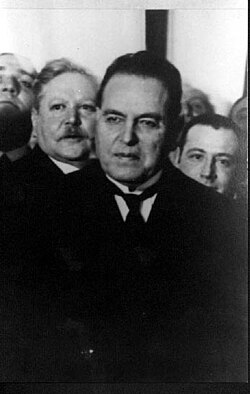
The Path to Reform: The Sáenz Peña Law
The transition to a fairer system was made possible by the Sáenz Peña Law of 1912. Passed by President Roque Sáenz Peña despite fierce opposition from his own social class and conservative members of Congress, this law mandated universal male suffrage and the secret ballot.
This reform was a pivotal agreement between President Sáenz Peña and Hipólito Yrigoyen, the leader of the Radical Civic Union. In exchange for these democratic guarantees, Yrigoyen ended a twenty-year boycott of the electoral system. The effectiveness of the law was first glimpsed in the 1914 mid-term elections, where the UCR secured 19 of 60 Lower House seats and the governorship of Santa Fe Province.
The 1916 Campaign and Candidates
As the 1916 election approached, the political landscape was fragmented. The once-dominant PAN had split into several factions, including the Conservative Party and the Democratic Progressive Party. Meanwhile, the Socialist Party, led by Juan B. Justo, emerged as a significant voice for reform.
Hipólito Yrigoyen campaigned as a champion of the marginalized, pledging to donate his presidential salary to charity and positioning himself as "the father of the poor." His opposition was divided: the Conservatives fielded Ángel Rojas, the Governor of San Juan, while the reformist Democratic Progressive Party was led by Lisandro de la Torre.
Key Political Figures
- Hipólito Yrigoyen (UCR): A populist leader from Buenos Aires who advocated for free elections.
- Ángel Rojas (Conservative): Governor of San Juan, chosen to appeal to moderate and rural voters.
- Lisandro de la Torre (PDP): A reformist publisher and Deputy from Santa Fe.
- Juan B. Justo (Socialist): A prominent Deputy from Buenos Aires.
Election Results and the Electoral College
The general election saw a turnout of approximately 63% for the presidency and 65% for the Chamber of Deputies. While Yrigoyen won a decisive share of the popular vote, the final result was determined by the Electoral College, consisting of 300 members.
The process was fraught with tension. Yrigoyen initially secured 133 electors, falling short of the 151 needed for an outright win. However, strategic shifts among electors—including support from the dissident UCR chapter in Santa Fe—eventually pushed Yrigoyen to 152 electoral votes, making him the first democratically elected President of Argentina.
| Candidate | Party | Popular Vote | Percentage | Electoral Votes |
|---|---|---|---|---|
| Hipólito Yrigoyen | UCR | 340,802 | 47.25% | 152 |
| Ángel Rojas | Conservative | 150,245 | 20.83% | 104 |
| Lisandro de la Torre | PDP | 135,308 | 18.76% | 20 |
Legislative Impact: The Chamber of Deputies
The election also reshaped the legislative branch. The Radical Civic Union secured 62 of the 120 seats in the Chamber of Deputies, significantly weakening the Conservative Concentration, which saw its seat count drop by nine. This gave the UCR a strong mandate to implement its agenda.
Key Facts
- First Free Election: The 1916 election is recognized as the first free and fair presidential election in Argentina.
- Secret Ballot: It was the first time the nation used a secret ballot for a presidential contest.
- UCR Victory: The Radical Civic Union ended 60 years of National Autonomist Party (PAN) dominance.
- Turnout: Voter turnout was approximately 63% for the presidency and 65% for the Chamber of Deputies.
- Legal Basis: The election was governed by the 1912 Sáenz Peña Law, which established universal male suffrage.
Frequently Asked Questions
What was the significance of the Sáenz Peña Law?
The Sáenz Peña Law of 1912 was critical because it mandated universal male suffrage and the secret ballot, removing the fraud and intimidation that had characterized previous elections under the National Autonomist Party.
Who was Hipólito Yrigoyen?
Hipólito Yrigoyen was the leader of the Radical Civic Union (UCR) and became the first democratically elected President of Argentina in 1916 after years of advocating for electoral reform.
How did the Electoral College work in 1916?
The Electoral College consisted of 300 members. A candidate needed 151 votes to win. Yrigoyen eventually secured 152 votes, aided by electors from the dissident UCR in Santa Fe.
Which party previously dominated Argentine politics?
The National Autonomist Party (PAN) had dominated Argentine politics for six decades prior to the 1916 election.
What was the result for the Chamber of Deputies?
The UCR won a majority, securing 62 of the 120 seats, while the Conservative Concentration suffered a loss of 9 seats.