President of Argentina
The President of the Argentine Nation serves as both the head of state and the head of government for Argentina. As the chief executive of the federal government and the commander-in-chief of the armed forces, the president wields significant authority over the nation's administration and security. The current incumbent, Javier Milei, assumed office on December 10, 2023, succeeding Alberto Fernández.
The office is governed by the Constitution of Argentina (1853), which defines the requirements for election, the scope of presidential powers, and the duration of the term. From its early origins in the 19th century to the modern democratic era, the presidency has evolved through various constitutional reforms and periods of political instability.
Key Facts
- Current President: Javier Milei (since December 10, 2023).
- Term Length: Four years, renewable once consecutively.
- Official Seat: Casa Rosada, Buenos Aires.
- Official Residence: Quinta presidencial de Olivos.
- Election Method: Direct popular vote using a modified two-round system (ballotage).
- Role: Head of State, Head of Government, and Commander-in-Chief.
Historical Evolution of the Presidency
The roots of Argentine governance date back to 1776 with the creation of the Viceroyalty of the Río de la Plata. Following the May Revolution of 1810, the country experimented with various autonomous governments, including the Primera Junta and subsequent Triumvirates. While these early bodies had presidents, the King of Spain was still nominally the head of state.
The first formal move toward a single executive occurred in 1813 with the creation of the Supreme Director. However, it was not until the Constitution of 1826 that the title of "President" was officially established. Bernardino Rivadavia became the first holder of this office, though his tenure was short-lived due to the Cisplatine War.
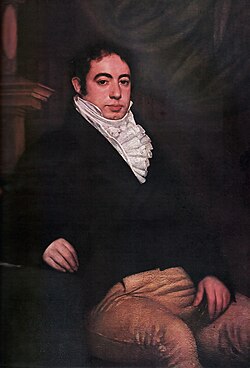
Following a period of civil war between the unitarios (centralists from Buenos Aires) and federalists, the current Constitution was drafted in 1853. This established a national federal government. Historians often debate who the "first" president was: Rivadavia (first to use the title), Justo José de Urquiza (first under the 1853 constitution), or Bartolomé Mitre (first president of the unified country within its current borders).
The 20th century was marked by several military coups (1930, 1943, 1955, 1962, 1966, and 1976). During these periods, military juntas or chiefs assumed power. The modern Argentine government considers certain military leaders, such as Jorge Rafael Videla and Leopoldo Fortunato Galtieri, as illegitimate presidents, denying them presidential pensions.
Powers and Constitutional Duties
Under Article 99 of the Constitution, the president is politically responsible for the general administration of the country. Key powers include:
- Executive Administration: Issuing regulations necessary to execute national laws.
- Appointments: Appointing and removing the Chief of Cabinet Ministers, other cabinet ministers, and ambassadors (the latter with Senate approval).
- Military Command: Serving as the highest-ranked officer and commander-in-chief of all armed forces.
- Legislative Interaction: Attending the annual opening session of Congress to deliver the state of the nation address and recommending necessary measures.
- Administrative Authority: Granting pensions, retirements, and licenses according to national law.
A unique cultural tradition, which became law in 1974, designates the president as the godfather for the seventh son or daughter of a family.
Election Requirements and Term Limits
To be eligible for the presidency, a candidate must be born in Argentine territory or be the child of a native citizen born abroad. Additionally, they must meet the requirements for a senator: being at least 30 years old, a citizen for six years, and a native or resident of the province electing them.
The Ballotage System
Argentina uses a modified two-round system known as ballotage. A candidate wins in the first round if they receive more than 45% of the positive votes (valid votes excluding blank or spoiled ballots), or at least 40% if they are more than 10 percentage points ahead of the runner-up. If neither condition is met, a second round is held two weeks later between the top two candidates.
Term Duration
Following the 1994 constitutional amendment, the presidential term is four years. Presidents may be re-elected once consecutively. After serving two consecutive terms, a person must wait one full term before running again. Notably, the 1994 reform also removed the previous requirement that the president and vice president be Roman Catholic.
Office Privileges and Logistics
| Feature | Details |
|---|---|
| Official Workplace | Casa Rosada (Buenos Aires) |
| Official Residence | Quinta presidencial de Olivos |
| Summer Residence | Presidential Unit Chapadmalal |
| Monthly Salary | ARS $4,066,018 (as of January 2026) |
| Primary Aircraft | Boeing 757-200 (ARG-01) |
The president is supported by the Presidential Guard for security and utilizes a fleet of aircraft for official travel. This includes the ARG-01 (a VIP Boeing 757), Fokker F28s, a Learjet 60, and various Sikorsky helicopters.
Succession and De Facto Governments
The Vice President is the primary successor in the event of the president's death, resignation, or removal. If both the president and vice president are absent, the "Acephaly Law" (Law 20,972) dictates a temporary succession order: the provisional president of the Senate, followed by the president of the Chamber of Deputies, and finally the president of the Supreme Court.
To prevent the legalization of power seizures, Article 36 of the Constitution (added in 1994) declares any acts of force against the democratic system as "irreparably null." Those who assume power through such means are punished as traitors and are permanently disqualified from holding public office.
Frequently Asked Questions
How long is the term of the Argentine president?
The president serves a four-year term and can be re-elected once consecutively.
What is the "ballotage" system?
It is a two-round voting system where a second runoff election is held if no candidate meets the specific percentage thresholds (45% total or 40% with a 10-point lead) in the first round.
Who is the commander-in-chief of the Argentine armed forces?
The President of the Argentine Nation holds the position of commander-in-chief and is the highest-ranked officer in the military.
What happens if both the president and vice president are unable to serve?
Temporary power is exercised by the provisional president of the Senate, then the president of the Chamber of Deputies, and then the president of the Supreme Court. For permanent vacancies, the National Congress Assembled elects a new president from among senators, deputies, and governors.
Where does the president of Argentina work and live?
The official workplace is the Casa Rosada in Buenos Aires, while the official residence is the Quinta presidencial de Olivos.