Archenteron: The Formation of the Primitive Gut
In the early stages of embryonic development, a critical transformation occurs that sets the foundation for an animal's digestive system. This process centers on the creation of the archenteron, also known as the gastrocoel. The archenteron is the internal cavity formed during gastrulation—the phase where a simple blastula rearranges into a multi-layered structure—which eventually evolves into the cavity of the primitive gut.
Key Facts
- The archenteron is the embryonic precursor to the digestive tract.
- It forms during the gastrulation stage of development.
- The opening of the archenteron is known as the blastopore.
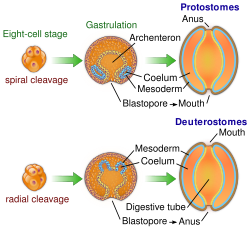
- In protostomes, the blastopore becomes the mouth; in deuterostomes, it becomes the anus.
- Formation involves processes called invagination and convergent extension.
The Process of Formation in Sea Urchins
Sea urchins provide a clear model for understanding how the archenteron develops. The process begins when primary mesenchyme cells detach from the vegetal pole (the bottom end of the embryo) and move into the blastocoel, which is the fluid-filled central cavity of the embryo.
As these cells migrate, the remaining cells at the vegetal pole flatten to create a vegetal plate. This plate then buckles inward toward the blastocoel through a process called invagination. As the cells continue to rearrange, the shallow dip created by invagination transforms into a deeper, narrower pouch composed of the endoderm (the innermost germ layer).
This pouch further narrows and lengthens via convergent extension—a process where cells crawl between one another to elongate the tissue—to officially become the archenteron. The open end of this structure is termed the blastopore.
In the final stages of gastrulation, the mesenchyme cells produce thin fibers called filopodia. These fibers contract, effectively dragging the tip of the archenteron across the blastocoel until the endoderm of the archenteron fuses with the ectoderm (the outermost layer) of the blastocoel wall. Once this fusion is complete, the embryo possesses a functional digestive tube.
Comparative Development Across Species
While the basic mechanism of forming a primitive gut is shared, the specific structures and outcomes vary across different animal groups. The initial indentation that forms the gut is referred to by different names depending on the species:
- Amphibians and Fish: The indentation is called the lip of the blastopore or the dorsal lip.
- Birds and Mammals: The structure is known as the primitive streak, which is controlled by the primitive node (also called Hensen's node).
A fundamental distinction in animal evolution is determined by the fate of the blastopore. In protostomes, the blastopore develops into the mouth. Conversely, in deuterostomes, the blastopore develops into the anus.
| Feature/Group | Protostomes | Deuterostomes |
|---|---|---|
| Blastopore Fate | Becomes the mouth | Becomes the anus |
| Key Structure | Archenteron (Primitive Gut) | Archenteron (Primitive Gut) |
| Formation Process | Gastrulation | Gastrulation |
Frequently Asked Questions
What is the archenteron?
The archenteron, or gastrocoel, is the internal cavity formed during the gastrulation stage of embryonic development that eventually becomes the primitive gut of the organism.
What is the difference between a protostome and a deuterostome?
The difference lies in the development of the blastopore (the opening of the archenteron). In protostomes, the blastopore becomes the mouth, while in deuterostomes, it becomes the anus.
What is invagination in embryonic development?
Invagination is the process where a sheet of cells (such as the vegetal plate in sea urchins) buckles inward to create a pouch or cavity within the embryo.
What role do filopodia play in sea urchin development?
Filopodia are thin fibers formed by mesenchyme cells that contract to pull the tip of the archenteron across the blastocoel, allowing it to fuse with the blastocoel wall and complete the digestive tube.
How does the archenteron form in mammals compared to sea urchins?
While sea urchins use a vegetal plate and invagination, mammals and birds utilize a structure called the primitive streak, controlled by the primitive node (Hensen's node), to initiate the process.