Anushtakin al-Dizbari: The Rise and Fall of the Fatimid Governor of Syria
The history of the 11th-century Levant is marked by the shifting loyalties of Bedouin tribes and the ambitions of military commanders. Among the most striking figures of this era was Anushtakin al-Dizbari, an ethnic Turk who rose from the status of an enslaved youth to become the most powerful governor in the history of the Fatimid Caliphate's Syrian territories.
Anushtakin's journey is a classic example of the ghulam system—a practice where enslaved soldiers were trained in martial arts and administration to serve as loyal elites for the Caliph. His career spanned several critical provinces, including Palestine, Damascus, and Aleppo, culminating in a brief period where he achieved the unprecedented feat of ruling all of Syria under a single Fatimid administration.
Key Facts
- Origins: Born in Transoxiana, sold into slavery in Damascus in 1009.
- Peak Power: The only Fatimid governor to rule all of Syria simultaneously.
- Military Achievement: Routed the Tayy and Kilab tribes at the Battle of al-Uqhuwana in 1029.
- Wealth: Left a fortune of 600,000 gold dinars and 200,000 dinars-worth of grain upon his death.
- Final Refuge: Died in the Citadel of Aleppo in January 1042.
From Slavery to Military Command
Anushtakin was born in Transoxiana and sold in Damascus in 1009 to a Daylamite officer named Dizbar ibn Awnim. By 1012, he entered the service of Caliph al-Hakim in Cairo, where he trained in the hujra (military barracks). Known for his martial talent and a somewhat arrogant demeanor toward his peers, he completed his training quickly and was manumitted (freed) by 1014/15.
His early administrative career began in Ba'albek and Caesarea between 1017 and 1023, where he gained a deep understanding of Syrian politics and amassed significant wealth.
The Struggle for Palestine
In 1023, Anushtakin was appointed military governor of Palestine. His primary challenge was the Jarrahids, a powerful clan of the Banu Tayy Bedouins who frequently plundered the region. Anushtakin initially miscalculated their strength; a conflict over tax collection in Bayt Jibrin led to a series of defeats, including a retreat to Ramla and the sacking of the city by Bedouin forces.
Despite these failures, he was named amir al-umara (commander of commanders), the first person to hold this title under the Fatimids. However, political pressure from the Jarrahids eventually led to his recall and imprisonment in Cairo in 1026.
The Reconquest of Syria
Anushtakin's fortunes shifted in 1028 when Vizier Ali al-Jarjara'i dispatched him with an army of 7,000 men to suppress the Tayy and Kilab tribes. In May 1029, Anushtakin achieved a decisive victory at the Battle of al-Uqhuwana near Lake Tiberias, killing the Mirdasid emir Salih ibn Mirdas.
This victory allowed the Fatimids to reclaim key fortresses, including Sidon, Baalbek, and Homs. Establishing his headquarters in Damascus, Anushtakin solidified his power through strategic alliances, most notably by marrying the daughter of Rafi ibn Abi'l Layl, a leader of the Kalb tribe.
The Conquest of Aleppo
The rise of Anushtakin eventually alarmed Vizier al-Jarjara'i, who feared the governor's growing independence. The Vizier attempted to weaken him by fostering conflict between Anushtakin and the Mirdasid emir of Aleppo, Shibl al-Dawla Nasr.
After securing a diplomatic agreement with the Byzantine Emperor Michael IV to ensure the continued payment of tribute, Anushtakin marched on Aleppo. On May 22, 1038, at Tell al-Fas, Anushtakin defeated and killed Nasr. Shortly thereafter, he captured Aleppo, marking the first and only time a single Fatimid governor ruled the entirety of Syria.
Downfall and Legacy
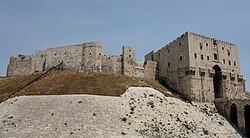
Anushtakin's triumph was short-lived. A mutiny in Damascus, engineered by al-Jarjara'i, forced him to flee his palace. After being denied entry to Ba'albek and Hama, he found refuge in the Citadel of Aleppo. Branded a traitor by the central government and suffering from severe fatigue, he died in January 1042.
Despite the accusations of betrayal, Caliph al-Mustansir later honored him in 1057 by relocating his body to Jerusalem with a state funeral procession.
Summary of Anushtakin's Career
| Period | Role/Position | Key Region | Outcome |
|---|---|---|---|
| 1017–1022 | Governor | Baalbek | Gained wealth and local renown |
| 1023–1026 | Military Governor | Palestine | Conflict with Jarrahids; imprisoned in Cairo |
| 1029–1041 | Governor | Damascus | Consolidated Fatimid rule over Syria |
| 1038–1041 | Governor | Aleppo | Unified all of Syria under one governor |
Patronage and Wealth
Anushtakin was not only a soldier but a shrewd businessman. He earned his fortune through tax farms in Egypt, maritime trade, and war spoils. He used this wealth to fund Islamic law colleges, mosques, and bridges in his ancestral homeland of Transoxiana, signaling his transition from a slave to a powerful statesman.
Frequently Asked Questions
Who was Anushtakin al-Dizbari?
He was an ethnic Turk and former ghulam (slave soldier) who rose to become a prominent Fatimid governor, eventually ruling all of Syria from 1038 to 1041.
What was the significance of the Battle of al-Uqhuwana?
Fought in 1029 near Lake Tiberias, this battle resulted in the defeat of the Tayy and Kilab tribes and the death of Salih ibn Mirdas, paving the way for the Fatimid reconquest of Syria.
Why did Anushtakin flee to the Citadel of Aleppo?
He fled after a military mutiny in Damascus, which was orchestrated by Vizier al-Jarjara'i, who viewed Anushtakin's political ambitions as a threat to the central government.
How did Anushtakin manage to capture Aleppo?
He secured the blessing of the Byzantine Emperor Michael IV by promising to maintain the city's tribute and formed alliances with local Bedouin tribes before defeating Emir Nasr at Tell al-Fas.
What happened to Anushtakin after his death?
Although he died under a cloud of accusations of treachery, Caliph al-Mustansir later honored him in 1057 by moving his remains to Jerusalem for a state burial.