Animal Domestication: The Genetic and Evolutionary Journey from Wild to Domestic
The relationship between humans and vertebrates is one of the most transformative partnerships in biological history. Domestication is the mutual relationship between vertebrate animals—including mammals and birds—and the humans who influence their care and reproduction. Unlike a simple friendship or a temporary arrangement, domestication represents a permanent genetic shift that alters the very nature of a species.
This process is not accidental. It is driven by a combination of environmental pressures and human selection, leading to a distinct genetic divergence between wild populations and their domestic descendants.
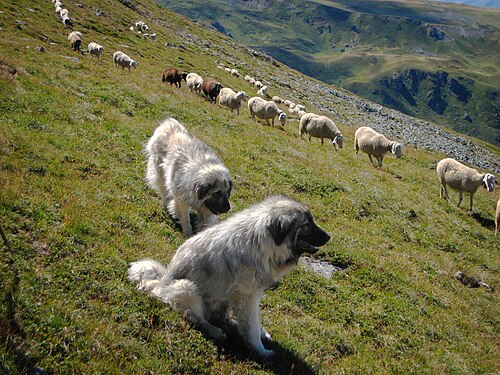
Key Facts
- Domestication vs. Taming: Domestication is a permanent genetic modification of a lineage; taming is a behavioral modification of a single wild-born individual.
- First Domesticate: The domestic dog (Canis lupus familiaris) was the first species domesticated, appearing at least 15,000 years ago.
- Environmental Triggers: Climatic shifts after the Last Glacial Maximum (approx. 21,000 years ago) and the Younger Dryas (12,900 years ago) pressured humans to intensify food procurement.
- Selection Types: Charles Darwin identified both conscious selective breeding (artificial selection) and unconscious selection (traits evolving as by-products).
- Domestication Syndrome: A set of universal physical and behavioral traits that appear across various domesticated species.
The Science of Domestication
Domestication vs. Taming
It is common to confuse taming with domestication, but they operate on entirely different biological levels. Taming is a conditioned behavioral change where a wild animal's natural avoidance of humans is reduced. In contrast, domestication is a genetic process. It creates an inherited predisposition toward humans that is passed down through generations.
The Domestication Syndrome
Researchers have identified a "domestication syndrome," a suite of traits that frequently appear when a species is domesticated. These include changes in brain size, function, and physical appearance. A notable example is neoteny, the retention of juvenile traits into adulthood, which often results in a reduction of skull size.
![Traits used to define the animal domestication syndrome[29]](/images/35/51/3551ab9a4dfd21e4933d56854c4b5f332bfad0b9749b8ca5ba5fdb07e5d4e200.jpg)
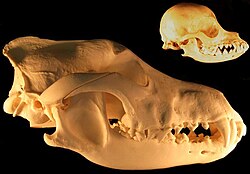
Genetic Distinctions: Domestication vs. Improvement
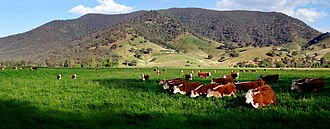
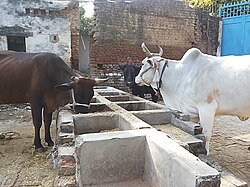
Not all genetic changes occur at the same time. Scientists distinguish between domestication traits and improvement traits. Domestication traits were selected during the initial episode of domestication and are generally fixed across all members of the species. Improvement traits appear later and are typically found only in specific breeds or regional populations, such as cattle bred specifically for beef or dairy.
History and Timing
The journey toward domestication was triggered by extreme climatic instability. Following the peak of the Last Glacial Maximum around 21,000 years ago, food became harder to obtain. The Younger Dryas, a period of intense cold and aridity 12,900 years ago, further forced humans to intensify their foraging strategies.
By the start of the Holocene (11,700 years ago), favorable conditions and growing human populations led to small-scale domestication. This allowed humans to supplement their hunter-gatherer diets with more reliable food sources.
![Evolution of temperatures in the postglacial period, after the Last Glacial Maximum, showing very low temperatures for the most part of the Younger Dryas, rapidly rising afterwards to reach the level of the warm Holocene, based on Greenland ice cores.[37]](/images/34/c0/34c0c01fc68d6c4a5d3bf72807604d52fe2a7bf88e12b481d03211e3a7e13777.jpg)
The Commensal Pathway
The grey wolf likely followed the commensal pathway, where animals first associate with humans for food scraps before being intentionally bred. While genetic divergence between dogs and wolves may have occurred 20,000–40,000 years ago, the most widely accepted early dog remains, such as the Bonn–Oberkassel dog, date back 15,000 years.
Around 11,000 years ago, people in the Near East began developing relationships with wild populations of boar, sheep, goats, and aurochs.
![Origin and dispersal of domestic livestock species in the Fertile Crescent (dates Before Present).[36]](/images/dc/ce/dcce908941572e63c25063b477c6ef2968835f53935ab8b91ac5f9317e928ffb.png)
What Makes a Species Domesticable?
Not every animal is a candidate for domestication. Certain behavioral and social characteristics make some species more suitable than others:
- Social Structure: The size and organization of their existing social groups.
- Mating Habits: The availability and selectivity in choosing mates.
- Parental Bonding: The speed of bonding between parents and young, and the mobility of the young at birth.
- Flexibility: Tolerance for different diets and habitats.
- Reactivity: Their flight response and general reaction to new environments and humans.
![Pig herding in fog, Armenia. Human selection for domestic traits is not affected by later gene flow from wild boar.[27][28]](/images/a2/68/a26871cf55c27ab4c49d2ae5c01d005bfb04f05428fd8f38fcf1493ada6f2437.jpg)
Summary of Animal Classifications
To understand the spectrum of human-animal relationships, it is helpful to categorize animals based on their genetic and behavioral status.
| Category | Description |
|---|---|
| Wild Animals | Animals living in nature with no human-induced genetic modification. |
| Captive Wild Animals | Wild animals kept by humans; they may be tamed but remain genetically wild. |
| Domestic Animals | Animals with permanent genetic modifications inherited over generations. |
| Cross-breed Animals | Offspring of different breeds or species. |
| Feral Animals | Domestic animals that have returned to a wild state. |
Frequently Asked Questions
What is the main difference between taming and domestication?
Taming is a behavioral change in an individual animal that reduces its fear of humans. Domestication is a genetic change in a population that creates an inherited predisposition toward humans.
Which animal was the first to be domesticated?
The domestic dog (Canis lupus familiaris), descended from the grey wolf, is considered the first domesticate, appearing at least 15,000 years ago.
What is the "domestication syndrome"?
It is a set of universal traits—such as reduced brain size, changes in coat color, and juvenile physical features (neoteny)—that appear across many different domesticated species.
How did climate change influence domestication?
Environmental shifts after the Last Glacial Maximum and during the Younger Dryas made food scarce, pressuring humans to move from simple hunting and gathering to the intensification of food sources through domestication.
What is the difference between domestication traits and improvement traits?
Domestication traits are the fundamental changes that occurred during the initial split from the wild ancestor and are found in all domesticates. Improvement traits are later modifications selected for specific purposes (like beef production) and are only found in certain breeds.