Aníbal Troilo: The Supreme Bandoneón of Buenos Aires
In the heart of Buenos Aires, the sound of the bandoneón—a concertina-like instrument central to the soul of tango—found its most expressive voice in Aníbal Carmelo Troilo. Known affectionately as "Pichuco," Troilo was not merely a musician; he was a composer, arranger, and bandleader who defined the sonic landscape of Argentina's golden age of tango.
From his early days in the Abasto neighborhood to his status as a national icon, Troilo's career mirrored the evolution of tango itself, transitioning from the rhythmic energy of the dance halls to the sophisticated depths of the concert stage.
Key Facts
- Full Name: Aníbal Carmelo Troilo (nicknamed "Pichuco").
- Role: Bandoneon player, composer, and orchestra director.
- Golden Age: Led one of the most popular orquestas típicas (traditional tango orchestras) between 1940 and 1955.
- Legacy: July 11 is celebrated as National Bandoneón Day in Argentina in his honor.
- Key Collaborators: Worked with Astor Piazzolla, Roberto Goyeneche, and poet Homero Manzi.
Early Life and Musical Beginnings
Born on July 11, 1914, in the Abasto district of Buenos Aires, Troilo was immersed in music from a young age. His nickname, "Pichuco," derived from the Neapolitan word picciuso, meaning "weepy" or "crybaby." This emotional sensitivity would later translate into the poignant melodies of his music.
Troilo's obsession with the bandoneón began in the local bars of his neighborhood. At age 10, he convinced his mother to buy him his first instrument, which he played for the rest of his life. A child prodigy, he gave his first public performance in a bar at age 11 and formed his first quintet by the age of 14.
Despite his musical pursuits, he attended the prestigious Escuela Superior de Comercio Carlos Pellegrini, one of Latin America's most renowned high schools, completing three years of study.
The Rise of a Tango Legend
Troilo's professional ascent began in December 1930 when he joined the Vardaro-Pugliese sextet, playing alongside luminaries like Osvaldo Pugliese and Elvino Vardaro. He further honed his craft by performing in the orchestras of Juan "Pacho" Maglio, Julio de Caro, Juan d'Arienzo, Angel D'Agostino, and Juan Carlos Cobián.
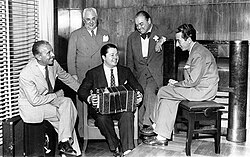
Eventually, Troilo established his own orchestra. During the golden age of tango (1940–1955), his orquesta típica became a favorite among social dancers. He is particularly remembered for his milongas—rhythmic, upbeat tangos—recorded with vocalist Francisco Fiorentino between 1941 and 1943.
Collaborations and Evolution
Troilo's influence extended to other greats of the genre. Between 1939 and 1944, the legendary Astor Piazzolla served as a player and arranger for Troilo's orchestra. The two also recorded a bandoneon duo for the songs "El motivo" and "Volver."
As the 1950s progressed, Troilo shifted his sound from the dance floor to the concert hall. He explored smaller ensembles, including a duo with guitarist Roberto Grela from 1953 to the mid-60s, which evolved into the Troilo-Grela Quartet. In 1968, he formed the Aníbal Troilo Quartet, featuring Ubaldo de Lío, Osvaldo Berlingieri (later replaced by José Colángelo), and Rafael del Bagno.
Personal Loss and Final Years
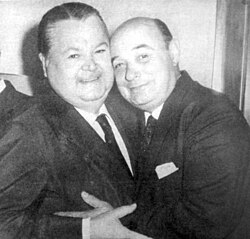
The music of Troilo was deeply intertwined with his personal relationships. The death of his closest friend, the poet Homero Manzi, in 1951 plunged Troilo into a deep depression for over a year. In a touching tribute to his friend, he composed the tango Responso.
Troilo continued to perform and record until his death on May 18, 1975, following a stroke and cardiac arrest at the Italian Hospital of Buenos Aires. He was laid to rest in the "Rincón de los Notables" (Famous Corner) of the La Chacarita cemetery, alongside fellow icons Agustín Magaldi and Roberto Goyeneche.
Musical Legacy and Compositions
Troilo's discography is vast, spanning 78 rpm records, LPs, and CDs. His work with vocalists like Roberto Goyeneche and Edmundo Rivero remains essential listening for tango enthusiasts. His compositions, such as "Barrio de tango," "Sur," and "Che, bandoneón," are considered masterpieces of the genre.
| Category | Details |
|---|---|
| Primary Instrument | Bandoneón |
| Key Era | Golden Age of Tango (1940–1955) |
| Notable Works | "Sur", "Barrio de tango", "Responso" |
| Major Collaborators | Astor Piazzolla, Homero Manzi, Roberto Grela |
| National Honor | National Bandoneón Day (July 11) |
Frequently Asked Questions
Why was Aníbal Troilo called "Pichuco"?
The nickname was given to him by his father. It is a variation of the Neapolitan word "picciuso," which means "weepy" or "crybaby."
What is the significance of July 11 in Argentina?
In 2005, the National Congress of Argentina declared July 11—Troilo's birthday—as National Bandoneón Day to honor his contributions to music.
How did Troilo's musical style change over time?
During the golden age (1940–1955), his orchestra focused on rhythmic instrumentals and milongas popular with social dancers. By the late 1950s, he transitioned toward a more refined concert sound.
Who was Homero Manzi and how did he influence Troilo?
Homero Manzi was a poet and Troilo's best friend. Their collaboration produced several classic tangos, and Manzi's death inspired Troilo to compose the piece "Responso."
Did Aníbal Troilo work with Astor Piazzolla?
Yes, Astor Piazzolla played in and arranged for Troilo's orquesta típica from 1939 to 1944, and the two later recorded as a bandoneon duo.