Android Evolution: From Science Fiction Concepts to Real-World Humanoid Robots
An android is a humanoid robot or artificial being designed to resemble a human, often constructed using flesh-like materials. While once confined to the imaginative realms of science fiction, rapid advancements in robotics have transitioned these beings from the silver screen into physical reality.
To understand the modern landscape of robotics, it is helpful to distinguish between two primary types: the golem type, which utilizes flexible or organic materials, and the automaton type, which is typically composed of a mix of mechanical and living-like parts.
The History and Terminology of Androids
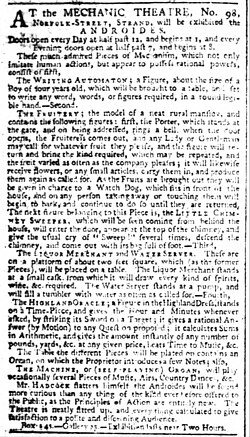
The concept of the artificial human has deep historical roots. The Oxford English Dictionary traces the earliest use of the term "Androides" to Ephraim Chambers' 1728 Cyclopaedia, referring to an automaton allegedly created by St. Albertus Magnus. By the late 1700s, elaborate mechanical devices known as "androides" were common attractions in exhibit halls.
As technology progressed, the terminology evolved:
- 1863: The term "android" appeared in US patents to describe miniature, human-like toy automatons.
- 1886: French author Auguste Villiers de l'Isle-Adam used the term in a modern sense in his work Tomorrow's Eve, featuring a humanoid named Hadaly.
- 1930s-40s: Science fiction authors like Jack Williamson and Edmond Hamilton helped popularize the distinction between mechanical robots and fleshy androids.
- Pop Culture: The term "droid" was popularized by George Lucas in Star Wars as an abbreviation of android, though it is now used for various non-humanoid robot forms.
Global Milestones in Humanoid Robotics
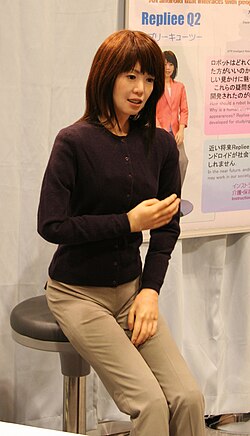
Different nations have led the charge in developing sophisticated humanoid technology, with Japan, South Korea, and the United States making significant contributions.
Japan: The Leader in Humanoid Research
Japanese robotics has been at the forefront since the 1970s. Waseda University achieved a major milestone in 1972 with WABOT-1, the first full-scale humanoid intelligent robot. It featured a limb control system for walking and gripping, an artificial vision system, and a conversation system capable of communicating in Japanese.
Subsequent developments include:
- WABOT-2 (1984): An improved model capable of reading music and playing the organ with ten fingers.
- DER2 (2006): Developed by Kokoro, this android features an "air servosystem" for fluid, quiet movement and can choreograph gestures to match its voice.
- WD-2: A shape-shifting robot created by Waseda University and NTT docomo that uses an elastic mask made of Septom to change facial expressions.
South Korea: Emotional Expression and Social Integration
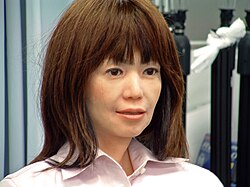
South Korean researchers have focused heavily on interpersonal communication. KITECH developed EveR-1, an android designed to emulate human emotions. Standing 160 cm tall, EveR-1 uses synthetic jelly silicon and 60 artificial facial joints to sing, dance, and engage in rudimentary conversation.
The South Korean government has also pursued ambitious social goals, including plans for "robot cities" and the establishment of a Robotics Ethics Charter to govern human-robot interactions and prevent abuse.
United States: AI and Iconic Representations
In the US, robotics has spanned from entertainment to advanced AI. Walt Disney's Imagineers created the famous Great Moments with Mr. Lincoln at the 1964 World's Fair. More recently, Dr. William Barry introduced Maria Bot, the first AI Android Teaching Assistant at the university level.
Hanson Robotics and KAIST also produced Albert Hubo, the first full-body walking android featuring a portrait of Albert Einstein. Additionally, a conversational android modeled after author Philip K. Dick won a first-place AI award from AAAI in 2005.
Summary of Key Android Milestones
| Project Name | Origin | Key Feature |
|---|---|---|
| WABOT-1 | Japan | First full-scale humanoid intelligent robot |
| EveR-1 | South Korea | Emulates human emotion via facial musculature |
| Albert Hubo | USA | First full-body walking android with Einstein portrait |
| DER2 | Japan | Fluid movement via air servosystem |
Key Facts
- The term "android" was used in US patents as early as 1863.
- WABOT-1 (1972) was the first full-scale humanoid intelligent robot.
- EveR-1 is constructed from advanced synthetic jelly silicon.
- The WD-2 robot uses a 3DOF (three degrees of freedom) unit to change facial features.
- In 2025, humanoid robots participated in a half-marathon in Beijing, with Tiangong Ultra and N2 taking the top spots.
Frequently Asked Questions
What is the difference between a robot and an android?
While the terms are often used interchangeably, an android specifically refers to a humanoid robot designed to mimic human appearance and behavior, whereas a robot can take any mechanical form.
How do androids like DER2 move so smoothly?
Some advanced androids use an "air servosystem," which allows actuators to be controlled precisely with air pressure, resulting in fluid, quiet movements.
Can androids actually communicate with humans?
Yes. Modern projects like WABOT-1 and EveR-1 have demonstrated the ability to use speech recognition, vocal synthesis, and facial expressions to interact with people.
What is the purpose of a Robotics Ethics Charter?
A Robotics Ethics Charter, such as the one planned in South Korea, establishes ground rules for human-robot interaction, setting standards for manufacturers and guidelines to prevent the abuse of robots.
Are androids common in science fiction?
Yes, they are a staple of the genre. Authors like Isaac Asimov and films like Blade Runner use androids to explore complex themes such as artificial intelligence and the nature of humanity.