Amazon: The Evolution of a Global Conglomerate
From its humble beginnings as an online bookstore to its current status as a multi-industry titan, Amazon has fundamentally reshaped how the world shops, works, and consumes digital media. Founded by Jeff Bezos, the company has transitioned from a niche e-commerce site into a massive conglomerate with a presence in nearly every corner of the global economy.
Originally operating under the name Cadabra, Inc. between 1994 and 1995, the company eventually adopted the name Amazon. Today, it is a publicly traded entity listed on the Nasdaq (AMZN) and is a prominent component of the S&P 500, the S&P 100, the Nasdaq-100, and the Dow Jones Industrial Average (DJIA).

Founder Jeff Bezos
The Foundations of an Empire
The story of Amazon began in 1994. The company's roots can be traced back to the home of its founder in Bellevue, Washington.

Jeff Bezos's home in Bellevue, Washington, where the company was founded in 1994
While the company's early years were focused on books, it quickly expanded its reach. By 1995, the official Amazon.com website was launched, marking the start of a digital revolution in retail. Over the decades, the company has established a massive international footprint, serving diverse markets through localized domains in regions including North America, Europe, Asia, and the Middle East.
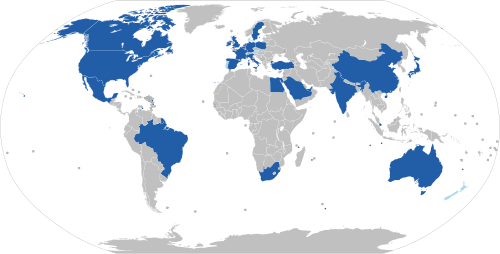
Amazon Marketplaces worldwide Top-Level Domain Served by neighboring Domain
Diverse Products and Services
Amazon's business model is incredibly diverse, spanning hardware, digital services, and physical retail. The company's ecosystem is designed to keep consumers engaged through a variety of integrated touchpoints.
Consumer Hardware and Devices
Amazon has become a leader in consumer electronics, producing a wide array of devices that facilitate smart home living and digital entertainment. Key products include:
- Echo smart speakers
- Kindle e-readers
- Fire Tablets and Fire TV devices
- Fire OS operating system
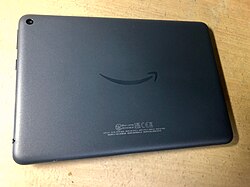
Amazon Fire tablet

Amazon Basics USB cable
Digital Services and Entertainment
Beyond physical goods, Amazon provides a suite of digital services that have become household names. These include Amazon Prime, which offers various benefits to members, and Amazon Prime Video for streaming entertainment. The company also owns Amazon MGM Studios and the streaming platform Twitch, a leader in live broadcasting.

Twitch at the Electronic Entertainment Expo
Other notable digital services include Amazon Music, Amazon Pay, Amazon Alexa, and the cloud-based screenwriting app Amazon Storywriter.
Cloud Computing and Enterprise Solutions
One of the most significant drivers of Amazon's modern success is Amazon Web Services (AWS). AWS provides cloud computing services—on-demand delivery of IT resources via the internet—to individuals, companies, and governments worldwide. This infrastructure powers a significant portion of the modern internet.
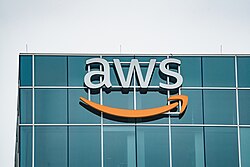
Amazon Web Services, HOU-14
Retail and Logistics Infrastructure
Amazon's ability to deliver products rapidly is supported by a massive physical infrastructure. This includes a vast network of fulfillment centers and a sophisticated logistics system.
Physical Stores and Grocery
Amazon has expanded into the physical retail space, most notably through the acquisition of Whole Foods Market. The company also operates Amazon Fresh stores, bringing its digital-first approach to the grocery sector.
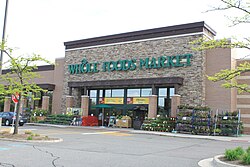
Whole Foods Market store in Ann Arbor, Michigan
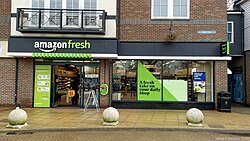
Amazon Fresh store in Sevenoaks, UK
Logistics and Delivery
To manage its immense volume of orders, Amazon utilizes Amazon Logistics and Amazon Transportation Services. The company manages a complex supply chain involving:
- Unpacking and inspecting incoming goods
- Storage and location recording
- Picking and packing individual shipments
- Sorting and shipping via a global network
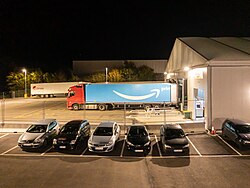
Amazon Transportation Services truck at an Amazon Logistics delivery station
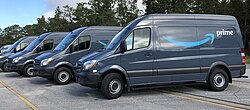
Amazon Logistics Delivery Service Partner company vehicles in Florida
Key Facts
- Founder: Jeff Bezos
- Current CEO: Andy Jassy
- Headquarters: Seattle, Washington, and Arlington County, Virginia
- 2025 Revenue: US$716.9 billion
- 2025 Net Income: US$77.67 billion
- Total Employees (2025): Approximately 1,576,000
- Major Subsidiaries: AWS, Whole Foods Market, Twitch, Audible, and PillPack
Financial Overview (2025)
| Metric | Value (USD) |
|---|---|
| Total Revenue | $716.9 billion |
| Operating Income | $79.98 billion |
| Net Income | $77.67 billion |
| Total Assets | $818.0 billion |
| Total Equity | $411.1 billion |
Frequently Asked Questions
What are the main business segments of Amazon?
Amazon's revenue is driven by several key segments: Online Stores (40.3%), Third-party Seller Services (24.4%), Amazon Web Services (15.8%), Advertising (8.2%), Subscription Services (7.0%), and Physical Stores (3.5%).
Where is Amazon headquartered?
Amazon maintains dual headquarters in Seattle, Washington, and Arlington County, Virginia.
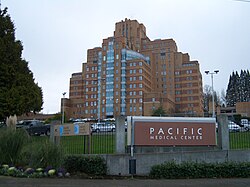
Amazon's former headquarters in the Pacific Medical Center building in Beacon Hill, Seattle
Who are the major shareholders of Amazon?
As of late 2025, the largest individual shareholder is Jeff Bezos (9.04%), followed by institutional investors such as The Vanguard Group (7.96%) and BlackRock (4.93%).
How does Amazon handle international markets?
Amazon operates through various localized domains and subsidiaries. For example, it serves Egypt via amazon.eg, Japan via amazon.co.jp, and the United Kingdom via amazon.co.uk, tailoring its services and languages to local needs.
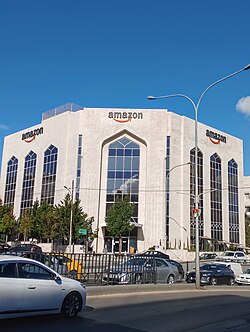
Amazon in Amman, Jordan
Has Amazon faced any public criticism?
Yes, the company has been the subject of various criticisms and protests regarding its corporate practices and impact on local communities, as seen in various public demonstrations globally.

A sticker expressing an anti-Amazon message is pictured on the back of a street sign in Seattle
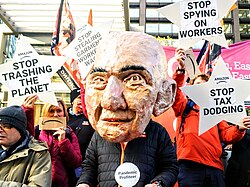
Placards and a papier-mâché Jeff Bezos head at London "Make Amazon Pay" protest in 2021

An Amazon Prime truck blocking a bike lane in Washington, D.C.