Albona and Malinska Class Minelayers: A History of Adriatic Mine Warfare
During the interwar period and the subsequent chaos of World War II, the Adriatic Sea became a strategic focal point for the navies of Italy and Yugoslavia. Central to the regional naval strategy were the minelayers—specialized vessels designed to deploy underwater explosive mines to protect coastlines or block enemy movement. Among the most notable of these were the Albona and Malinska classes, ships whose histories reflect the shifting alliances and violent transitions of the era.
The Albona Class: Italian Defensive Strategy
The Albona class represented the Regia Marina's (Italian Royal Navy) initial efforts to modernize its mine warfare capabilities. When Italy entered World War II in June 1940, three Albona-class ships were assigned to the Settore Alto Adriatico (Upper Adriatic Sector) based in Venice, under the command of Division Admiral Ferdinando di Savoia.
At the time, the Italian command viewed the Adriatic as their "backyard" and did not perceive the Royal Yugoslav Navy (KM) as a significant threat. Consequently, the sea was used extensively for training, even as Allied submarines increased their activity. Between June 6 and July 10, 1940, the Albona-class ships, supported by the Azio and the auxiliary minesweeper San Guisto, deployed 769 mines across 21 defensive fields in the northern Adriatic.
As the war progressed, the ships were adapted for specific roles. The Laurana was fitted with smoke apparatus to defend Venice, while the Albona and Rovigno were moved to Greek waters. Following the Italian Armistice in September 1943, the Germans captured these vessels. The Albona and Rovigno were renamed Netztender 57 and Netztender 56, while the Laurana was commissioned into the 11th Security Flotilla of the Kriegsmarine (German Navy).
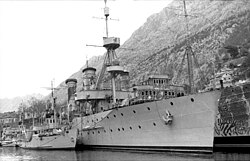
The end of the war saw the destruction of the class: the German-operated Netztender ships were scuttled at Salonika in October 1944, and the Laurana was sunk by British aircraft bombs at Trieste in February 1945.
The Malinska Class: From Yugoslavia to Italy and Back
The Malinska class began their service as training vessels and minesweepers for the Yugoslav Coast Defence Command, officially becoming minelayers by 1936. Their early career was marked by operational mishaps, such as the 1939 incident where the Malinska suffered a boiler failure and had to be towed to safety by the Sokol.
The Axis Invasion and Scuttling
During the Axis invasion of Yugoslavia in April 1941, the five Malinska-class ships were spread across three sectors. While ships in the South and Central sectors were captured by the Italians without incident, the North Sector saw a more dramatic conclusion. Captain Pleiweiss, a loyal Yugoslav officer, scuttled several passenger steamers in Klimno Bay to prevent Italian capture before navigating the Malinska up the Zrmanja river to Obrovac, where he scuttled her on April 13.
Italian Service as the Arbe Class
The Italians salvaged the Malinska-class ships and renamed them the Arbe class, using the Italian names for the islands of Rab, Ugljan, Šolta, Mljet, and Pašman. The Regia Marina modified these ships by removing their mainmasts and 47 mm guns, replacing them with two Ansaldo Model 15 76 mm L/30 guns and Breda M37 8 mm heavy machine guns. In this configuration, they could carry 30 mines.
These ships were utilized in operations against Yugoslav Partisans, including attacks on the Partisan naval station at Podgora in early 1943. However, the Italian surrender in 1943 split the class again. Some were captured by Germans, while others escaped to Malta and were eventually returned to the Yugoslav Navy-in-exile.
Post-War Service and the Corfu Incident
After the war, the surviving vessels Marjan, Meljine, and Mljet were commissioned into the new Yugoslav Navy (JRM) as M1, M2, and M3 (later redesignated M31, M32, and M33). They were re-armed with Breda 20 mm anti-aircraft guns and equipped with MDL-2 mechanical minesweeping gear.
The most controversial chapter of their service occurred in 1946. At the request of Albania, M2 and M3 laid mines in the Straits of Corfu. This undeclared minefield resulted in a major international incident when British destroyers HMS Saumarez and HMS Volage struck the mines. The attack killed 44 men and left HMS Saumarez beyond repair. Although the International Court of Justice ruled against Albania, the Yugoslav government never admitted responsibility for laying the mines.
Key Facts
- Albona Class: First of several mine warfare classes acquired by the interwar Regia Marina.
- Malinska Class: Originally Yugoslav; captured by Italy and renamed the Arbe class.
- Armament Upgrade: The Italians equipped the Arbe class with 76 mm Ansaldo guns and Breda machine guns.
- Post-War Specs: JRM vessels had a maximum speed of 8.5 knots and a range of 360–420 nautical miles.
- Cold War Impact: The M2 and M3 were linked to the 1946 Corfu Channel incident involving the British Royal Navy.
| Feature | Albona Class | Malinska (Arbe) Class |
|---|---|---|
| Original Nationality | Italian | Yugoslav |
| Primary Role | Defensive Minelaying | Training / Minesweeping / Minelaying |
| Italian Armament | 76 mm L/30 guns | 76 mm L/30 guns (after conversion) |
| Mine Capacity | Not specified | 30 mines (Italian service) |
| Fate | Sunk or scuttled by 1945 | Some served into the 1960s (JRM) |
Frequently Asked Questions
What happened to the Albona-class ships at the end of WWII?
The Albona and Rovigno (renamed Netztender 57 and 56) were scuttled by German forces at Salonika on October 31, 1944. The Laurana was sunk by British bombs at Trieste on February 20, 1945.
How did the Malinska class become the Arbe class?
After the Axis invasion of Yugoslavia in 1941, the Italian Navy captured the Malinska-class ships. They renamed them after Italian island names (such as Arbe, Ugliano, and Solta) and modified their armament and masts.
What was the significance of the Corfu Channel incident?
In 1946, Yugoslav ships M2 and M3 allegedly laid mines in the Straits of Corfu for Albania. British destroyers HMS Saumarez and HMS Volage hit these mines, causing significant casualties and leading to a long-term diplomatic freeze between the UK and Albania.
What were the post-war technical specifications of the JRM minelayers?
The ships had a maximum speed of 8.5 knots, a cruising speed of 7 knots, and a range of up to 420 nautical miles. They were armed with two Breda 20 mm anti-aircraft guns and could carry 24 SAG-2 mines.
Which Malinska-class ship was captured by Partisans?
The Pasman was captured by the crew of the Partisan armed ship NB 3 Jadran on January 5, 1944, after the ship stranded in a bay on the island of Ist.