Al-Farabi: The Second Master of Islamic Philosophy and Music Theory
Abu Nasr Muhammad al-Farabi (c. 870 – 950), known in the Latin West as Alpharabius, stands as one of the most influential intellectuals of the Islamic Golden Age. A polymath of extraordinary range, he bridged the gap between classical Greek thought and Islamic theology, earning him the prestigious title of al-Mu‘allim al-thānī, or the Second Master (with Aristotle being the first). He is widely recognized as the Father of Islamic Neoplatonism and the Founder of Islamic Political Philosophy.
Born in Farab, Khorasan (in present-day Kazakhstan), al-Farabi lived a life of intellectual migration, eventually settling in Damascus where he passed away. His work synthesized the logic of Aristotle with the mysticism of Neoplatonism, creating a framework that would influence centuries of subsequent thinkers in both the East and the West.
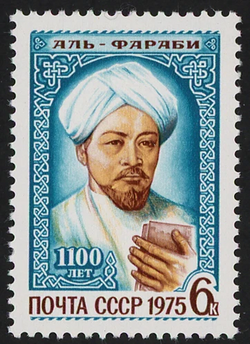
Key Facts
- Titles: Known as the "Second Master" and the "Father of Islamic Neoplatonism."
- Era: Islamic Golden Age (c. 870 – 950 AD).
- Core Contributions: Founded Islamic Political Philosophy and advanced music theory.
- Philosophical Schools: Primarily associated with Aristotelianism and Neoplatonism.
- Legacy: His works were translated into Latin, influencing medieval European scholarship.
Life and Intellectual Background
The exact origins of al-Farabi are a subject of historical debate. Some sources describe him as being of Persian origin, while others emphasize his Turkish descent or suggest he was a Sogdian (an East Iranian people) from the merchant city of Farab. Regardless of his ethnicity, he was a linguistic prodigy, fluent in Persian and Turkish, and later mastered Arabic to engage with the scholarly circles of Baghdad.
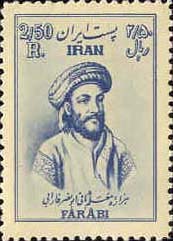
Al-Farabi's education was diverse, involving studies under various thinkers, including Christian scholars. This openness to different traditions allowed him to synthesize disparate philosophical systems into a cohesive whole, focusing on the harmony between reason and revelation.
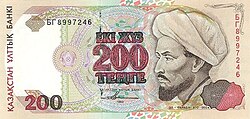
Major Contributions and Works
Philosophy and Logic
Al-Farabi's primary mission was the reconciliation of Plato and Aristotle. He viewed their philosophies not as contradictory, but as different expressions of a single truth. His work in logic—the study of the principles of valid inference—was foundational, as he provided extensive paraphrases and commentaries on Aristotle's Categories.
![Gerard of Cremona's Latin translation of Kitab ihsa' al-'ulum ("Enumeration of the Sciences")[E]](/images/c2/5d/c25d13be9b325732fb87b54097f8fcbac0b8149ecf8099d9dc5fa52199003ee1.jpg)
Political Philosophy
As the founder of Islamic Political Philosophy, al-Farabi explored the relationship between the individual, the state, and the divine. He envisioned a "Virtuous City" (Madinatuʾl fadilah), where the leader possesses both philosophical wisdom and prophetic insight to guide citizens toward true happiness.
Music Theory
Beyond philosophy, al-Farabi was a pioneering music theorist. His magnum opus, Kitab al-Musiqi al-Kabir (The Great Book of Music), is one of the most important treatises on music in history, blending mathematical precision with aesthetic theory. He also designed and described various musical instruments.
![Drawing of a musical instrument, a shahrud, from al-Farabi's Kitab al-Musiqi al-Kabir[C]](/images/56/f0/56f0fd8b7e37e8ee493f6c16b6d24a92ec62c617a4ab104447d38c1f19e465c3.png)
Other Scientific Interests
Al-Farabi's intellectual curiosity extended to several other fields, including:
- Physics and Metaphysics: Investigating the nature of existence and the cosmos.
- Psychology: Exploring the soul and the nature of prophetic knowledge.
- Alchemy: Engaging with the early chemical sciences of his time.
Summary of Al-Farabi's Profile
| Attribute | Details |
|---|---|
| Lifespan | c. 870 – 950 AD |
| Birthplace | Farab, Khorasan |
| Key Titles | Second Master, Father of Islamic Neoplatonism |
| Primary Schools | Aristotelianism, Neoplatonism |
| Major Work (Music) | Kitab al-Musiqi al-Kabir |
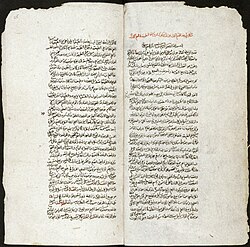
| Major Work (Science) | Kitab ihsa' al-'ulum (Enumeration of the Sciences) |
Frequently Asked Questions
Why is al-Farabi called the "Second Master"?
He is called the Second Master because of his immense contribution to the study of logic and philosophy, positioning him as the primary authority following Aristotle, who is considered the First Master.
What was al-Farabi's main goal in philosophy?
His primary goal was to harmonize the philosophies of Plato and Aristotle, demonstrating that their core truths were compatible and could be integrated into a single, comprehensive system.
How did al-Farabi influence music?
Through his work Kitab al-Musiqi al-Kabir, he provided a scientific and mathematical basis for music theory, influencing both the Islamic world and later European musical thought.
What is the "Virtuous City"?
The Virtuous City is a political ideal described by al-Farabi where the society is led by a philosopher-king or prophet who guides the community toward spiritual and intellectual perfection.
In which languages were his works translated?
His works were translated into Latin (by scholars like Gerard of Cremona), as well as modern English, French, Spanish, Portuguese, and German.