Understanding Agave: The Resilient "Century Plant" of the Americas
From the arid landscapes of Mexico to the curated gardens of the world, the Agave is a striking genus of monocots (plants with a single embryonic leaf) native to the dry regions of the Americas. Known for their dramatic architectural form and extreme resilience, these plants are more than just ornamental succulents; they are biological marvels that have provided food, fiber, and drink to human civilizations for millennia.
Key Facts
- Origin: Native to the arid regions of the Americas.
- Life Cycle: Mostly monocarpic, meaning an individual plant flowers once and then dies.
- Adaptations: Xerophytic (adapted to very dry environments) with water-storing fleshy leaves.
- Primary Uses: Production of tequila, agave syrup, sisal fiber, and traditional foods.
- Growth Habit: Typically forms large rosettes of fibrous leaves with sharp marginal teeth.
Botany and Physical Characteristics
Agaves are characterized by their succulent leaves, which are designed to store water and withstand intense heat. Most species feature sharp teeth along the leaf margins and a formidable terminal spine at the tip. Internally, the leaves are highly fibrous, a trait that has made them invaluable for textile production.
While they may appear stemless, agaves actually possess a very short, stout stem. Their root system consists of shallow rhizomes (horizontal underground stems), which allow the plant to rapidly capture moisture from dew, condensation, and light rainfall. To ensure survival, the leaf surfaces are coated to prevent evaporation, and the sap is naturally acidic.
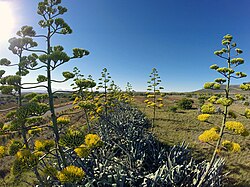
One of the most fascinating aspects of the agave is its reproductive cycle. While some species are polycarpic (flowering multiple times), most are monocarpic. After years—sometimes up to 60 years—of storing energy, the plant produces a massive flower spike known as a "mast" or quiote in Mexico. These stalks can reach heights of 12 meters (40 feet), though some species like Agave salmiana can grow even taller.
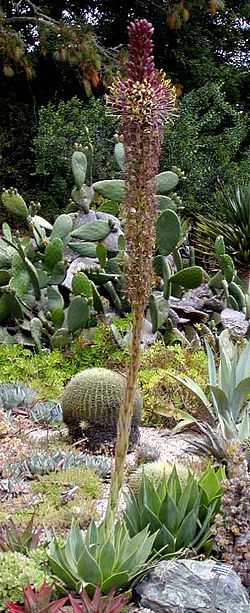
Once the panicle (the branched flower cluster) blooms and the fruit develops, the original rosette dies. However, many agaves produce "pups"—young plants that grow from runners or rhizomatous suckers at the base—ensuring the colony continues even after the parent plant perishes.

Taxonomy and Classification
The genus name Agave is derived from the Ancient Greek word agauê, meaning "illustrious" or "noble," likely referring to the plant's towering flower spikes. First classified by Carl Linnaeus in 1753, the taxonomy of the agave has shifted significantly as DNA sequencing has improved.
Originally placed in the family Liliaceae, agaves were later moved to Agavaceae and then subsumed into the broader Asparagaceae family under the APG III system. However, by 2020, Agavaceae regained its status as an independent family. This taxonomic complexity is attributed to the group's relatively young evolutionary age (diversifying 8–10 million years ago) and a high tendency for hybridization between species.
Notable Agave Species
While there are many varieties, a few species stand out for their economic and horticultural importance.
Agave americana (Century Plant)
Commonly known as the century plant or maguey, A. americana is famous for the long interval between planting and flowering. It is hardy down to temperatures between -9.5 and -6.5 °C. While native to tropical America, it has become naturalized in southern Europe and South Africa, where it is used to produce sugar and syrup.
Agave attenuata (Foxtail Agave)
Unlike its spiny cousins, A. attenuata lacks terminal spines and marginal teeth, making it a popular choice for landscaping near footpaths. It is distinguished by its curved flower spike, which resembles a fox's tail.
Agave tequilana (Blue Agave)
The Agave tequilana 'Weber's Blue' is the essential ingredient for 100% blue agave tequila. Native to Mexico and the Caribbean, this species is significantly sweeter and higher in fructose than other agaves. By law, authentic tequila must be produced from this specific variety within the state of Jalisco.
Human Uses and Ethnobotany
For indigenous peoples of Mesoamerica and the Southwestern United States, the agave was a "miracle of nature," providing almost every necessity for survival.
Food and Nutrition
Multiple parts of the plant are edible. The flowers and young flowering stalks can be roasted and eaten. The "heart" or basal rosette, when roasted, provides a nutritious food source. Additionally, the sap, known as aguamiel ("honey water"), can be extracted and processed into agave syrup, a popular alternative sweetener.
Fiber and Tools
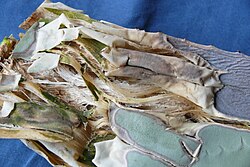
The tough, twisted fibers within the leaves have been used for centuries to create strong cords, ropes, and coarse fabrics. Agave sisalana is the primary source of sisal hemp, while A. americana provides pita fiber. Historically, the sharp leaf tips were used as sewing needles or basketry awls.
Beverages and Spirits
The agave is most famous today for its alcoholic derivatives. The sap of A. americana and other species is fermented to create pulque. Through distillation, this sap is transformed into spirits such as mezcal and tequila.

Modern Research and Industrial Potential
Beyond traditional uses, the agave is a subject of modern scientific interest. Researchers are exploring its use as a feedstock for bioethanol and bioenergy, as agave plantations can thrive on marginal lands unsuitable for traditional grain crops.
In the field of health, agave is used to produce fructans, which serve as prebiotic dietary fibers. Specifically, fructooligosaccharides found in agave are being studied for their ability to help peanut-allergic individuals undergo allergen immunotherapy more safely. Furthermore, because of its adaptation to extreme stress, the agave is a model for studying how crops might survive the economic and environmental effects of global climate change.
Comparison of Common Agave Species
| Species | Common Name | Defining Feature | Primary Use |
|---|---|---|---|
| A. americana | Century Plant | Massive size; long flowering cycle | Fiber, syrup, and ornamentals |
| A. attenuata | Foxtail Agave | Spineless leaves; curved spike | Landscaping/Ornamental |
| A. tequilana | Blue Agave | High fructose content; blue-grey hue | Tequila and agave nectar |
| A. sisalana | Sisal Hemp | Extremely strong leaf fibers | Industrial rope and twine |
Frequently Asked Questions
Why is it called the "Century Plant"?
The name refers to the exceptionally long time the plant takes to reach maturity and flower. While it rarely takes a full century, the process can take several decades depending on the soil, climate, and individual plant vigor.
Is agave related to aloe vera?
While they look similar due to convergent evolution (developing similar traits to survive in similar environments), they belong to different families. Agaves are in the Asparagaceae family, while aloes are in the Asphodelaceae family.
What happens to an agave plant after it flowers?
Most agaves are monocarpic, meaning the energy required to produce the massive flower spike exhausts the plant. Once the seeds are produced, the original rosette dies, though it often leaves behind "pups" or offsets to continue the lineage.
Can all agaves be used to make tequila?
No. While many agave species can be used to make mezcal or pulque, authentic 100% blue agave tequila must be made specifically from Agave tequilana 'Weber's Blue' and produced in the state of Jalisco, Mexico.
Are agave plants toxic?
While not generally considered highly toxic, the juice of some species contains components that can cause dermatitis (skin irritation) in some individuals.