Afrin: History, Conflict, and Recovery in Northern Syria
Located in the northern reaches of Syria within the Aleppo Governorate, Afrin is a city characterized by its Kurdish majority and its strategic position. From its 19th-century origins as a market town to its role as a focal point of geopolitical tension during the Syrian Civil War, Afrin has undergone profound demographic and political shifts. Today, the city stands as a testament to the complexities of regional governance and the resilience of its inhabitants.
The city is situated at an elevation of 270 meters and serves as the center of the Afrin District. While the town itself had a population of 70,000, the wider district recorded 172,095 residents as of 2020.
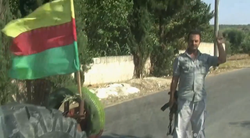
Key Facts
- Location: Aleppo Governorate, Northern Syria.
- Demographics: Kurdish majority population.
- Climate: Hot-summer Mediterranean climate known for olive groves.
- Key Event: Captured by Turkish-backed forces in March 2018 during Operation Olive Branch.
- Recent Status: Control transferred to the Syrian government in early 2025.
Historical Evolution
Afrin's modern administrative history began in 1923 when the Syria–Turkey border was drawn, detaching the area from the Kilis Province. It was subsequently managed under the French mandate of Syria, passing through the State of Aleppo and the Syrian Republic before being fully incorporated into modern Syria in 1961.
Founded as a market in the 19th century, the town grew from 800 permanent residents in 1929 to 7,000 by 1968. The urban layout evolved from a hillside settlement northward to expand across the river toward the village of Turandah.
Civil Unrest and Political Tension
The region has a history of political volatility. In 1999, the arrest of Kurdish leader Abdullah Öcalan sparked clashes between protesters and police. Later, on March 16, 2004, civil unrest led to an outbreak of violence resulting in three deaths at the hands of Syrian police.
The Impact of the Syrian Civil War
The most significant disruption to Afrin occurred during the Syrian Civil War. On January 20, 2018, the Turkish army launched Operation Olive Branch, alleging that the local government consisted of terrorists. This operation began with the bombing of over 100 targets and resulted in significant damage to cultural heritage, including the ancient temple of Ain Dara.
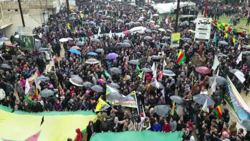
By March 18, 2018, the Turkish Armed Forces and the Syrian National Army (SNA) captured the city from the YPG (People's Protection Units) and YPJ (Women's Protection Units). The capture was followed by the destruction of Kurdish symbols, such as the statue of Kāve, and the installation of a Turkish-backed interim council led by Zuhair Haider.
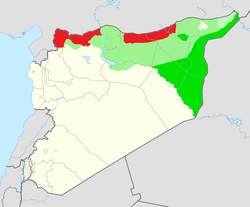
Control remained contested and volatile for years. A devastating bombing on April 28, 2020, killed 46 people, including 11 children. However, a major shift occurred in early 2025 when the "Public Security Forces" of the Syrian caretaker government entered the city. By September 2025, Turkish intelligence and military forces had completely withdrawn from the city center and districts.
Infrastructure, Education, and Health
Healthcare and Education
Prior to March 2018, the World Health Organization noted that Afrin had four hospitals. Following the Turkish capture, health services were reorganized, including the introduction of mobile screening vehicles and the employment of Turkish personnel. The Afrin State Hospital eventually provided essential services, including dialysis and maternity care.
Education saw a dramatic shift. The University of Afrin, established in 2015 with programs in engineering, medicine, and the Kurdish language, was closed in January 2018. Subsequently, Turkey introduced a "Turkified" curriculum in schools and established a religious İmam Hatip school, while the University of Gaziantep announced a Faculty of Education for the area in 2019.
Economy and Utilities
Afrin's economy is deeply tied to its landscape, which is surrounded by olive trees. Infrastructure efforts in late 2018 and 2019 focused on renovating the electricity grid and repairing the Afrin Dam via the Turkish State Hydraulic Works (DSI) to restore the city's water supply.
Geography and Climate
Afrin experiences a hot-summer Mediterranean climate. This is characterized by hot, dry summers and cool winters with moderate rain and occasional snow, typically occurring between December and February.
| Metric | January (Winter) | July (Summer) | Yearly Average/Total |
|---|---|---|---|
| Mean Daily Maximum | 9 °C (48 °F) | 34 °C (93 °F) | - |
| Mean Daily Minimum | 2 °C (36 °F) | 22 °C (72 °F) | - |
| Average Precipitation | 110 mm | 0 mm | 565 mm |
| Relative Humidity | 84% | 41% | 61% |
Frequently Asked Questions
Who currently controls Afrin?
As of early 2025, control of the city was transferred to the newly installed Syrian government, following the withdrawal of Turkish forces by September 2025.
What was Operation Olive Branch?
Operation Olive Branch was a Turkish military incursion launched on January 20, 2018, aimed at removing the YPG/YPJ from Afrin, which Turkey alleged were terrorist organizations.
What is the primary economic feature of the Afrin region?
The region is famous for its vast olive groves, which define both the landscape and the local economy.
How has the population changed since the conflict?
Thousands fled during the 2018 retreat, though 50,000 to 70,000 remained. By October 2025, the administration reported that 20,000 families had returned following the fall of the Assad regime.
What happened to the University of Afrin?
The university, which opened in 2015, was closed in January 2018 due to the Turkish military operation and did not reopen under the subsequent administration.