Adaptation in Biology: Mechanisms, History, and Evolutionary Success
In the study of life, adaptation is a multifaceted concept that describes how organisms interact with and survive within their environments. It is not merely a single event, but a complex phenomenon that can be viewed through three distinct lenses: as a dynamic evolutionary process, as a specific state reached by a population, or as a functional trait within an individual organism.
Understanding adaptation requires looking at how organisms change over generations to enhance their evolutionary fitness—the ability to survive and reproduce. This process is driven by natural selection, which acts upon the genetic variations present in a population to favor those that provide a survival advantage.
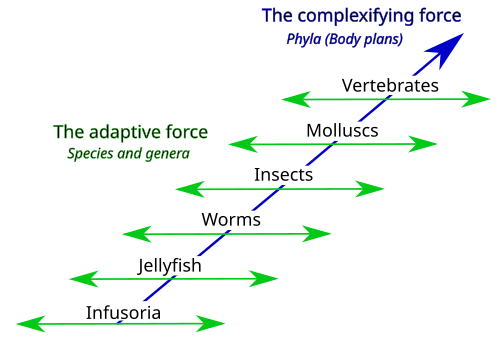
Key Facts
- Adaptation can refer to a process, a population state, or an individual trait.
- Natural selection is the primary mechanism driving evolutionary adaptation.
- Co-adaptation occurs when two or more species evolve interlocking traits, such as pollinators and flowering plants.
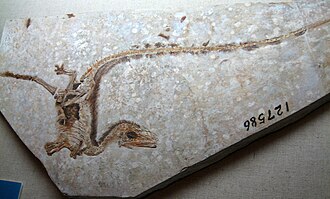
- Exaptation describes traits that evolve for one purpose but are later co-opted for another, such as feathers transitioning from insulation to flight.
- Mimicry is a form of co-evolution where species evolve to resemble others for protection.
The Three Dimensions of Adaptation
To grasp the scientific meaning of adaptation, biologists distinguish between three related definitions:
- The Evolutionary Process: The dynamic movement of natural selection that fits organisms to their environment.
- The Population State: The condition a population reaches as it undergoes the evolutionary process.
- The Adaptive Trait: A specific phenotypic trait (a physical or behavioral characteristic) that serves a functional role and has been maintained through natural selection.
| Concept | Definition | Example |
|---|---|---|
| Natural Selection | The process where organisms better suited to their environment survive. | Changes in allele frequencies over time. |
| Co-adaptation | Species evolving in response to one another. | Flowering plants and pollinating insects. |
| Mimicry | Evolving to resemble another species. | Hoverflies resembling wasps. |
| Exaptation | A trait co-opted for a new function. | Dinosaur feathers used for flight. |
Historical Perspectives
The concept of adaptation has been debated since the era of ancient Greek philosophers like Aristotle and Empedocles. In the 18th and 19th centuries, many viewed adaptation through the lens of natural theology, seeing it as evidence of a divine creator. However, this view was fundamentally transformed by Charles Darwin and Alfred Russel Wallace, who proposed that adaptation is the result of natural selection.
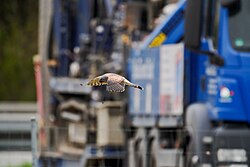
Complex Evolutionary Interactions
Co-adaptation and Co-evolution
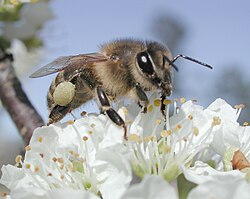
Evolution does not happen in isolation. Often, species engage in co-adaptation, where they develop traits that interlock with those of another species. A classic example is the relationship between flowering plants and the insects that pollinate them. As one species changes, it exerts evolutionary pressure on the other, leading to a reciprocal dance of biological change.
Mimicry and Defense
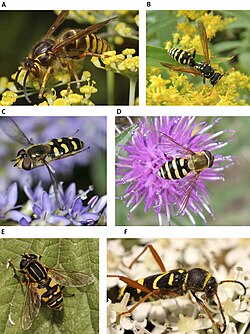
Mimicry is a specialized form of co-evolution. In many cases, species evolve to resemble other, more strongly defended species. For instance, certain harmless insects may evolve to look like stinging wasps to deter predators. This creates a mutually beneficial system where the visual signals of defended species are shared across a group.
Exaptation: Shifting Functions
Sometimes, a trait that evolved for one specific purpose is later used for something entirely different. This is known as exaptation. A notable example is found in the fossil record: the feathers of certain dinosaurs may have originally evolved for insulation or display, but were later co-opted to facilitate the mechanics of flight in birds.
Visualizing Evolutionary Success
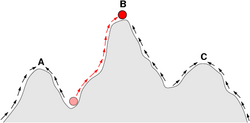
Biologists often use models like the fitness landscape to visualize how populations move toward better survival. In these models, a population can evolve by following paths toward an "adaptive peak." However, populations can sometimes become trapped at "local optima," which are points that are better than their immediate surroundings but not as efficient as the highest possible peak.
Beyond physical traits, behavior also plays a critical role in adaptation. Certain behaviors, such as the "stotting" seen in springboks, may serve as signals to predators, communicating the individual's fitness and potentially increasing its chances of survival and subsequent reproduction.
!["Behaviour with a purpose": a young springbok stotting. A biologist might argue that this has the function of signalling to predators, helping the springbok to survive and allowing it to reproduce.[105][106]](/images/44/f6/44f67d45ced52ec96e33ba54d746528ed702b9e687ab0a366fd6ec9d661a5fba.jpg)
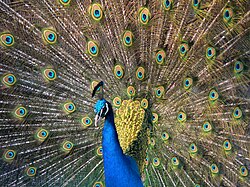
Visual displays are another facet of adaptive behavior. The elaborate train of an Indian peacock serves as a powerful example of how traits can be driven by the need to attract mates and demonstrate genetic quality.
Frequently Asked Questions
What is the difference between adaptation and natural selection?
Natural selection is the mechanism or the process that drives change, while adaptation is the result—the trait or the state of being better suited to an environment.
How does mimicry help an organism survive?
Mimicry allows a species to avoid predation by resembling another species that is dangerous, unpalatable, or otherwise defended, thereby tricking potential predators.
What is an exaptation?
An exaptation is a biological feature that was originally shaped by natural selection for one function but was later repurposed for a different use.
What is co-adaptation?
Co-adaptation occurs when two or more species evolve in response to one another, creating a biological relationship where their traits are functionally linked.
What does biological fitness mean?
Biological fitness refers to an organism's ability to survive and pass its genetic material to the next generation, which directly influences the rate of evolution.