ABC Islands: Aruba, Bonaire, and Curaçao
The ABC Islands—comprising Aruba, Bonaire, and Curaçao—are a distinct group of islands located in the Caribbean Sea. As the westernmost islands of the Leeward Antilles, they sit just north of the Falcón State in Venezuela. While they share a common political history and a connection to the Kingdom of the Netherlands, each island possesses a unique administrative status and individual charm.
Geographically, these islands are situated on the South American continental shelf, though they are often associated with North America due to their political ties. From west to east, the islands are ordered as Aruba, Curaçao, and Bonaire.
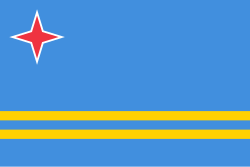
Key Facts
- Composition: Aruba and Curaçao are autonomous constituent countries; Bonaire is a special municipality of the Netherlands.
- Total Area: Approximately 912 km² (352 sq mi).
- Population: Estimated at 300,000 (2022).
- Primary Languages: Dutch, Papiamento/u, English, and Spanish.
- Climate: Hot desert climate characterized by high evaporation and low rainfall.
- Economy: Historically driven by plantations and oil refining; currently supported by tourism and ecotourism.
History and Political Evolution
The islands were originally inhabited by Arawakan people, including the Caquetio. European exploration began around 1499, with Alonso de Ojeda landing on Curaçao. By 1527, the Spanish had established a government and introduced Catholicism.
Control shifted to the Netherlands in 1634 after a conflict with Spain. The Dutch West India Company developed Curaçao into a major port and introduced enslaved people from West Africa to Curaçao and Bonaire. Aruba, being too dry for large-scale plantations, did not see slavery as widespread as its neighbors.
The 20th century brought a shift in economic importance. The discovery of oil in Venezuela led to the establishment of major refineries on the islands, which played a critical role in the Allied effort during World War II. Politically, the islands were part of the Colony of Curaçao and Dependencies until 1954, when they became part of the Netherlands Antilles.
The modern political structure emerged through a series of transitions: Aruba seceded in 1986 to become a separate country within the kingdom. In 2010, the Netherlands Antilles were dissolved, leaving Curaçao as an autonomous country and Bonaire as a special municipality of the Netherlands.
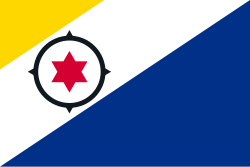
Geography, Climate, and Environment
The ABC islands feature a hot desert climate (Köppen classification BWh and BWk). They are located north of the Intertropical Convergence Zone, meaning they are generally very dry. Rainfall is highly variable and influenced by the Southern Oscillation; strong El Niño years can result in less than 200mm of rain, while La Niña years can bring over 1,100mm.
Temperatures remain consistently hot, typically ranging between 28°C and 37°C (82.4°F to 98.6°F) year-round. The landscape is dominated by cactus scrub vegetation.
Environmentally, the islands are diverse. Bonaire is celebrated as a "diving paradise" due to its protective reefs, which also shelter the island from storm surges. Aruba is flatter and more exposed to tidal surges, but it protects 20% of its land through the Arikok National Park. The region is home to various wildlife, including four species of sea turtle and flamingos.
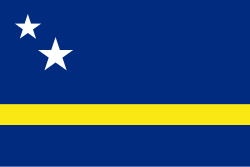
Demographics and Culture
The population reflects a rich blend of heritage. Curaçao and Bonaire have majorities of African descent, while Aruba's population is primarily of Mestizo and European descent. In recent years, the islands have seen significant immigration from Europe, Asia, North America, and other Caribbean islands, including a notable number of Venezuelan refugees.
Language and Communication
Multilingualism is a hallmark of the ABC islands. While Dutch is the official language of government and education, it is not the most common spoken language. Instead, Papiamento/u—a Portuguese-based creole with influences from Spanish, Dutch, English, French, West African, and Amerindian languages—is the most widely used. It is an official language in Aruba (since 2003) and Curaçao and Bonaire (since 2007).
Administrative Summary
| Island | Political Status | Capital | Currency |
|---|---|---|---|
| Aruba | Constituent Country | Oranjestad | Aruban florin |
| Curaçao | Constituent Country | Willemstad | Caribbean guilder |
| Bonaire | Special Municipality | Kralendijk | United States dollar |
Frequently Asked Questions
Are the ABC islands part of the European Union?
They are constitutional parts of the European Union as special member state territories. Citizens hold European passports and can vote in European parliament elections, though the islands are not part of the Schengen area.
What is Papiamento?
Papiamento (or Papiamentu) is a Portuguese-based creole language spoken across the ABC islands. It incorporates elements of Spanish, Dutch, English, and various African and Amerindian languages.
How does the climate differ between the islands?
All three have a hot desert climate, but Aruba is generally the driest. While Aruba is flat and exposed to storm surges, Bonaire and Curaçao are more sheltered by surrounding coral reefs.
What is the difference in political status between Bonaire and Aruba?
Aruba is an autonomous, self-governing constituent country within the Kingdom of the Netherlands. Bonaire is a special municipality, meaning it is more directly subject to Dutch law.
What is the primary economic driver for Bonaire?
Bonaire relies heavily on ecotourism, specifically its reputation as a world-class diving destination.