Trinidad: The Land of the Hummingbird
Trinidad is the largest and most populous island of the Republic of Trinidad and Tobago. Situated just 11 km (6.8 mi) off the northeastern coast of Venezuela, the island sits on the South American continental shelf, making it the southernmost island in the Caribbean. Spanning 4,768 km² (1,841 sq mi), it ranks as the fifth-largest island in the Caribbean region.
Key Facts
- Highest Point: El Cerro del Aripo (940 m / 3,084 ft).
- Capital: Port of Spain.
- National Instrument: The steelpan.
- Economy: Driven largely by oil and liquefied natural gas (LNG).
- Biodiversity: Home to the green anaconda and the endemic Trinidad piping-guan.
- Demographics: A diverse population primarily comprising Indo-Trinidadians and Afro-Trinidadians.
The Evolution of a Name
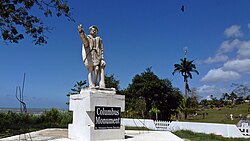
Long before European arrival, the island was known in Arawakan languages as Iëre, meaning "Land of the Hummingbird." On July 31, 1498, Christopher Columbus encountered the island during his third voyage. Upon sighting a cluster of three peaks, he renamed it La Isla de la Trinidad ("The Island of the Trinity"), fulfilling a personal vow and reflecting his devotion to the Trinity.
In the 19th century, the island was referred to as Chinidat or Chinidad (meaning "land of sugar") in Trinidadian Hindustani. This term was frequently used by recruiters in India to attract workers into indentureship.
History and Governance
Trinidad was originally inhabited by the Kalinago and Arawakan-speaking peoples. Following Columbus's arrival, the island remained under Spanish control until 1797, though it was largely settled by French colonists from the French Caribbean, particularly Martinique. By 1889, Trinidad and Tobago were merged into a single British crown colony.
The path to sovereignty began with self-governance in 1958, followed by independence from the United Kingdom in August 1962. The nation officially became a republic in September 1976.
Geography and Natural Landscape
The island's terrain is varied, featuring the Northern, Central, and Southern Ranges (known as the Dinah ranges). Key plains include the Caroni and Naparima Plains, while the landscape is dotted with the Nariva, Caroni, and Oropouche Swamps. The island's hydrology is defined by the Caroni, Ortoire, and North and South Oropouche Rivers.
Trinidad experiences two distinct seasons: the rainy season and the dry season. The highest elevation is found at El Cerro del Aripo, which reaches 940 metres (3,084 ft) within the Aripo Massif of the Northern Range.
Demographics and Vibrant Culture
Trinidad is a melting pot of ethnicities and traditions. According to the 2011 census, the population is 37% Indo-Trinidadian, 32% Afro-Trinidadian, and 24% mixed race. A specific term, Dougla, is used to describe individuals of combined African and Indian descent. Cultural influences from Venezuela are also evident, notably in the parang music style.
The island is world-renowned for its festivals, including the pre-Lenten Carnivál, J'ouvert, and Panorama—a prestigious competition for the steelpan, the national instrument. Religious diversity is reflected in the official recognition of holidays such as Divali, Eid al-Fitr, and Indian Arrival Day, alongside traditional Christian holidays.
Biodiversity and Zoology
Due to its proximity to the mainland, Trinidad's fauna is predominantly of South American origin. The island supports approximately 100 mammal species, including the ocelot, red brocket deer, collared peccary, and the Guyanese red howler monkey.
Avian life is equally rich with over 400 species, including the endemic Trinidad piping-guan. The island is also a critical sanctuary for reptiles, hosting the green iguana, spectacled caiman, and the green anaconda—the world's largest snake species. Furthermore, Trinidad serves as the largest nesting site for leatherback turtles in the western hemisphere.
Economy and Geological Wealth
Trinidad possesses a stable, diversified economy heavily reliant on hydrocarbons. It is a global leader in gas-based exports and one of the top five exporters of liquefied natural gas (LNG). This economic strength is rooted in the island's complex geology.
The island is part of the Venezuela Tertiary Basin, formed between the Caribbean and South American plates. The Northern Range consists of metamorphic rocks from the Upper Jurassic to Lower Cretaceous periods. To the south, the Southern Range and the Naparima Plain contain significant hydrocarbon-bearing anticlines, including the Pitch Lake and various oil fields such as Teak, Samaan, and Galeota.
![Regional Geology of Trinidad and Venezuela[23]](/images/0f/79/0f7942ac2fd88286ff77096c5fb7c5dc3622d93e6c887250cddf5edaad3888d1.jpg)
| Category | Details |
|---|---|
| Area | 4,768 km² (1,841 sq mi) |
| Population (2011) | 1,267,145 |
| Official Language | English (with Trinidadian Creole) |
| Currency | Trinidad and Tobago dollar (TTD) |
| Highest Point | El Cerro del Aripo (940 m) |
| Primary Exports | Oil and Natural Gas |
Frequently Asked Questions
What is the origin of the name "Trinidad"?
Christopher Columbus renamed the island La Isla de la Trinidad ("The Island of the Trinity") on July 31, 1498, after sighting three mountain peaks and in honor of his devotion to the Trinity.
What is the national instrument of Trinidad?
The national instrument is the steelpan, which originated on the island and is featured prominently in the Panorama competition.
Which animals are native or prominent in Trinidad?
Trinidad is home to the green anaconda, the endemic Trinidad piping-guan, and is the western hemisphere's largest nesting site for leatherback turtles.
What drives the economy of Trinidad?
The economy is primarily based on oil and natural gas, making the island one of the world's leading exporters of liquefied natural gas (LNG).
What does the term "Dougla" mean?
In Trinidad, "Dougla" refers to a person of mixed African and Indian descent.