6th (Poona) Division: The British Indian Army in Mesopotamia
The 6th (Poona) Division was a prominent formation of the British Indian Army, established in 1903. Its creation was a direct result of the Kitchener reforms, a series of structural changes designed to modernize the Indian Army for more effective imperial defense and operational readiness.
Key Facts
- Formed: 1903 following the Kitchener reforms.
- Primary Theater: The Mesopotamian campaign during World War I.
- Key Engagement: The Battle of Ctesiphon (November 1915).
- Major Setback: The surrender at Kut on April 29, 1916.
- Casualties: Over 4,000 enlisted soldiers died in captivity.
World War I and the Mesopotamian Campaign
During the First World War, the 6th (Poona) Division played a pivotal role in the Mesopotamian campaign. Under the leadership of Major General Barrett and later Major General Townshend, the division earned the distinction of being the first British Indian troops to land in Mesopotamia, arriving at the Fao Landing in November 1914.
While the division initially enjoyed a string of successes, the momentum shifted in November 1915 during the Battle of Ctesiphon. This engagement proved to be a significant setback, forcing the division to withdraw to the city of Kut.
Upon reaching Kut, Major General Townshend decided to hold the city, leading to a grueling siege by Ottoman forces. The stalemate ended on April 29, 1916, when Townshend surrendered. The scale of the surrender was immense, with 10,061 troops and 3,248 followers taken as prisoners of war.
The Aftermath of the Siege of Kut
Following the surrender, the Ottoman captors separated the officers from the Non-Commissioned Officers (N.C.O.s) and enlisted men. The N.C.O.s and men were subjected to forced marches toward Anatolia. The conditions for these enlisted soldiers were particularly severe, resulting in the deaths of more than 4,000 men in captivity.
As a result of these losses and the surrender, the Poona Division ceased to exist. It remained inactive until 1920, when a new 6th Division was raised to address the Iraq Rebellion.
Order of Battle (December 1914)
At the start of the campaign, the division was organized into three primary brigades and supported by specialized artillery and divisional troops.
16th (Poona) Brigade
- 2nd Bn. Dorsetshire Regiment
- 1st Bn. 20th Duke of Cambridge's Own Infantry (Brownlow's Punjabis)
- 1st Bn. 104th Wellesley's Rifles
- 1st Bn. 117th Mahrattas
17th (Ahmednagar) Brigade
- 1st Bn. Ox & Bucks
- 1st Bn. 119th Infantry (The Mooltan Regiment)
- 1st Bn. 103rd Mahratta Light Infantry
- 1st Bn. 22nd Punjabis
18th (Belgaum) Brigade
The 18th Brigade included the 2nd Battalion, Norfolk Regiment, alongside other specialized infantry units.
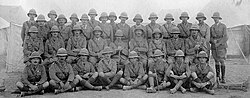
- 2nd Bn. Norfolk Regiment
- 1st Bn. 110th Mahratta Light Infantry
- 1st Bn. 120th Rajputana Infantry
- 1st Bn. 7th (Duke of Connaught's Own) Rajputs
Divisional Artillery and Support
The division's firepower was provided by the X Brigade, Royal Field Artillery (RFA), including the 63rd, 76th, and 82nd Batteries. They were supported by the 1st Indian Mountain Artillery Brigade (including the 23rd Peshawar Mountain Battery and 30th Mountain Battery) and the 1/5th Hampshire Howitzer Battery.
Additional divisional assets included the 33rd Queen Victoria's Own Light Cavalry, the 48th Pioneers, and the 17th and 22nd Companies of the 3rd Sappers and Miners.
Divisional Leadership
The division was led by several high-ranking officers between 1908 and 1916.
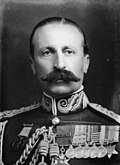
| Period | Commander | Honors |
|---|---|---|
| 1908–1912 | Major-General Edwin Alderson | CB |
| 1912–1915 | Major-General Sir Arthur Barrett | KCB, KCVO |
| 1915–1916 | Major-General Charles Townshend | CB, DSO |
Frequently Asked Questions
When was the 6th (Poona) Division formed?
The division was formed in 1903 as part of the Kitchener reforms of the Indian Army.
What was the significance of the Fao Landing?
The Fao Landing in November 1914 marked the first time British Indian troops landed in Mesopotamia during World War I.
What happened at the Battle of Ctesiphon?
The Battle of Ctesiphon in November 1915 was a major setback for the 6th Division, leading to their withdrawal and subsequent siege at Kut.
How many troops were captured at the surrender of Kut?
A total of 10,061 troops and 3,248 followers were taken captive by Ottoman forces on April 29, 1916.
What happened to the enlisted soldiers after the surrender?
The N.C.O.s and enlisted men were separated from the officers and forced to march to Anatolia; over 4,000 of these soldiers died in captivity.
Was the 6th Division ever reformed?
Yes, after ceasing to exist following the surrender at Kut, another 6th Division was raised in 1920 for the Iraq Rebellion.