51st Sikhs (Frontier Force)
The 51st Sikhs (Frontier Force) stands as a distinguished lineage of infantry, tracing its roots back to the mid-19th century. From its origins in British India to its current role within the Pakistan Army, the regiment has earned a reputation for gallantry across diverse terrains and global conflicts. Known for their resilience and discipline, the soldiers of this unit have transitioned through multiple designations while maintaining a core identity of military excellence.
Key Facts
- Founded: December 10, 1846, at Hoshiarpur.
- Original Name: 1st Regiment of Infantry The Frontier Brigade.
- Nickname: Prince of Wales's Own.
- Motto: Ekwanja.
- Current Status: Active as 3 Battalion The Frontier Force Regiment (Pakistan Army).
- Major Conflicts: Second Sikh War, Indian Mutiny, Second Afghan War, Boxer Rebellion, WWI, WWII, and Indo-Pakistan Wars.
Early History and the "Piffers"
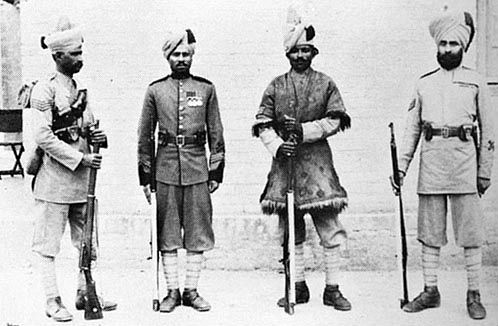
The regiment was raised by Major JS Hodgson in 1846. Its initial composition was a diverse mix of Sikhs, Punjabi Muslims, Pathans, and Dogras, many of whom were recruited from the disbanded regiments of the Sikh Empire following the First Anglo-Sikh War.
In 1851, the unit became part of the Punjab Irregular Force, later known as the Punjab Frontier Force. The members of this force were affectionately known as "The Piffers." This elite group, consisting of cavalry, infantry, and artillery, was tasked with the critical mission of maintaining order on the Punjab Frontier.
During its early decades, the regiment saw intense action. It fought in the Second Sikh War (1848–49) and played a role in the Great Indian Mutiny (1857–58) within the regions of Oudh and Rohilkhand. Later, during the Second Afghan War (1878–80), the regiment was instrumental in the capture of Ali Masjid and the advance toward Jalalabad. By 1900, their reach extended to China, where they served to suppress the Boxer Rebellion.
The World Wars and Royal Recognition
Following the 1903 reforms led by Lord Kitchener, the unit was redesignated as the 51st Sikhs (Frontier Force). By the onset of World War I in 1914, the regiment's composition included four companies of Sikhs, two of Pathans, and one each of Dogras and Punjabi Muslims.
The First World War took the 51st Sikhs far from home. After serving in Egypt and Aden, they moved to Mesopotamia in 1915. They fought with distinction during the Relief of Kut al Amara on the Tigris Front (1916–17) and participated in the capture of Baghdad. In 1918, the regiment moved to Palestine, where they took part in the Battle of Megiddo, a decisive engagement that led to the collapse of the Turkish Army in the region.
In recognition of their bravery and heavy sacrifices, the regiment was granted the title Prince of Wales's Own in 1921. In 1922, they were integrated into the 12th Frontier Force Regiment as the 1st Battalion.
Transition to the Pakistan Army
During World War II, the unit (then 1 FF) served in Iraq and Syria before deploying to Italy in 1943, where they continued their record of distinguished service. With the partition of India in 1947, the Frontier Force Regiment was allocated to the Pakistan Army.
In 1956, a major reorganization merged the Frontier Force Regiment, the Frontier Force Rifles, and the Pathan Regiment. Consequently, 1 FF (Prince of Wales's Own) was redesignated as 3 Battalion The Frontier Force Regiment. The battalion continued to see active combat in the Indo-Pakistan War of 1965 at the Battle of Chawinda and in the 1971 conflict during the Battle of Chhamb in Kashmir.
Regimental Summary
| Attribute | Details |
|---|---|
| Motto | Ekwanja |
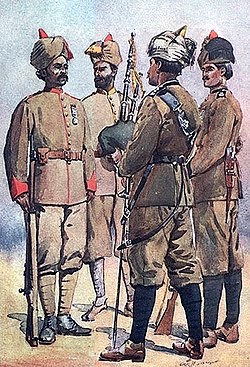
| Uniform | Drab with yellow facing |
| Regimental March | God Bless the Prince of Wales (from 1922) / Lilly Dale |
| Notable Commanders | Field Marshal Sir Charles Henry Brownlow; Gen Sir Rob Lockhart |
| Current Designation | 3 Battalion The Frontier Force Regiment |
Regimental Genealogy
- 1846: 1st Regiment of Infantry The Frontier Brigade
- 1847: 1st Regiment of Sikh Local Infantry
- 1857: 1st Regiment of Sikh Infantry (Punjab Irregular Force)
- 1865: 1st Regiment of Sikh Infantry, Punjab Frontier Force
- 1903: 51st Sikhs (Frontier Force)
- 1921: 51st The Prince of Wales's Own Sikhs (Frontier Force)
- 1922: 1st Battalion (Prince of Wales's Own Sikhs) 12th Frontier Force Regiment
- 1947: 1st Battalion (Prince of Wales's Own) The Frontier Force Regiment (Pakistan Army)
- 1956: 3rd Battalion The Frontier Force Regiment
Frequently Asked Questions
Who were the "Piffers"?
The "Piffers" was the nickname for the Punjab Frontier Force (originally the Punjab Irregular Force), an elite military formation tasked with maintaining order on the Punjab Frontier.
When did the regiment become part of the Pakistan Army?
The regiment was allocated to the Pakistan Army in 1947 following the partition of British India.
What is the significance of the title "Prince of Wales's Own"?
This title was awarded to the 51st Sikhs in 1921 as a reward for their exceptional performance and gallantry during the First World War.
In which major battles did the regiment fight after 1947?
The battalion fought in the Battle of Chawinda during the Indo-Pakistan War of 1965 and the Battle of Chhamb in Kashmir during the Indo-Pakistan War of 1971.
What was the original ethnic composition of the regiment?
The regiment was originally composed of Sikhs, Punjabi Muslims, Pathans, and Dogras, many of whom came from the disbanded Sikh Empire regiments.