2018 FIFA World Cup Qualification: The Road to Russia
The 2018 FIFA World Cup qualification was a massive global undertaking, consisting of a series of tournaments organized by the six FIFA confederations. The primary goal was to determine 31 of the 32 teams that would compete in the final tournament in Russia. As the host nation, Russia qualified automatically, leaving the remaining 210 FIFA member associations to battle for a spot on the world stage.
For the first time in the history of the World Cup, every eligible national team registered for the preliminary competition. This era marked significant milestones for the sport, including the qualification debuts of Bhutan, South Sudan, Gibraltar, and Kosovo. Additionally, Myanmar returned to the competition after a successful appeal against a prior ban, though they were required to play their home matches in neutral territories.
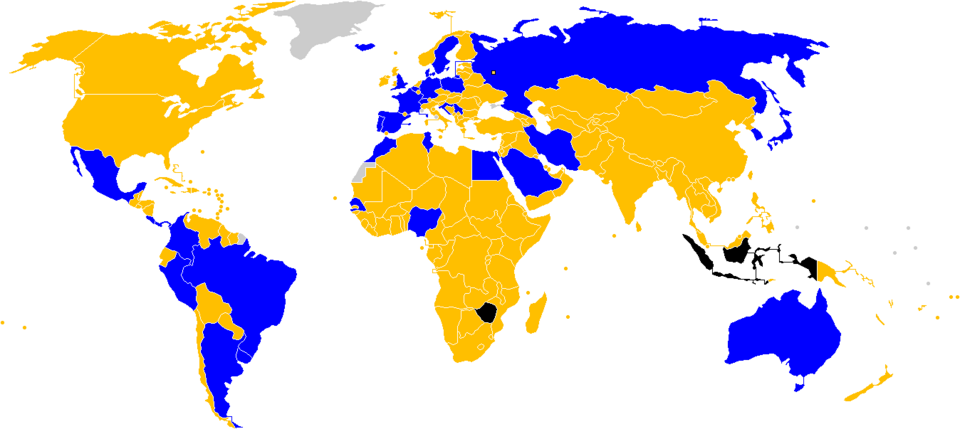
Key Facts
- Total Teams: 211 nations from six confederations participated.
- Matches Played: 869 matches were contested globally.
- Goals Scored: 2,454 goals, averaging 2.82 per match.
- Attendance: A total of 18,720,691 fans attended, averaging 21,543 per match.
- Top Scorers: Robert Lewandowski, Mohammad Al-Sahlawi, and Ahmed Khalil tied for the lead with 16 goals each.
- Timeline: The process ran from 12 March 2015 to 15 November 2017.
The Qualification Process and Format
While the journey began in March 2015, the specific allocation of slots for each confederation was finalized by the FIFA Executive Committee on 30 May 2015. It was decided that the slot distribution would remain identical to the 2014 tournament.
The Expansion Debate
There was significant discussion regarding the size of the tournament. In October 2013, UEFA President Michel Platini proposed expanding the finals from 32 to 40 teams, suggesting groups of five instead of four. This proposal followed comments from FIFA President Sepp Blatter regarding the need for more spots for Africa and Asia. However, officials including Jérôme Valcke and Vitaly Mutko indicated that expansion for 2018 was unlikely. Ultimately, the FIFA Council voted on 10 January 2017 to expand the tournament to 48 teams, but this change was deferred until the 2026 FIFA World Cup.
Tiebreaker Regulations
To ensure fair results in group stages, FIFA employed a strict hierarchy of tiebreakers. Teams were first ranked by points (3 for a win, 1 for a draw). If points were equal, the following criteria were applied in order:
- Overall goal difference.
- Overall goals scored.
- Points, goal difference, and goals scored in matches between tied teams.
- Away goals scored (in two-team home-and-away formats).
- Fair play points (deductions for yellow and red cards).
- Drawing of lots by the FIFA Organising Committee.
Confederation Summaries
The qualification paths varied significantly across the six confederations, ranging from round-robin leagues to knockout stages.
| Confederation | Direct Slots | Play-off Slots | Teams Started | Teams Qualified | Period |
|---|---|---|---|---|---|
| AFC (Asia) | 4 | 1 | 46 | 5 | Mar 2015 – Nov 2017 |
| CAF (Africa) | 5 | 0 | 54 | 5 | Oct 2015 – Nov 2017 |
| CONCACAF (North/Central America) | 3 | 1 | 35 | 3 | Mar 2015 – Nov 2017 |
| CONMEBOL (South America) | 4 | 1 | 10 | 5 | Oct 2015 – Nov 2017 |
| OFC (Oceania) | 0 | 1 | 11 | 0 | Aug 2015 – Nov 2017 |
| UEFA (Europe) | 13+1 | 0 | 54+1 | 13+1 | Sep 2016 – Nov 2017 |
Regional Highlights
In the AFC, the process was merged with the AFC Asian Cup qualifiers. In UEFA, 52 teams were divided into nine groups, with group winners qualifying directly and the eight best runners-up entering a play-off round. CONMEBOL utilized a single league format where Brazil became the first team to secure qualification on 28 March 2017.
Not all registered teams competed. Zimbabwe was expelled on 12 March 2015 due to unpaid severance fees to a former coach, and Indonesia was excluded on 30 May 2015 following the suspension of its football association. Kuwait also faced sanctions that led to their eventual elimination.
The Final Stretch: Inter-confederation Play-offs
The final two spots were decided through inter-confederation play-offs held in November 2017. Australia defeated Honduras (3–1 aggregate) to secure a spot over the CONCACAF representative. In the second play-off, Peru defeated New Zealand (2–0 aggregate), becoming the 32nd and final team to qualify for the tournament.
Frequently Asked Questions
Which teams were disqualified from the 2018 qualifiers?
Zimbabwe was expelled for failing to pay a severance fee to former coach José Claudinei, and Indonesia was excluded after FIFA suspended its football association.
Who were the top goalscorers during the qualification phase?
Robert Lewandowski, Mohammad Al-Sahlawi, and Ahmed Khalil were the joint top scorers, each netting 16 goals.
How did Peru qualify for the tournament?
Peru secured the final spot in the 2018 World Cup by defeating New Zealand 2–0 on aggregate in the OFC-CONMEBOL inter-confederation play-off.
Was there a proposal to increase the number of teams for 2018?
Yes, UEFA President Michel Platini proposed expanding the tournament to 40 teams, but this was not implemented for 2018. Instead, FIFA later voted to expand the tournament to 48 teams starting in 2026.
Which new nations made their debut in the 2018 qualification process?
Bhutan, South Sudan, Gibraltar, and Kosovo all made their first-ever appearances in FIFA World Cup qualification.