2026 FIFA World Cup Qualification: The Global Race to North America
The journey to the 2026 FIFA World Cup has been one of the most expansive in the tournament's history. With the event being hosted across Canada, Mexico, and the United States, the qualification process was designed to determine the 45 teams that would join the three hosts on the world stage.
Spanning from September 7, 2023, to March 31, 2026, the qualification phase saw a massive scale of competition, involving 206 teams from six different confederations. The road to the finals was marked by high-scoring matches, dramatic play-offs, and the return of several nations to the global spotlight.
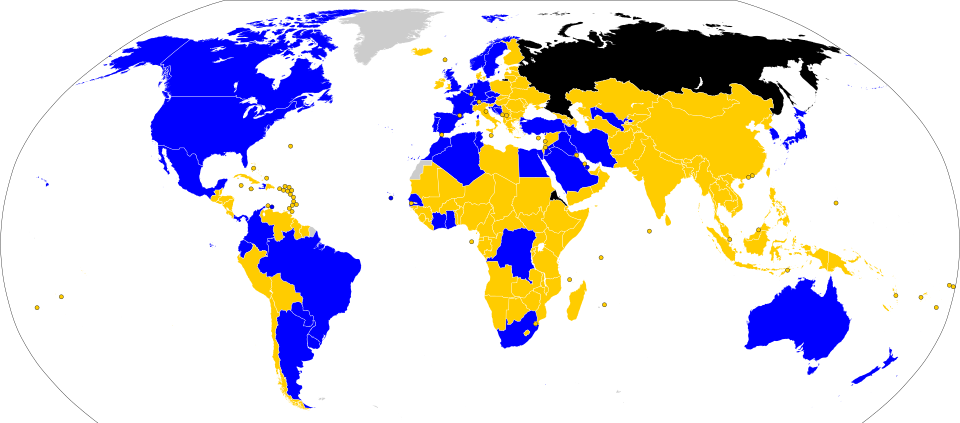
Key Facts
- Total Teams: 206 nations competed for 45 available slots.
- Total Matches: 899 matches were played during the qualification phase.
- Goal Scoring: 2,527 goals were scored, averaging 2.81 goals per match.
- Top Scorer: Erling Haaland led all scorers with 16 goals.
- Attendance: A total of 15,626,580 fans attended the matches.
- Lowest Ranked Qualifier: New Zealand qualified despite being ranked 85th.
Slot Allocation and Qualification Summary
The allocation of slots was proposed by the Bureau of the FIFA Council on March 30, 2017, to accommodate the expanded tournament format. This expansion allowed more teams from every confederation to participate, increasing the total number of qualified teams by 16 compared to the 2022 edition.
| Confederation | Direct Slots | Change from 2022 | Play-off Slots | Teams Started | Teams Qualified |
|---|---|---|---|---|---|
| AFC (Asia) | 8 | +3 | 1 | 46 | 9 |
| CAF (Africa) | 9 | +4 | 1 | 53 | 10 |
| CONCACAF (North/Central America) | 3 (+3 hosts) | +3 | 2 | 32 (+3 hosts) | 3 (+3 hosts) |
| CONMEBOL (South America) | 6 | +2 | 1 | 10 | 6 |
| OFC (Oceania) | 1 | +1 | 1 | 11 | 1 |
| UEFA (Europe) | 16 | +3 | 0 | 54 | 16 |
| Total | 45 (+3 hosts) | +16 | 6 | 206 (+3 hosts) | 45 (+3 hosts) |
Confederation Highlights
AFC and CAF
In the Asian Football Confederation (AFC), teams like Iran and Japan dominated their groups. The process involved multiple rounds, culminating in a fifth-round play-off where Iraq secured their place by defeating the United Arab Emirates with an aggregate score of 3–2.
The Confederation of African Football (CAF) saw a highly competitive first round. Notable results included Egypt, Senegal, and Morocco topping their respective groups. The African play-off tournament, hosted in Morocco, saw DR Congo return to the World Cup after 52 years by defeating Jamaica in the inter-confederation play-offs.
CONMEBOL and CONCACAF
CONMEBOL maintained its traditional home-and-away round-robin format. Argentina finished at the top of the standings with 38 points, followed by Ecuador and Colombia. Paraguay also successfully returned to the tournament after their last appearance in 2010.
In CONCACAF, the three host nations (Canada, Mexico, and the USA) qualified automatically. Other teams like Panama, Curaçao, and Haiti emerged as group leaders during the third round of qualification.
UEFA and OFC
UEFA introduced a new format involving twelve groups. Group winners qualified directly, while runners-up entered a play-off system. Powerhouses like Germany, France, and Spain secured their spots, while Italy missed out after a play-off defeat to Bosnia and Herzegovina.
The Oceania Football Confederation (OFC) saw New Zealand dominate the final, defeating Fiji 7–0 to secure their place as the lowest-ranked team to qualify.
Tiebreaker Regulations
To ensure fairness in round-robin formats, FIFA implemented a strict set of tiebreaker criteria. Teams were first ranked by total points (3 for a win, 1 for a draw). If points were equal, the following were applied in order:
- Greatest goal differential.
- Most goals scored.
- Points obtained in matches between the tied teams.
- Goal differential in matches between tied teams.
- Most goals scored in matches between tied teams.
- Most away goals scored in matches between tied teams.
- Fair play score (deducting points for yellow and red cards).
- Drawing of lots by FIFA.
Frequently Asked Questions
Which player was the top scorer during the qualification phase?
Erling Haaland was the top scorer of the 2026 FIFA World Cup qualification, netting a total of 16 goals.
How many teams qualify for the 2026 World Cup in total?
A total of 48 teams will participate: 45 teams that qualified through the various confederation processes and the 3 host nations (Canada, Mexico, and the United States).
Which team was the lowest ranked to qualify?
New Zealand was the lowest ranked team to secure a spot in the tournament, entering with a ranking of 85th.
How did the UEFA qualification format change?
UEFA used twelve groups of four or five teams. Group winners qualified directly, while runners-up had to compete in a play-off system to determine the remaining slots.
What happened to the DR Congo team?
DR Congo (which competed as Zaire from 1970 to 1998) successfully qualified for the 2026 World Cup, returning to the tournament after a 52-year absence.