130th (King George's Own) Baluchis (Jacob's Rifles)
The 130th (King George's Own) Baluchis, originally known as Jacob's Rifles, stands as a distinguished infantry unit with a lineage stretching from the mid-19th century through the colonial era to the modern day. From its origins as a frontier force in Sindh to its current role in the Pakistan Army, the regiment has a storied history of service across Asia and Africa.
Key Facts
- Founded: June 1858 as the 1st Belooch Rifles.
- Founder: Major John Jacob.
- Colonel-in-Chief: King George V (appointed 1906).
- Major Conflicts: Second Afghan War, Boxer Rebellion, World War I, World War II, and the Indo-Pakistani War of 1965.
- Current Status: Exists as the 12th Battalion of The Baloch Regiment in the Pakistan Army.
Early History and the Silladar System
The regiment was raised in June 1858 by Major John Jacob, who established two local silladar infantry battalions—a unique arrangement where soldiers provided their own equipment and horses, making them the only silladar infantry in the history of the Indian Army. Initially named the Belooch Rifles and later Jacob's Rifles, these units became renowned for maintaining peace on the Sindh frontier as part of the Sind Frontier Field Force.
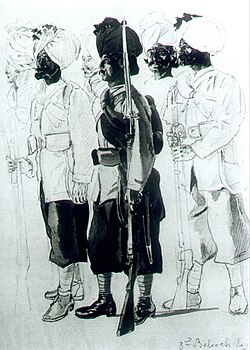
By 1861, the first battalion achieved regular status as the 30th Regiment of Bombay Native Infantry (Jacob's Rifles), while the second battalion was disbanded. The regiment saw significant action during the Second Afghan War (1878–80), notably suffering heavy losses at the Battle of Maiwand. In 1881, the unit was reconstituted as a Baluch battalion and renamed the 30th Regiment (Jacob's) Bombay Native Infantry, also known as the 3rd Belooch Regiment. By 1900, the regiment's reach extended to China, where it was deployed to suppress the Boxer Rebellion.
The 130th Baluchis and the First World War
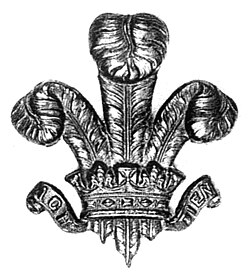
In 1903, Lord Kitchener implemented sweeping reforms across the Indian Army. As part of these changes, all former Bombay Army units had 100 added to their numerical designation, resulting in the regiment becoming the 130th Jacob's Baluchis. The unit's prestige grew in 1906 when the Prince of Wales, later King George V, was appointed as Colonel-in-Chief.
The regiment's identity was visually defined by its striking uniform. In 1914, the full dress consisted of a rifle green turban and a kurta (a knee-length tunic) piped in red, paired with white gaiters and red trousers. These red trousers were a signature element shared by all five Baluch infantry regiments in the Indian Army at the time.
During the First World War, the 130th Baluchis served in challenging theaters, including German East Africa and Palestine. In 1918, a second battalion was raised to meet wartime demands, though it was subsequently disbanded in 1920.
Evolution into the 10th Baluch Regiment
A major reorganization in 1922 grouped the 130th with five other Baluch battalions—including the 124th Duchess of Connaught's Own Baluchistan Infantry, the 126th Baluchistan Infantry, the 127th Queen Mary's Own Baluch Light Infantry, and the 129th Duke of Connaught's Own Baluchis—to form the 10th Baluch Regiment. The unit was redesignated as the 5th Battalion (King George's Own) 10th Baluch Regiment (Jacob's Rifles).
During the Second World War, the 5/10th Baluch served with distinction in the Burma Campaign. The battalion's performance was highly commended, despite suffering 575 casualties, and the unit received numerous gallantry awards for its service.
Transition to the Pakistan Army
Following the Partition of India in 1947, the Baluch Regiment and its constituent battalions were allocated to the Pakistan Army. In 1956, the regiment underwent further changes when the 8th Punjab and Bahawalpur Regiments merged with the Baluch Regiment. Consequently, the 5 Baluch was redesignated as 12 Baluch (now known as 12 Baloch).
The battalion continued its active service in the Indo-Pakistani War of 1965, where it fought in the Kasur Sector.
| Year | Designation | Affiliation |
|---|---|---|
| 1858 | 1st Belooch Rifles / Jacob's Rifles | British Indian Army |
| 1861 | 30th Regiment of Bombay Native Infantry | British Indian Army |
| 1881 | 30th Regiment (Jacob's) Bombay Native Infantry | British Indian Army |
| 1903 | 130th Jacob's Baluchis | British Indian Army |
| 1922 | 5th Battalion (King George's Own) 10th Baluch Regiment | British Indian Army |
| 1947 | 5 Baluch | Pakistan Army |
| 1956 | 12 Baluch (now 12 Baloch) | Pakistan Army |
Frequently Asked Questions
Who founded the 130th Baluchis?
The regiment was raised in June 1858 by Major John Jacob, initially as the 1st Belooch Rifles.
What was unique about the regiment's early organization?
They were the only silladar infantry to exist in the Indian Army, meaning the soldiers provided their own equipment and horses.
What were the distinctive features of the 130th Baluchis' uniform?
By 1914, the uniform featured a rifle green turban and kurta piped in red, worn with white gaiters and distinctive red trousers.
Which major wars did the regiment participate in?
The regiment fought in the Second Afghan War, the Boxer Rebellion, World War I (East Africa and Palestine), World War II (Burma Campaign), and the Indo-Pakistani War of 1965.
Where is the regiment located today?
Following the 1947 partition and subsequent mergers in 1956, the unit exists as the 12th Battalion of The Baloch Regiment in the Pakistan Army.