Zoellner Quartet: A Legacy of Family Artistry and Musical Versatility
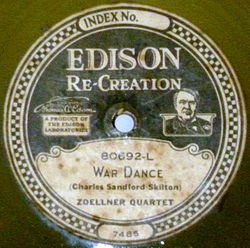
The Zoellner Quartet was a distinguished family ensemble that left a significant mark on the North American classical music scene during the first quarter of the 20th century. Founded on a bedrock of familial bonds and rigorous European training, the group became renowned for its relentless touring schedule and a daringly eclectic repertoire that bridged the gap between Baroque classics and contemporary works.
Formation and European Apprenticeship
The quartet was established in Brooklyn, New York, around 1903 or 1904 by Joseph Zoellner, who operated a music school in the city. The ensemble's early years saw them relocating to Stockton, California, where Joseph opened another music store and school. Seeking to refine their artistry, the group traveled to Belgium under the sponsorship of Ethel Crocker, the wife of San Francisco banking magnate William Henry Crocker.
In Belgium, the Zoellners studied under the celebrated pedagogue César Thomson. This period of intensive training was pivotal, as Thomson was a highly influential teacher who had also mentored members of the prestigious Flonzaley Quartet, providing the Zoellners with a world-class foundation in string performance.

The North American Touring Era
Returning to North America, the Zoellner Quartet embarked on an era of unprecedented activity. Between 1912 and 1923, they maintained an intense schedule of coast-to-coast tours across the United States and Canada. Their dedication to their craft was legendary; by 1919, they had completed 500 performances in just six years, and by 1921, that number had climbed to 1,100.
The group's commitment to their schedule was absolute. Even when cellist Joseph Zoellner, Jr. suffered a fall in Topeka, Kansas, in 1921 and was forced to use a crutch, the quartet continued their tour without delay. In one particularly grueling stretch in early 1923, they performed 46 concerts in just nine weeks. Over the course of his career, second violinist Amandus Carl Zoellner is said to have participated in more than 2,500 performances.
Notable Encounters and Cultural Impact
As their celebrity grew, the Zoellners associated with musical giants such as Eugène Ysaÿe, Mischa Elman, and Ernestine Schumann-Heink. However, one of their most poignant moments occurred in Oklahoma City during the 1916–1917 season. The quartet met the deafblind author and activist Helen Keller and her teacher, Anne Sullivan.
In a fascinating experiment to see if she could sense music, Keller placed her fingertips on a resonant tabletop while the quartet played the andante cantabile from Tchaikovsky's String Quartet no. 1 in D Major. Keller responded emotionally, swaying in time with the vibrations, smiling and crying as she experienced the music through touch.
Musical Breadth and Repertory
The Zoellner Quartet was praised for its "musical catholicity," a term referring to their wide-ranging and inclusive choice of music. They frequently mixed established classical masterpieces with adventurous new compositions. This was evident in their 1914 New York debut at Aeolian Hall, which featured works by Haydn, Glazounov, and Jan Brandts Buys.
Their versatility was further highlighted during a 1919 marathon series of ten weekly recitals at the Ebell Club Auditorium in Los Angeles. Their program spanned centuries, including works by Handel, Mozart, Beethoven, Debussy, and then-contemporary composers like Milhaud and Eugene Goossens.
The Zoellner Conservatory and Later Years
In 1922, the family relocated permanently to Los Angeles, where they established the Zoellner Conservatory of Music. The institution grew to include branches in Hollywood and Burbank, remaining active well into the 1940s. Beyond their own school, the quartet supported youth music education through the Behymer Philharmonic Series, offering low-priced concerts to make classical music accessible to the public.
The quartet officially retired in 1925, though the family remained active in music. They continued to perform occasionally, including a 1927 radio broadcast on station KHJ and an informal performance with Albert Einstein in 1931.
Key Facts
- Founded: Approximately 1903/1904 in Brooklyn, New York.
- Training: Studied in Belgium under the renowned pedagogue César Thomson.
- Performance Volume: Amandus Zoellner performed in over 2,500 concerts.
- Educational Legacy: Founded the Zoellner Conservatory of Music in Los Angeles.
- Notable Experiment: Performed for Helen Keller, who sensed their music through vibrations.
- Retirement: The ensemble officially retired from professional touring in 1925.
| Member | Instrument | Role/Relationship | Notable Detail |
|---|---|---|---|
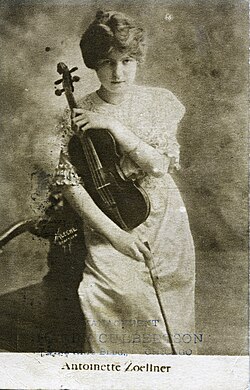
| Antoinette Zoellner | First Violin | Daughter | Studied with César Thomson and Raimund von zur-Mühlen. |
| Amandus Carl Zoellner | Second Violin | Son | Participated in over 2,500 performances. |
| Joseph Zoellner | Viola | Father/Founder | Former first violinist of the Theodore Thomas Orchestra. |
| Joseph Zoellner, Jr. | Cello | Son | Graduate of the Royal Conservatory of Brussels. |
Frequently Asked Questions
Who founded the Zoellner Quartet?
The quartet was founded by Joseph Zoellner, a musical veteran and former first violinist of the Theodore Thomas Orchestra, around 1903 or 1904 in Brooklyn, New York.
Where did the quartet receive their advanced training?
The ensemble traveled to Belgium to study under the celebrated Belgian pedagogue César Thomson, which helped them hone the skills necessary for their professional career.
How did Helen Keller experience the quartet's music?
Helen Keller sensed the music by placing her fingertips on a resonant tabletop, allowing her to feel the vibrations of the instruments, specifically during a performance of Tchaikovsky's String Quartet no. 1.
What was the Zoellner Conservatory of Music?
Established in 1922 after the family moved to Los Angeles, it was a music school founded by the Zoellners that eventually expanded to Hollywood and Burbank.
Did any other quartets use the Zoellner name?
Yes, Joseph Zoellner, Jr. later founded the New Zoellner Quartet based in Chicago. Unlike the original ensemble, this group was not composed of family members and was active through the 1950s.