Zeams Whitten: A Legacy of Power and Longevity in the U.S. House
Few figures in American political history have wielded as much influence over the federal purse as Zeams Whitten. Representing Mississippi for over five decades, Whitten became a titan of the U.S. House of Representatives, blending a commitment to New Deal liberalism with a complex evolution on civil rights. His tenure is defined not only by his record-breaking longevity but by his absolute command over agricultural policy and federal appropriations.
Whitten first entered Congress in 1941 via a special election to represent Mississippi's 2nd District, filling the vacancy left by Wall Doxey. After securing a full term in 1942, he became a permanent fixture in Washington, winning re-election 25 more times. Following the 1970 Census, his district was renumbered as the 1st District.
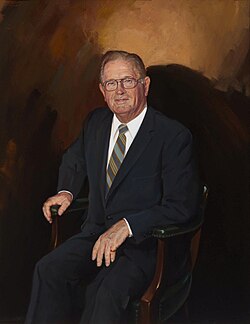
Key Facts
- Service Record: Served 53 years and two months (1941–1995), the longest tenure in House history until 2009.
- Policy Focus: A dominant force in agricultural spending and a staunch supporter of New Deal programs.
- Leadership: Chaired the Appropriations subcommittee on agriculture and later the full Appropriations Committee.
- Political Stance: An ardent New Dealer who frequently clashed with the Reagan administration.
- Legacy: Known for "Whitten's Law," distinguishing the "hallucinations" of the Budget Committee from the "facts" of the Appropriations Committee.
Leadership in Agricultural Policy and Spending
Whitten's primary sphere of influence was the Appropriations Committee, which determines how federal funds are allocated. He chaired the subcommittee on agriculture from 1949 to 1953 and again from 1954 to 1978, eventually rising to chair the entire committee from 1979 to 1992. This position gave him a decisive voice in shaping American agricultural spending and policy for decades.
As a fierce advocate for farmers, Whitten famously challenged the FDA in the early 1970s when the agency recommended restricting antibiotics in livestock. He insisted that scientists provide concrete proof of danger before such restrictions were implemented. While he held immense power, his influence over environmental issues waned after 1977, and his political grip finally loosened following a debilitating stroke in February 1992.
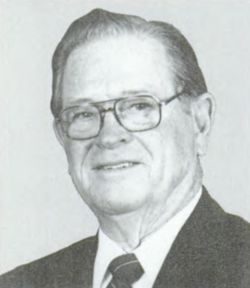
The New Deal and Political Clashes
A dedicated New Dealer, Whitten championed liberal spending to support the vulnerable. He partnered with urban Democrats to support food stamps, school lunch programs, and the distribution of surplus commodity stocks to the poor. This ideological leaning put him at odds with the conservative Reagan administration during the 1980s. Whitten voted against Reagan's tax cuts, economic plans, welfare reform, abortion restrictions, and the Persian Gulf War.
Despite representing a district that became increasingly Republican and suburban, Whitten's seniority and local popularity made him nearly invincible. He often faced only "sacrificial lamb" opponents, remaining popular even when Republican presidential candidates won his district by landslides.
Record on Racial Issues and Civil Rights
Whitten's early career reflected the segregationist views common among Southern Democrats of the era. He signed the Southern Manifesto, which condemned the Supreme Court's decision in Brown v. Board of Education regarding the desegregation of public schools. His voting record included opposition to the Civil Rights Acts of 1957, 1960, 1964, and 1968, as well as the Voting Rights Act of 1965 and the 24th Amendment.
In later years, Whitten expressed regret for these positions, describing his votes as a "mistake" resulting from severe misjudgment. This evolution was capped by his vote in favor of the Civil Rights Act of 1991.
Whitten's Law and the Appropriations Committee
Whitten's tenure on the Appropriations Committee is perhaps best remembered through a piece of political wisdom known as "Whitten's Law." When a junior member, Dick Durbin, inquired about joining the Budget Committee, Whitten remarked that the Budget Committee deals in "hallucinations" while the Appropriations Committee deals in "facts."
This phrase, later cited by Senator Durbin in 2018, highlights the functional difference between the two bodies: the Budget Committee sets political goals and promises, while the Appropriations Committee must manage the actual reality of funding those promises.
| Category | Details |
|---|---|
| Years of Service | November 4, 1941 – January 3, 1995 |
| Total Tenure | 53 years, 2 months |
| Key Leadership Roles | Chair, Appropriations Subcommittee on Agriculture; Chair, Appropriations Committee |
| Political Affiliation | Democrat |
| District | Mississippi 2nd District (later 1st District) |
Retirement and Legacy
Whitten retired in 1994, choosing not to seek a 28th term. At the time of his retirement, he was the longest-serving member of Congress in U.S. history. He passed away in Oxford, Mississippi, on September 9, 1995, at the age of 85. His record for House service stood until 2009, when it was surpassed by Representative John Dingell. Whitten remains the 5th longest-serving member of Congress overall.
Frequently Asked Questions
How long did Zeams Whitten serve in the House of Representatives?
Zeams Whitten served for 53 years and two months, from November 4, 1941, to January 3, 1995.
What is "Whitten's Law"?
Whitten's Law is the concept that the Budget Committee deals in "hallucinations" (political promises), whereas the Appropriations Committee deals in "facts" (the actual allocation of funds).
What was Whitten's stance on agricultural policy?
He was a champion for American farmers and a powerful voice in agricultural spending. Notably, he fought against FDA recommendations to restrict antibiotics in livestock unless scientists could prove the danger.
How did Whitten's views on civil rights change over time?
Originally a segregationist who signed the Southern Manifesto and voted against several Civil Rights Acts, Whitten later apologized for these votes, calling them a mistake, and voted for the Civil Rights Act of 1991.
Did Whitten's opposition to President Reagan affect his elections?
No. Despite voting against many of Reagan's economic and social policies and representing a district that was becoming more Republican, Whitten's seniority and popularity ensured he remained in office.