Yugoslavia and Croatia: Post-War Economic Transformation and Industrialization
Following the end of World War II, the Socialist Federal Republic (SFR) of Yugoslavia, including the Socialist Republic (SR) of Croatia, embarked on a radical economic overhaul. Initially guided by the Soviet Union's ideological framework, the Communist Party of Yugoslavia (CPY) viewed state ownership and centralism as the only viable paths to avoid economic collapse and accumulate the resources necessary for rapid development. This period was marked by the systematic elimination of the private sector, which the regime deemed historically wasteful.
Key Facts
- Initial Model: The economy was heavily influenced by the Soviet Union, emphasizing central planning and state ownership.
- War Damage: SR Croatia lost 7.8% of its population (298,000 people) and suffered severe industrial and agricultural destruction.
- Foreign Aid: The UNRRA provided 2.5 million tons of goods worth US$415 million, feeding approximately 5 million people.
- Agrarian Reform: Land exceeding 35 acres was confiscated and redistributed or turned into state property.
- Industrialization: The first Five-Year Plan aimed for massive growth, specifically targeting a 452% increase in industrial production for SR Croatia.
- Labor Shift: The industrial workforce grew from 461,000 in 1945 to 1,990,000 by 1949.
Economic Transition and War-Time Nationalization
The shift toward a socialist economy began even before the war ended. On November 24, 1944, Yugoslav Partisans initiated nationalization by seizing assets from occupiers and war criminals. This soon expanded to include the entire German minority, resulting in the confiscation of 199,541 assets, including 68,781 hectares of land. By the war's conclusion, the state controlled 55% of industry, 70% of mining, 90% of ferrous metallurgy, and 100% of the oil industry.
Post-War Renewal and Recovery
The SR Croatia faced immense challenges during the reconstruction phase. The combination of a four-year partisan war, bombings, and the over-exploitation of resources left the region in economic chaos. Damage to industry in Yugoslavia was the most severe in Europe, with SR Croatia, Bosnia and Herzegovina, and Montenegro being among the hardest hit.
Due to a shortage of qualified professionals, renewal relied heavily on mass volunteer work. This workforce consisted of three main groups: those lured by communist propaganda, political opponents or Nazi collaborators seeking to avoid persecution, and prisoners of war who performed the most grueling tasks.
Critical infrastructure, such as the Zagreb-Belgrade railway, was repaired around the clock, reopening by late June 1945. Additionally, the United Nations Relief and Rehabilitation Administration (UNRRA), an American-led agency, played a vital role in preventing mass starvation by distributing food, clothing, and shoes between 1945 and 1946.
![Map showing the economic development of the Yugoslav republics in 1947 as a deviation from the mean (Yugoslavia = 100 %).[dubious – discuss]](/images/dd/86/dd86e1ad46fb94910d1ce2d3318e20f1118f0f05d9ad5695988bd430a5377cb3.png)
Agrarian Reform and Collectivization
On August 23, 1945, the authorities implemented the Agrarian Reform. This policy stripped wealthy citizens and peasants of land exceeding 35 acres; half of this land became state property, while the other half was distributed to poor peasants. In SR Croatia, this led to colonization in Slavonia, where poor Croatian and Bosnian Serb peasants moved into areas previously occupied by the expelled Volksdeutsche (ethnic Germans).
The state also introduced a redemption system for agricultural products to supply cities, prioritizing the "working segment" of society over those deemed "parasitic." This disparity fueled the rise of black markets and speculation. By April 28, 1948, the private sector in SR Croatia was virtually liquidated; of 5,395 private shops, only five remained active.
In 1949, the state forced farmers into peasant labor unions based on Soviet kolhozes (collective farms) by imposing taxes that were impossible to pay. This forced collectivization backfired, resulting in the "Bread Crisis" of 1949. This rapid process of dispossession was among the fastest in Eastern Europe.
Industrialization and the Five-Year Plan
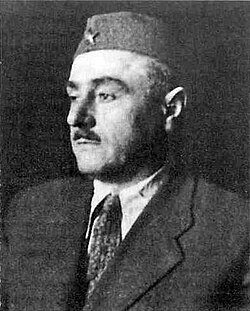
Industrialization was the cornerstone of the regime's development strategy. The creation of the first Five-Year Plan was led by Andrija Hebrang, who served as President of the Economy Council and the Planning Commission. Approved in the spring of 1947, the plan mirrored the Soviet model, prioritizing heavy and military industries, such as the "Rade Končar" and "Prvomajska" factories in SR Croatia.
The plan set ambitious, often exaggerated, goals: increasing industrial production fivefold and GDP per capita by 1.8 times. For SR Croatia specifically, industrial production was targeted to increase by 452%. While unemployment dropped as the workforce swelled to nearly 2 million by 1949, the lack of qualified personnel meant many projects were completed slowly or not at all.
To maintain control, the state utilized directorate-generals as intermediaries between ministries and Party leadership. Although companies existed as legal entities, they possessed no operational autonomy and functioned as state organs.
| Category | Pre-Reform/War State | Post-Reform/Plan State |
|---|---|---|
| Private Shops | 5,395 active | 5 active (by 1948) |
| Industrial Workforce | 461,000 (1945) | 1,990,000 (1949) |
| Land Ownership | Private/Wealthy holdings | State property or poor peasant plots |
| Economic Control | Mixed/Private | Strictly Centralized (Politburo) |
Frequently Asked Questions
What was the primary goal of the first Five-Year Plan?
The plan aimed for rapid industrialization and electrification based on the Soviet model, specifically targeting massive increases in heavy industry, military production, and GDP per capita.
How did the UNRRA assist Yugoslavia after the war?
The UNRRA provided 2.5 million tons of essential goods, primarily food, clothing, and shoes, valued at US$415 million, which helped feed approximately 5 million people and prevent mass starvation.
What was the "Bread Crisis" of 1949?
The Bread Crisis was a food shortage caused by the forced collectivization of villages, where farmers were coerced into Soviet-style kolhozes through high taxes.
Who was Andrija Hebrang and what was his role?
Andrija Hebrang was the 4th Secretary of the Communist Party of Croatia and the chief architect of the first Five-Year Plan, overseeing all economic ministries as President of the Economy Council.
How did the Agrarian Reform affect land ownership in SR Croatia?
Land exceeding 35 acres was confiscated from wealthy owners; half was converted to state-owned agricultural areas and the other half was given to poor peasants, often involving colonization in the Slavonia region.