Yorktown: A Legacy of Strategic Importance and Military History
Founded in 1691, Yorktown began as a vital port on the York River, designed by principal founders Thomas Ballard and Joseph Ring to facilitate the export of tobacco from the Virginia colonies to Europe. Named after the ancient city of York in Northern England, the settlement quickly became a hub of commerce, serving as the county seat by 1696. While the town remained modest in size—never exceeding roughly 200 houses—its strategic location made it a cornerstone of colonial trade.
By 1750, Yorktown reached its developmental peak, boasting a population of nearly 2,000 residents and between 250 and 300 buildings. Its geography was its greatest asset; situated to control the upstream portions of the York River and its tributaries, it provided critical access to the Chesapeake Bay. Thomas Jefferson, in his 1781–82 work Notes on the State of Virginia, praised the area as the best harbor in the state for large vessels due to its narrow width and high banks.
Key Facts
- Founded: 1691 as a tobacco export port.
- Peak Population: Nearly 2,000 people around 1750.
- Revolutionary Significance: Site of the last major battle of the American Revolutionary War in 1781.
- Civil War Role: Captured by Union forces in 1862 during the Peninsula Campaign.
- Modern Use: Home to the Naval Weapons Station Yorktown and a US Coast Guard training center.
The Revolutionary War and the Siege of Yorktown
Yorktown is most famous for its role in the American Revolutionary War. In 1781, the town served as the base for British General Charles Cornwallis. The subsequent siege of the town marked the final major engagement of the war, leading to the British surrender.
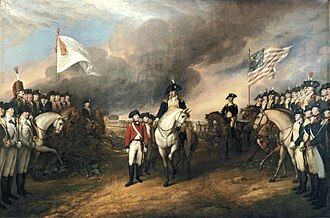
The victory was a global effort. Yorktown maintains sister-city relationships with two European towns that played pivotal roles in this victory: Port-Vendres, France, where the French expeditionary force departed for America, and Zweibrücken, Germany. The latter is linked via the Royal Deux-Ponts Regiment, commanded by Comte Christian de Forbach and his brother Philippe Guillaume, which arrived in Rhode Island in 1780 and fought alongside Americans at Yorktown.
Economic Shift and the Civil War
Following the Revolutionary War, the town's name transitioned from "York" to "Yorktown." However, the region soon faced an economic decline. The relocation of the state capital from Williamsburg to Richmond drew development away from the peninsula. Simultaneously, the soil became exhausted from tobacco farming, forcing planters to switch to mixed crops that required less slave labor. This shift, combined with the migration of younger generations toward the Piedmont, Kentucky, Tennessee, and the Northwest Territory, led to a population drop.
Military conflict returned in 1862 during the American Civil War's Peninsula Campaign. Following the Siege and Battle of Yorktown, Union forces captured the town. General George B. McClellan then utilized Yorktown as a base for the Army of the Potomac to launch an offensive against Richmond.
Modern Military Installations
In the 20th century, Yorktown returned to its roots as a strategic military site. In 1918, the federal government acquired approximately 13,000 acres to establish the Mine Depot, Yorktown, to support Atlantic defenses. This installation has since evolved into the Naval Weapons Station Yorktown, which includes the Cheatham Annex developed on the site of the former town of Penniman.
Today, the region remains a center for military training and industry. The Training Center Yorktown provides instruction for the United States Coast Guard. The surrounding area is home to several other major installations, including Camp Peary, Fort Eustis Army base, the Huntington Ingalls Industries Newport News Shipbuilding yards, Langley Air Force Base in Hampton, and Naval Station Norfolk.
| Era/Event | Key Detail | Significance |
|---|---|---|
| Colonial Era (1691) | Tobacco Export Port | Economic link to Europe |
| Revolutionary War (1781) | Siege of Yorktown | Last major battle of the war |
| Civil War (1862) | Peninsula Campaign | Union base for attack on Richmond |
| World War I (1918) | Mine Depot established | Atlantic defense support |
| Modern Era | Naval Weapons Station | Continued strategic military use |
Frequently Asked Questions
Why was Yorktown strategically important?
Yorktown controlled the upstream portions of the York River and its tributaries, providing a critical gateway to the Chesapeake Bay. Thomas Jefferson noted it offered the best harbor in Virginia for the largest vessels due to its high banks and narrow river width.
Who were the founders of Yorktown?
The city was primarily founded by lawyer Thomas Ballard and Joseph Ring in 1691.
What caused the population decline in the rural peninsula?
The decline was caused by the relocation of the state capital to Richmond, the exhaustion of soil from tobacco farming, and the migration of younger residents to the west, including Kentucky and Tennessee.
Which international cities are sister cities to Yorktown?
Yorktown's sister cities are Zweibrücken, Germany, and Port-Vendres, France, both of which are linked to the French and German military support provided during the American Revolutionary War.
What military facilities are currently located in or near Yorktown?
Current facilities include the Naval Weapons Station Yorktown (including Cheatham Annex) and the Training Center Yorktown for the US Coast Guard. Nearby installations include Camp Peary, Fort Eustis, Langley Air Force Base, Naval Station Norfolk, and the Newport News Shipbuilding yards.