Yankee Network: The Rise and Fall of New England's Radio Pioneer
Long before the digital age, the Yankee Network served as the heartbeat of New England broadcasting. By offering affiliates up to 17 hours of daily programming, it bridged the gap between local interests and national reach. From the golden age of live orchestras to the experimental frontiers of FM radio, the network shaped how millions of listeners in the Northeast consumed news, music, and sports.
Early Years and Programming
In its early stages, the Yankee Network became a cultural hub by providing access to top-tier talent. Listeners enjoyed performances by opera star Mary Garden, the Providence Symphony Orchestra, and popular bandleaders like Joe Rines and Dok Eisenbourg. The network even maintained its own 22-piece orchestra under the leadership of Charles R. Hector.
Programming was diverse, spanning several genres to capture a wide audience:
- Entertainment: Radio plays performed by a WNAC staff drama troupe led by Ben Hadfield, and music from artists like Gus Arnheim and "Hum and Strum."
- Culture and Politics: Educational talks, religious services, and appearances by regional governors and mayors. Notably, it broadcast excerpts from "The Green Pastures" starring Richard B. Harrison.
- Sports: Live coverage of the Boston Red Sox and Boston Braves, announced by Fred Hoey.
While focusing on New England, the network maintained an affiliation with the Columbia Broadcasting System (CBS) to provide national content.
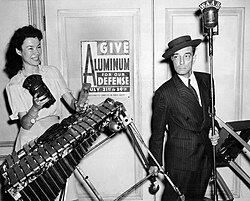
The Birth of the Yankee News Service
By 1931, the network provided news every half-hour using reports from Boston newspapers. However, a conflict known as the "Press-Radio Agreement" of 1933 limited radio stations to just two newscasts a day, sparking listener frustration. In response, John Shepard III established the Yankee News Service in March 1934.
Led by Richard D. Grant and editor-in-chief Leland Bickford, the service adopted the slogan "News while it IS News," a direct challenge to the slower pace of print journalism. This independence expanded in 1938 with the launch of a dedicated weather service headed by chief meteorologist Salvatore Pagliuca.
Expansion and Technical Innovation
Throughout the 1930s, the network expanded into Springfield, Hartford, and Manchester. In 1935, it centralized operations at a new headquarters at 21 Brookline Avenue in Boston, which housed the network's Boston stations, WNAC and WAAB.
The news department gained national acclaim from publications like Variety for its coverage of state legislatures and natural disasters, such as the 1936 Massachusetts floods and the 1938 hurricane. By 1939, it became the first regional network to station a full-time reporter, Pete Tully, in Washington, D.C.
Pioneering FM Radio
John Shepard III was an early adopter of Frequency Modulation (FM), a technology offering superior audio quality. Collaborating with inventor Major Edwin H. Armstrong, the Yankee Network launched the nation's first FM radio network in December 1940, linking stations in Massachusetts, Connecticut, and New Jersey.
This innovation faced fierce opposition from the Radio Corporation of America (RCA), the parent company of NBC. RCA feared that Yankee's inexpensive off-air FM relays would threaten their business model. Consequently, RCA pressured the FCC to shift the FM spectrum from 42–50 MHz to 88–108 MHz in 1945. This forced a costly hardware overhaul that set FM broadcasting back by over a decade.
![In 1947 the network consisted of 24 AM and two FM affiliates.[59]](/images/fd/fe/fdfe323031b577136524ac40f4f5ed42bbfa8eff4df28842aa846671a206cbb4.jpg)
Controversies and Corporate Shifts
The network's growth was not without conflict. In 1938, former employee Lawrence J. Flynn accused Shepard of using WAAB and WNAC to air biased political attacks. This led to the 1941 Mayflower Decision, an FCC ruling stating that radio stations must remain neutral in news and politics due to their public interest obligations.
Further regulatory changes in 1941 prohibited owning more than one station in a single city. To comply, Shepard moved WAAB from Boston to Worcester, Massachusetts, where it debuted on December 13, 1942.
In December 1942, the network was sold to the General Tire and Rubber Company of Akron, Ohio, led by William O'Neil. While Shepard remained head of the network for five years, the leadership eventually transitioned to Linus Travers and later George Steffy.
The Transition to Television
The network entered the television era on June 21, 1948, with the launch of WNAC-TV. This expansion was marred by a 16-day strike in May 1949, when 80 engineers protested proposed wage cuts. The strike affected remote broadcasts, including Boston Braves games, before an arbitrator helped reach a new salary agreement.
The Final Years and Legacy
During the 1950s, the Yankee Network remained a staple for homemakers and sports fans. Popular figures included Bill Hahn, Ruth Mugglebee, and Louise Morgan. In 1953, WNAC improved its reach by moving to the 680 kHz frequency after the sale of station WLAW.
As the 1950s progressed, the rise of "top-40" radio shifted the industry toward a younger audience. While many stations pivoted to hit records, the Yankee Network doubled down on "great standards" and easy-listening music, appealing to an aging demographic. The Yankee News Service remained vital, particularly during the 1957 Boston newspaper strike.
By the late 1950s, the regional network model began to crumble as affiliates preferred local autonomy. In August 1959, the network de-affiliated from the Mutual Broadcasting System. After several failed attempts to find a new niche, the parent company, RKO General, disbanded the network on February 26, 1967.
| Category | Details |
|---|---|
| Founder/Key Leader | John Shepard III |
| Flagship Station | WNAC (Boston) |
| Major Innovations | First FM radio network (1940), Yankee News Service (1934) |
| Key Affiliations | CBS, NBC Red Network, Mutual Broadcasting System |
| Ceased Operations | February 26, 1967 |
Key Facts
- Launched the first FM radio network in the U.S. in December 1940.
- Created the Yankee News Service in 1934 to bypass restrictive press-radio agreements.
- The "Mayflower Decision" of 1941 mandated political neutrality for all radio stations.
- WNAC-TV launched in June 1948, marking the network's entry into television.
- The network was eventually owned by RKO General before closing in 1967.
Frequently Asked Questions
What was the Mayflower Decision?
The Mayflower Decision was a 1941 FCC ruling that required radio stations to remain neutral in news and politics, prohibiting them from providing editorial support to specific candidates or political positions.
How did the Yankee Network innovate FM radio?
In collaboration with Major Edwin H. Armstrong, the network established the first FM inter-city relay and officially debuted the first FM radio network in 1940, utilizing mountaintop transmitters for wide coverage.
Why did the network struggle in its final years?
The network struggled to compete with the rising popularity of top-40 radio and television. Additionally, many affiliate stations preferred to produce their own local content rather than rely on a regional network.
Who owned the Yankee Network before it closed?
The network was owned by the General Tire and Rubber Company, and later by RKO General.
What role did the Yankee News Service play?
The Yankee News Service provided independent local and regional news to affiliates, allowing the network to maintain regular newscasts after newspapers stopped providing news to radio stations in 1933.