Yagi-Uda Antenna and the Evolution of Wireless Communication
The foundation of modern wireless communication owes much to the early 20th-century research into directional electric waves. While radio technology was in its infancy, visionary researchers began to realize that the future of long-distance communication lay not in omnidirectional signals, but in the ability to focus radio waves in a specific direction.
The Visionary Research of Professor Yagi
After pursuing studies abroad, the researcher dedicated his career to the science of wireless communication. In 1919, he attained the title of Doctor of Engineering and became a professor at the Faculty of Engineering Sciences of the Tohoku Imperial University. During this era, he correctly predicted that short waves and ultra-short waves (radio waves with shorter wavelengths and higher frequencies) would become the primary medium for radio communication.
This foresight led to a series of influential academic publications, including "Generation of Short Wavelength Waves" and "Measuring Specific Wavelengths with Short Wavelengths." These papers provided the theoretical framework for what would eventually become one of the most ubiquitous antenna designs in history.
The Invention of the Yagi Antenna
Utilizing his developed method for directional electric waves, he invented the Yagi antenna. This design allowed for highly directional communication, meaning the signal could be concentrated in one direction rather than radiating in all directions. The invention was officially recognized when he obtained patent number 69115 in 1926.
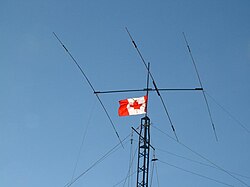
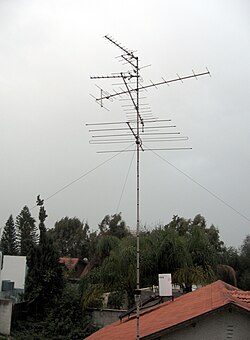
The brilliance of the Yagi antenna lies in its simple construction. By using a series of elements to direct the signal, it provided a practical solution for high-frequency communication. This fundamental architecture remains the basis for many antennas used today for ultra-short and extremely short waves.
Legacy and Global Impact
The influence of this directional antenna design extends from amateur radio to commercial broadcasting. Because the physical length of the antenna elements is proportional to the wavelength, the Yagi-Uda design is particularly effective for VHF (Very High Frequency) and UHF (Ultra High Frequency) bands, where the elements remain small enough for practical installation on rooftops.
In recognition of his contributions to science and technology, the Japan Patent Office named him one of the Ten Japanese Great Inventors on April 18, 1985. His enduring legacy was further celebrated globally on January 28, 2016, when Google featured his work in an animated Google Doodle.
Key Facts
- Patent Number: 69115, issued in 1926.
- Core Innovation: A method for directional electric waves using a simple construction.
- Academic Origin: Developed through research at Tohoku Imperial University.
- Primary Application: Optimized for short, ultra-short, and extremely short waves (VHF/UHF).
- Recognition: Named one of the Ten Japanese Great Inventors in 1985.
| Milestone | Year / Detail |
|---|---|
| Academic Appointment | 1919 (Tohoku Imperial University) |
| Patent Issuance | 1926 (Patent No. 69115) |
| National Honor | 1985 (Ten Japanese Great Inventors) |
| Global Recognition | 2016 (Google Doodle) |
Frequently Asked Questions
What is the primary purpose of a Yagi antenna?
The primary purpose is to enable directional communication with electric waves, focusing the signal in a specific direction rather than broadcasting it omnidirectionally.
Which frequency bands are most suited for this antenna design?
The design is widely used for ultra-short and extremely short waves, specifically within the VHF and UHF frequency ranges, because the element lengths are conveniently small at these wavelengths.
Where was the theoretical research for the Yagi antenna conducted?
The research was conducted at the Faculty of Engineering Sciences of the Tohoku Imperial University, where the inventor served as a professor starting in 1919.
Is the Yagi antenna design still relevant today?
Yes, the basic construction of the Yagi antenna is still utilized in various types of antennas used for modern high-frequency wireless communications.
How was the inventor recognized by the Japanese government?
On April 18, 1985, the Japan Patent Office officially selected him as one of the Ten Japanese Great Inventors.