X-33 Spaceplane: The Ambitious Quest for Single-Stage-to-Orbit Flight
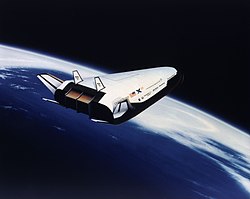
In the mid-1990s, NASA embarked on a visionary mission to revolutionize how we access space. The goal was to move away from expensive, multi-stage rockets and toward a future of highly efficient, reusable vehicles. At the heart of this ambition was the Lockheed Martin X-33, an uncrewed technology demonstrator designed to pave the way for the next generation of commercial spaceflight.
The X-33 was intended to prove the viability of Single-Stage-to-Orbit (SSTO) technology. Unlike traditional rockets that drop heavy stages as they ascend, an SSTO vehicle would reach orbit in a single piece, significantly reducing complexity and cost. This ambitious project was the precursor to the proposed VentureStar, a commercial orbital spaceplane that promised to transform the economics of space access.
Key Facts
- Manufacturer: Lockheed Martin
- Primary Goal: Demonstrate technologies for Single-Stage-to-Orbit (SSTO) reusable launch vehicles.
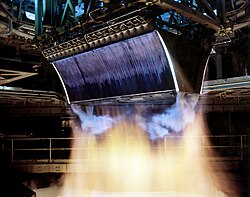
- Propulsion: Two XRS-2200 linear aerospike engines.
- Total Investment: Approximately $1.279 billion ($922 million from NASA and $357 million from Lockheed Martin).
- Status: Canceled in February 2001.
The Vision: Reusable Launch Vehicle (RLV) Program
The X-33 was a cornerstone of NASA's Reusable Launch Vehicle (RLV) program, initiated in 1994. The program aimed to develop space boosters capable of delivering payloads at a fraction of current costs. NASA Administrator Daniel Goldin famously envisioned a system that could turn around in days rather than months, reducing the cost of getting a pound of payload to orbit from $10,000 down to just $1,000.
To achieve this, the X-33 was designed to test several cutting-edge technologies:
- Lifting Body Aerodynamics: A shape that provides lift during atmospheric flight.
- Aerospike Engines: A type of rocket engine that maintains efficiency across various altitudes.
- Metallic Thermal Protection Systems: Advanced shielding to handle the intense heat of reentry.
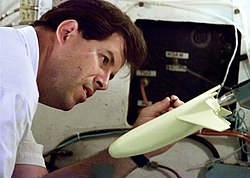
- Composite Cryogenic Fuel Tanks: Lightweight tanks designed to hold liquid hydrogen (LH2) and liquid oxygen (LOX).
- Autonomous Flight Control: Uncrewed systems for precise navigation and landing.
Technical Specifications
| Feature | Specification |
|---|---|
| Height | 20 m (66 ft) |
| Wingspan | 21 m (69 ft) |
| Mass | 129,000 kg (285,000 lb) |
| Maximum Speed | Mach 13 (9,896 mph) |
| Engine Thrust | 1,800 kN (410,000 lbf) per engine |
| Propellant | LOX / LH2 |
Design and Flight Profile
The X-33 was designed for a Vertical Takeoff, Horizontal Landing (VTHL) profile. It was slated to launch vertically from Edwards Air Force Base, perform 15 suborbital "hops" to altitudes of approximately 75.8 km, and then glide back to a runway for a horizontal landing.
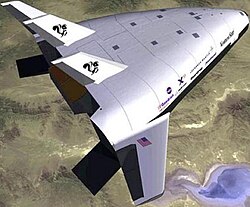
The vehicle's design utilized a lifting body shape and a multi-lobed fuel tank configuration. This complex tank shape was necessary to fit within the aerodynamic mouldline of the craft, but it presented significant engineering challenges regarding weight and structural integrity.
Technical Challenges and Cancellation
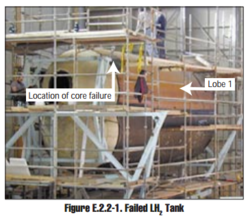
Despite being 85% assembled and having a nearly complete launch facility, the X-33 program faced insurmountable technical hurdles. The most critical failure occurred in November 1999 during pressure testing of the composite liquid hydrogen fuel tank. The tank, constructed with honeycomb composite walls to save weight, failed to meet the rigorous requirements for SSTO operations.
For an SSTO vehicle to be successful, the mass fraction must be extremely tight; the vehicle's dry weight must be only about 10% of its fully fueled weight. The complex joints required for the multi-lobed composite tank actually increased the total mass beyond that of a traditional aluminum tank, making the SSTO goal unachievable with the technology available at the time.
Compounding these technical issues were shifts in the commercial space market. A decline in anticipated commercial satellite launches made it difficult for Lockheed Martin to justify continuing the project privately without government support. Consequently, NASA canceled the program in February 2001.

Legacy and Continued Research
While the X-33 did not fly, the research conducted during its development contributed to future aerospace advancements. The lessons learned regarding composite materials were invaluable. In 2004, Northrop Grumman and NASA successfully tested a liquid-hydrogen tank made of carbon-fiber composite, demonstrating that the technology for large, autoclave-free composite tanks was indeed becoming a reality.
Frequently Asked Questions
What was the main purpose of the X-33?
The X-33 was a technology demonstrator designed to test the components necessary for a single-stage-to-orbit (SSTO) reusable launch vehicle, specifically focusing on aerospike engines and composite fuel tanks.
Why was the X-33 program canceled?
The program was canceled due to technical failures with the composite liquid hydrogen fuel tanks, weight issues that prevented the vehicle from achieving SSTO capabilities, and a changing commercial satellite market.
What is an aerospike engine?
An aerospike engine is a type of rocket engine that provides efficient thrust across a wide range of altitudes, unlike traditional bell-shaped nozzles which are optimized for specific atmospheric pressures.
Did the X-33 ever fly?
No, the X-33 never completed a flight test. The program was canceled while the prototype was approximately 85% assembled.
What was the VentureStar?
The VentureStar was the proposed full-scale, commercially operated orbital spaceplane that was intended to be developed using the technologies demonstrated by the X-33.