Württemberg-Hohenzollern: The Path to Baden-Württemberg
The geopolitical landscape of post-war Germany was a complex puzzle of administrative zones and shifting borders. Among these entities was Württemberg-Hohenzollern, a state that played a pivotal role in the eventual creation of one of Germany's most prosperous modern regions. To understand its history, one must first distinguish it from the larger Gau (a regional administrative district) of the same name that existed briefly during the Third Reich.
The Composition of Württemberg-Hohenzollern
Württemberg-Hohenzollern was formed from a combination of three distinct territories: the southern half of the former state of Württemberg, the Prussian administrative region of Hohenzollern, and the Bavarian district of Lindau. This configuration was largely a result of the Allied occupation zones following World War II.
The division of Württemberg into northern and southern halves was strategically determined. The northern portion became part of Württemberg-Baden under United States administration. This specific boundary was drawn to ensure that the Autobahn connecting Karlsruhe and Munich (known today as the A8) remained entirely within the American zone.
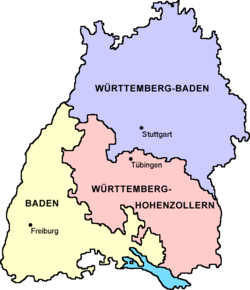
Political Evolution and the Federal Republic
As the region transitioned toward self-governance, a new constitution was enacted on May 18, 1947, leading to the election of the first parliament for Württemberg-Baden. The political trajectory of the region shifted further on May 23, 1949, when Württemberg-Baden officially joined the newly formed Federal Republic of Germany (West Germany).
The Merger into Baden-Württemberg
The early 1950s saw a movement toward consolidating the fragmented states of the southwest. This process began with a straw poll on September 24, 1950, involving Württemberg-Hohenzollern, Württemberg-Baden, and Baden to gauge public interest in a merger.
Following the straw poll, a formal public referendum was conducted on December 9, 1951. The positive outcome of this vote led to the unification of the three states. On April 25, 1952, the modern German state of Baden-Württemberg was officially founded.
Key Facts
- Components: Formed from southern Württemberg, the Prussian region of Hohenzollern, and the Bavarian district of Lindau.
- Strategic Border: The division between north and south Württemberg was designed to keep the A8 Autobahn within the American zone.
- Key Date: The modern state of Baden-Württemberg was established on April 25, 1952.
- Democratic Process: The merger was decided via a straw poll in 1950 and a public referendum in 1951.
| Date | Event |
|---|---|
| May 18, 1947 | Enactment of new constitution and first parliament election |
| May 23, 1949 | Joining of the Federal Republic of Germany |
| September 24, 1950 | Straw poll regarding the merger of three states |
| December 9, 1951 | Public referendum on the merger |
| April 25, 1952 | Official founding of Baden-Württemberg |
Frequently Asked Questions
What territories made up Württemberg-Hohenzollern?
It consisted of the southern half of the former state of Württemberg, the Prussian administrative region of Hohenzollern, and the Bavarian district of Lindau.
Why was the border between north and south Württemberg drawn that way?
The border was established so that the A8 Autobahn, which connects Karlsruhe and Munich, was located entirely within the American administration zone.
How was the decision to merge the states made?
The decision was reached through a two-step process: a straw poll on September 24, 1950, followed by a formal public referendum on December 9, 1951.
When was the modern state of Baden-Württemberg founded?
Baden-Württemberg was officially founded on April 25, 1952, following the merger of Baden, Württemberg-Baden, and Württemberg-Hohenzollern.
Is Württemberg-Hohenzollern the same as the Gau of the same name?
No, it should not be confused with the larger Gau (shire) that was briefly formed during the Third Reich.