World War II Shipwrecks and Naval Losses: A Global Record
The maritime landscape of the mid-20th century was defined by intense naval conflict, resulting in the loss of thousands of vessels across the globe. From massive transport ships and submarines to specialized landing craft and small fishing vessels, the wreckage left behind serves as a silent testament to the scale of World War II. These losses occurred across diverse theaters, including the Atlantic Ocean, the Pacific, and the coastal waters of Europe.
Key Facts
- Diverse Vessel Types: Losses included specialized craft such as the German Marinefahrprahm (naval ferry/landing craft) and Japanese Gyoraitei (motor torpedo boats).
- Global Distribution: Shipwrecks are recorded from the coast of Florida and Alaska in the United States to the waters of Norway, France, and the Philippines.
- Varying Fates: While many ships were sunk by torpedoes or bombs, others were scuttled (intentionally sunk by their own crew) or abandoned due to damage.
- Post-War Recovery: Some vessels, such as the V 607 Düsseldorf and Tempo 7, were salvaged and returned to service under different flags.
Naval Losses by Nation and Type
Kriegsmarine (German Navy)
The German Kriegsmarine suffered significant losses of specialized landing and support craft. A large number of Marinefahrprahm—landing craft used for transporting troops and equipment—were sunk between 1944 and 1945, including Type A (AF 57, F 241), Type C (F 459, F 615, F 626), and Type D (F 855, F 964, F 1165). Minelayer variants (Type DM), such as F 923 and F 949, were also lost during this period.
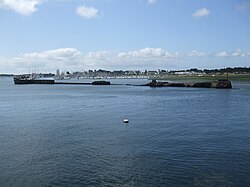
Other notable German losses include the Type VIIC submarine U-743, which sank in the Atlantic north of Ireland in late 1944 with all 50 crew members lost. Support vessels like the Strasbourg II barracks ship were scuttled in Lorient, France.
Imperial Japanese Navy (IJN)
In the Pacific theater, the IJN lost numerous small, fast-attack vessels. This includes various Gyoraitei (motor torpedo boats) and H-class motor gun boats. Larger losses included the Nichiyu Maru, an auxiliary transport ship torpedoed by the USS Halibut in March 1943 and eventually sunk during the Battle of Guam in 1944.
The IJN also lost several SS-class landing ships (SS-4, SS-8, SS-10) and the T-134 landing ship, which ran aground at Iwo Jima in August 1944 before being destroyed by a storm.
Royal Navy and Allied Forces
The British Royal Navy recorded the loss of numerous Landing Craft Personnel (LCP) in 1944. These included both Large (LCP(L)) and Ramped (LCP(R)) variants, the latter of which saw a high number of losses including units 640, 652, 669, 735, 978, 982, 987, 989, 991, 993, and 1023.
United States losses included civilian and auxiliary vessels, such as the Alice L. Pendleton, a 228-foot lumber schooner abandoned in Connecticut, and the Libby, McNeill & Libby V No. 6 scow, which sank in Alaskan waters.
Summary of Notable Shipwrecks
| Ship Name/ID | Nationality | Type | Fate/Location |
|---|---|---|---|
| U-743 | Kriegsmarine | Type VIIC Submarine | Sunk, North Atlantic |
| Nichiyu Maru | Imperial Japanese Navy | Auxiliary Transport | Sunk, Guam |
| Strasbourg II | Kriegsmarine | Barracks Ship | Scuttled, Lorient |
| Alice L. Pendleton | United States | Lumber Schooner | Abandoned, Connecticut |
| Herold | Norway | Cargo Ship | Bombed, Bergen |
Frequently Asked Questions
What is a Marinefahrprahm?
A Marinefahrprahm was a type of naval ferry or landing craft used by the German Kriegsmarine to transport troops, vehicles, and supplies to shore during amphibious operations.
What does it mean when a ship was "scuttled"?
Scuttling is the deliberate sinking of a ship by its own crew, typically to prevent the vessel from falling into enemy hands.
Were any of these ships recovered after the war?
Yes. For example, the V 607 Düsseldorf was salvaged and entered French service as the fishing vessel Turbot, and the tanker Tempo 7 was refloated and renamed Vendémiaire.
Which regions saw the most recorded losses in this data?
The data highlights significant losses in the waters surrounding France (Lorient, Pauillac), the Pacific (Guam, Iwo Jima, Philippines), and the coastal regions of Norway and the United States (Alaska, Florida, Connecticut).