Woodstock College: The Evolution of a Jesuit Seminary
The history of Woodstock College reflects the shifting landscape of Catholic theological education in the United States. From its origins as a secluded rural sanctuary to its later transition into an urban academic hub, the institution served as a primary center for the formation of Jesuit priests for several decades.
The Founding in Maryland
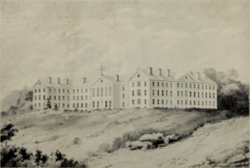
Following unsuccessful attempts to establish a divinity school in major hubs like Boston, New York, and Washington D.C., the Society of Jesus looked toward the countryside. In 1866, 249 acres were purchased in Woodstock, Maryland, situated west of Baltimore along the Patapsco River. The college officially incorporated in 1867 and opened its doors on September 22, 1869.
At its inception, Woodstock College held a unique position as the only Jesuit seminary in the United States. It was designed to be the central training ground for the majority of future American Jesuit priests.
Campus Life and Facilities
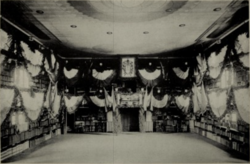
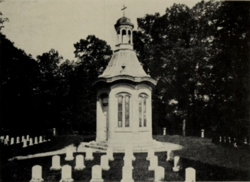
The original campus provided a comprehensive environment for spiritual and academic growth, featuring dedicated spaces for study and reflection.
Transition to an Urban Model
By the 1960s, the college began evaluating the benefits of affiliating with an urban university. This shift was driven by new perspectives on priestly formation and theological education emerging from the Second Vatican Council (a major ecumenical council of the Catholic Church) and the Jesuits' own Thirty-First General Congregation.
After considering New Haven, Washington D.C., and New York City as potential sites, the college closed its Maryland campus and relocated to New York City in 1969. In this new environment, the college operated in cooperation with the Union Theological Seminary and the Jewish Theological Seminary, fostering a broader inter-institutional network of higher learning.
Closure and Legacy
The move to New York City was not without friction. The institution faced controversies regarding the merits of the relocation and the lifestyle of the Jesuits in training within the city. Coupled with a broader desire by the Jesuit order to consolidate its theology schools on a national level, Woodstock College closed in 1974.
The college's academic legacy continued through the Woodstock Theological Center, an independent, nonprofit Catholic research institute located at Georgetown University in Washington, D.C., which operated until 2013. Additionally, the theological library remains independent through an affiliation with Georgetown University, where the collection is still housed.
Key Facts
- Founded: Opened September 22, 1869, in Woodstock, Maryland.
- Original Scale: Established on 249 acres along the Patapsco River.
- Unique Status: Originally the only Jesuit seminary in the United States.
- Relocation: Moved to New York City in 1969 to align with urban theological trends.
- Closure: The college closed in 1974 due to consolidation and internal controversies.
- Successor: Succeeded by the Woodstock Theological Center at Georgetown University until 2013.
| Year/Period | Event/Status | Location |
|---|---|---|
| 1866 | Land purchase (249 acres) | Woodstock, MD |
| 1869 | Official opening | Woodstock, MD |
| 1969 | Relocation and urban affiliation | New York City, NY |
| 1974 | Institutional closure | New York City, NY |
| Until 2013 | Woodstock Theological Center | Washington, D.C. |
Frequently Asked Questions
Why was Woodstock College originally built in Maryland?
The college was established in Woodstock, Maryland, after previous efforts to start a divinity school in Boston, New York, and Washington D.C. failed.
What made Woodstock College unique at the time of its opening?
When it opened in 1869, it was the only Jesuit seminary in the United States and was intended to train the majority of the country's future Jesuit priests.
What influenced the move to New York City in 1969?
The move was influenced by new ideas on theological education and priestly formation from the Second Vatican Council and the Jesuits' Thirty-First General Congregation.
Why did Woodstock College eventually close in 1974?
The closure resulted from controversies over the move to the city, disputes regarding the lifestyle of Jesuits in training, and a general effort by the order to consolidate theology schools nationally.
What happened to the college's library?
The theological library maintains its independence through an affiliation with Georgetown University, where it continues to be housed.