Windy Arbour: A History of Names, Landmarks, and Legacy
Nestled along the banks of the River Slang, Windy Arbour is a location defined by its linguistic evolution and its connection to significant figures in Irish history. From its origins as a lush landscape to its role as a site of medical care and patriotic heritage, the area offers a glimpse into the changing nature of the Irish countryside.
The Evolution of a Name
The area was originally known by the Irish name Na Glasáin, which translates to "the green land." Over time, this was anglicised to "Glassons." Later, the names Windy Harbour or Sandy Arbour were adopted, specifically referring to a landing-point located on the River Slang.
Interestingly, the term "Arbour" historically referred to a garden, lawn, or grass plot. Because of this, it is possible that "Sandy Arbour" was intended as a direct English translation of the original Irish term, glasáin.
Historic Landmarks and Figures
One of the most notable residents of Windy Arbour was the Irish patriot Robert Emmet. Emmet grew up in a manor house known as The Casino. This residence, which was also formerly called Carton House, is now known as Emmet House. Today, the building serves as the Secretariat of Secondary schools in Ireland and is situated on Bird Avenue, adjacent to the Church of the Miraculous Medal.
Medical Care and the Central Mental Hospital
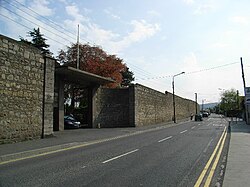
The landscape of the village is also defined by the Central Mental Hospital, which was constructed around 1850. This facility provides essential psychiatric services, offering treatment across high, medium, and low-security conditions.
The hospital serves as a critical point of care for patients referred by local hospitals, prisons, and the courts for both residential treatment and clinical assessment.
Key Facts
- Original Name: Na Glasáin ("the green land"), later anglicised as Glassons.
- Geographic Feature: Located near a landing-point on the River Slang.
- Notable Resident: Robert Emmet, who lived in The Casino (now Emmet House).
- Industrial History: The area formerly hosted a starch mill.
- Healthcare: The Central Mental Hospital (est. c.1850) provides tiered security psychiatric care.
| Landmark | Former Name/Detail | Current Use/Significance |
|---|---|---|
| Emmet House | The Casino / Carton House | Secretariat of Secondary schools in Ireland |
| Central Mental Hospital | Built c.1850 | High, medium, and low-security psychiatric treatment |
| River Slang | Landing-point | Historical site of a starch mill |
Frequently Asked Questions
What does the original name Na Glasáin mean?
Na Glasáin is an Irish term meaning "the green land," which was later anglicised as Glassons.
Who is the most famous person associated with Windy Arbour?
The most famous resident was the Irish patriot Robert Emmet, who spent his childhood in the manor house now known as Emmet House.
What is the current function of Emmet House?
Formerly known as The Casino and Carton House, it now houses the Secretariat of Secondary schools in Ireland.
When was the Central Mental Hospital built?
The hospital was constructed around 1850.
How are patients admitted to the Central Mental Hospital?
Patients are referred to the facility for assessment and residential treatment via the courts, prisons, and local hospitals.