Windscreen Wiper History: From Early Patents to Smart Sensors
The ability to maintain a clear view of the road during rain or snow is a fundamental aspect of vehicle safety. While modern drivers take the flick of a switch for granted, the windscreen wiper—the device used to clear precipitation from a vehicle's front window—was the result of over a century of iterative engineering and legal battles.
The Dawn of Window Cleaning Technology
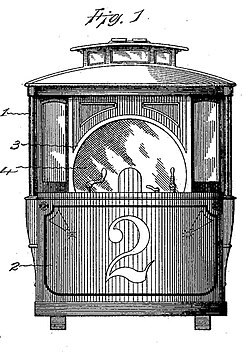
The quest for visibility began long before the mass production of the automobile. One of the earliest recorded patents was filed on August 6, 1896, by George J. Capewell of Hartford, Connecticut. Capewell designed his system for slow-moving craft, though he specifically intended it for high-speed locomotives and cars. His design typically utilized two wipers secured to the frame, positioned to scrape away debris from the glass.
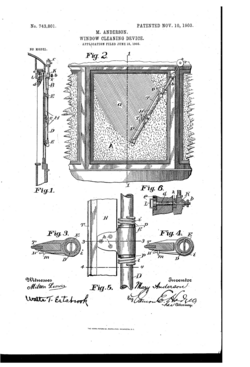
By 1903, a surge of innovation occurred as multiple inventors sought to solve the same problem. Mary Anderson, an American inventor, is widely credited with creating the first operational version. Her "window cleaning device" for electric cars and other vehicles was operated by a lever inside the cabin, a design that closely mirrors early automotive wipers. She filed her patent (US 743,801) on June 18, 1903.
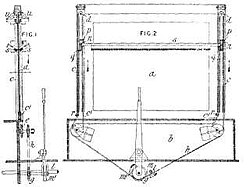
Simultaneously, other inventors were exploring different mechanisms. In the UK, James Henry Apjohn patented an apparatus that could use either brushes or wipers, powered by either a motor or by hand. His design allowed for movement in one direction or both up and down on vertical windows.
![A "locomotive-cab-window cleaner" on 12 March 1903[7]](/images/c8/f8/c8f8f46323c85ed2d7f43f53055c5e6e01975eec4cecd0bbcd7ace31d28fcb69.png)
Commercialization and Automation
The transition from individual patents to mass-market products began in 1917 when John R. Oishei formed the Tri-Continental Corporation. The company introduced "Rain Rubber," a wiper designed for the slotted, two-piece windscreens common at the time. This venture eventually evolved into Trico Products, which remains one of the world's largest wiper manufacturers. In contrast, Bosch now operates the world's largest wiper factory in Tienen, Belgium, producing 350,000 blades daily.
Automation arrived shortly after. Charlotte Bridgwood patented the first automatic electric wiper arms in 1917. Later, in 1919, William and Fred Folberth applied for an automatic apparatus patent (granted in 1921), though some attribute the original invention to Ormand Wall of Hawaii. Trico eventually acquired Folberth's company, and their vacuum-powered system became the industry standard until approximately 1960.
The Evolution of Intermittent Wipers
Continuous wiping is often unnecessary for light rain, leading to the development of intermittent wipers (non-continuous wipers). Raymond Anderson proposed an electro-mechanical design in 1923, and by 1958, Oishei filed patents for thermal and hydraulic versions. In 1961, John Amos of Lucas Industries filed the first UK patent for a solid-state electronic design.
A major breakthrough occurred in 1963 when Robert Kearns, a professor at Wayne State University, developed a system designed to mimic the human eye's blinking. His design used a capacitor to determine the interval between wipes; once the capacitor reached a specific voltage, it discharged and triggered the wiper motor. Despite initial rejection by Ford Motor Company, Kearns eventually won a lengthy patent dispute after Ford introduced a similar design on its Mercury line in 1969.
The next leap in intelligence came in March 1970 with the Citroën SM. This model featured rain-sensitive wipers that adjusted their speed based on the electrical current drawn by the motor. High current indicated a dry screen (resulting in a longer delay), while low current indicated wet glass (resulting in a shorter delay).
Key Facts
- First Patent: George J. Capewell filed one of the earliest patents in 1896.
- Pioneering Woman: Mary Anderson patented an operational lever-operated design in 1903.
- Industry Giant: Trico Products grew from the 1917 Tri-Continental Corporation.
- Vacuum Era: Vacuum-powered wipers were the standard until about 1960.
- Blinking Logic: Robert Kearns invented the intermittent wiper based on the human eye's blink reflex.
- Modern Scale: The Bosch factory in Belgium produces 350,000 blades per day.
| Year | Inventor/Company | Innovation |
|---|---|---|
| 1896 | George J. Capewell | Early patent for high-speed vehicles |
| 1903 | Mary Anderson | Operational lever-operated wiper |
| 1917 | Charlotte Bridgwood | First automatic electric wiper arms |
| 1921 | Folberth Brothers | Vacuum-powered automatic mechanism |
| 1963 | Robert Kearns | Capacitor-based intermittent wipers |
| 1970 | Citroën | Rain-sensitive current-based wipers |
Frequently Asked Questions
Who invented the first operational windscreen wiper?
Mary Anderson is popularly credited with devising the first operational windscreen wiper in 1903, which she called a "window cleaning device" and operated via an internal lever.
How did early automatic wipers work before electronics?
From the 1920s until about 1960, many automobiles used a vacuum-powered system to operate the wiper arms automatically.
What is the significance of Robert Kearns' invention?
Robert Kearns invented the intermittent wiper, which mimics the human eye's blinking. His design used a capacitor to control the timing between wipes, reducing the need for constant motion during light rain.
How did the first rain-sensitive wipers detect water?
Introduced by Citroën in 1970, these wipers measured the electrical current drawn by the motor. Low current indicated wet glass, which triggered a shorter delay between wipes.
Who are the major manufacturers in the history of wipers?
Trico Products (originally Tri-Continental Corporation) and Bosch are two of the most significant manufacturers, with Bosch currently operating a massive production facility in Belgium.