Wind Power: Driving the Global Transition to Renewable Electricity
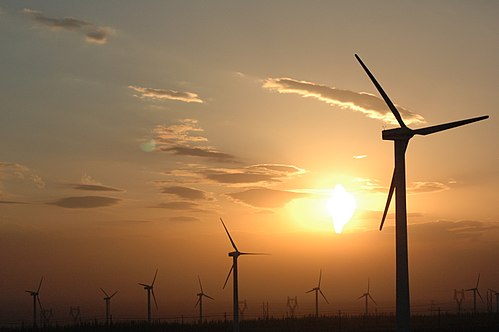
Wind power is the process of harnessing wind energy to perform useful work. While historically utilized for sails, windmills, and windpumps, modern wind power is primarily focused on the generation of electricity. Today, this is achieved almost exclusively through wind turbines—large-scale devices that convert kinetic energy from the wind into electrical power. These turbines are typically organized into wind farms and integrated into the electrical grid to provide power to homes and industries.
As the world seeks to meet the Paris Agreement goals to limit climate change, wind energy has emerged as a critical pillar of the global energy strategy. By replacing fossil fuels, wind power significantly reduces greenhouse gas emissions and provides a sustainable, renewable alternative for the planet's growing energy needs.
Key Facts
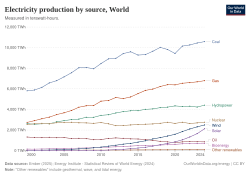
![In 2025, growth in solar, wind and other low-carbon electric power exceeded the overall growth in demand for electricity, reducing reliance on fossil fuels and helping to curb greenhouse gas emissions.[53]](/images/a1/4c/a14c7741841e444a8892d855b910fd8a15302377f5473e0819853643795f8e73.webp)
- Global Contribution: In 2025, wind power supplied approximately 2,700 TWh of electricity, accounting for over 8% of world electricity.
- Rapid Growth: Global installed wind power capacity exceeded 800 GW, with nearly 100 GW added in 2021 alone.
- Leading Markets: China and the United States are the primary drivers of new capacity installations.
- Environmental Impact: Wind power has minimal greenhouse gas emissions per unit of energy and is among the least deadly energy sources.
- Market Penetration: By 2021, wind's share of worldwide electricity usage reached nearly 7%, doubling its 2015 share of 3.5%.
Wind Energy Resources and Potential
![Onshore wind cost per kilowatt-hour between 1983 and 2017[86]](/images/64/aa/64aa68e95314bf36c1b5954111b754ee1cc078ff6edcb275204cf944d3ad2998.png)
The viability of wind power depends on the availability of consistent and strong wind speeds. Wind power density—the amount of energy available in the wind per unit area—varies significantly by geography. Coastal areas and high-altitude plains generally offer the highest potential for energy extraction.
![Global map of wind speed at 100 meters on land and around coasts.[13]](/images/cd/d3/cdd3157c93a6a81fac95936431c7f087fd0fcb87ec5615f7c4904d8663bafdb9.png)
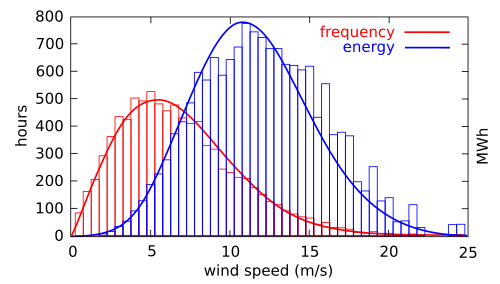
To predict energy output, engineers use models such as the Rayleigh model distribution to analyze wind speed and energy distribution over time. This data allows developers to site wind farms where they can maximize the capacity factor, which is the ratio of actual energy produced to the maximum possible energy that could have been produced.
![Global map of wind power density potential[14]](/images/67/2a/672a0e42ac875e94c8106e73de7fdf7147ae75b2fc5e719a24fdbe0b02b0fc8c.png)
Onshore vs. Offshore Wind Farms
Wind farms are categorized by their location, each offering distinct advantages and challenges.
Onshore Wind Power
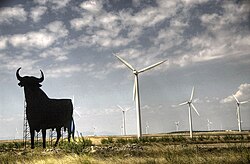
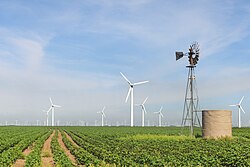
Land-based wind farms are the most common. They are generally more cost-effective to build and maintain. However, they often face opposition due to their visual impact on the landscape and perceived aesthetic disruptions.
Offshore Wind Power
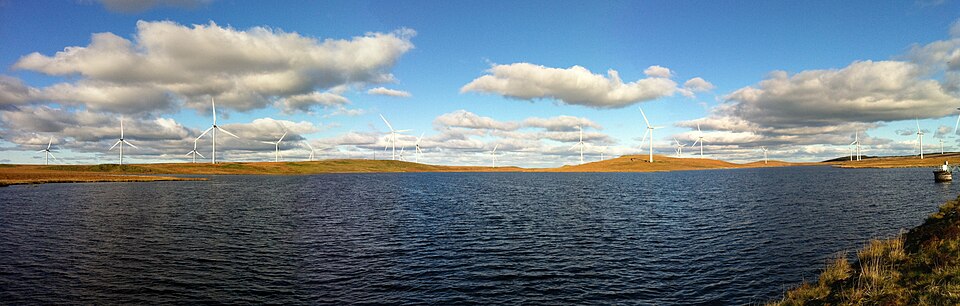
Offshore wind farms are situated in bodies of water, typically on the continental shelf. While more expensive to install, they benefit from higher and more consistent wind speeds, leading to higher capacity factors. They also have a significantly lower visual impact on populated areas. Currently, offshore installations represent about 10% of new wind power additions.
Technical Implementation and Infrastructure
Modern wind turbines are complex machines consisting of a rotor, a gearbox, and a generator. The rotor captures the wind's kinetic energy, which is then stepped up by the gearbox to drive the generator.
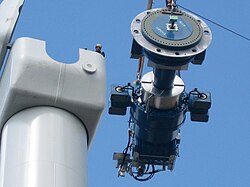
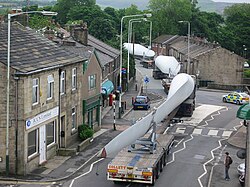
Transporting these components is a major logistical challenge. Turbine blades have grown so large that some are now manufactured in two pieces and assembled on-site to facilitate transportation.
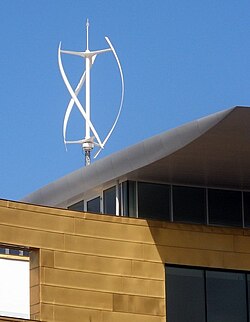
While utility-scale farms dominate the industry, small-scale wind power is also used for localized needs. These smaller turbines, such as vertical axis wind turbines, can be installed on rooftops or in urban environments to provide modest amounts of power.
Overcoming Variability and Integration
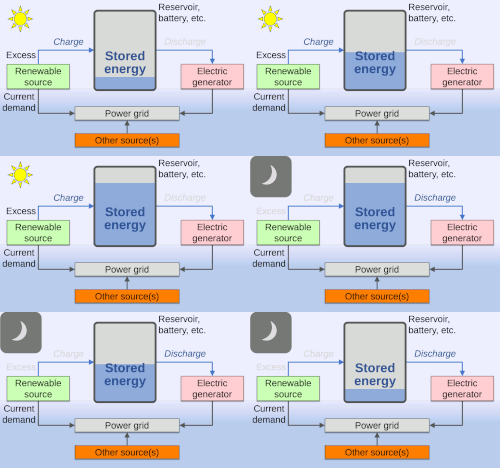
One of the primary challenges of wind power is its variability; wind does not blow at a constant speed, and there are periods of calm. To ensure a reliable electricity supply, wind power must be paired with dispatchable generation or energy storage systems.
Energy storage solutions include electric batteries and pumped-hydro reservoirs, where excess wind energy is converted into potential energy for later use. Additionally, wind and solar energy often exhibit complementary seasonal cycles, where wind production peaks during months when solar production is low, helping to balance the grid.
![Seasonal cycle of capacity factors for wind and photovoltaics in Europe under idealized assumptions. The figure illustrates the balancing effects of wind and solar energy at the seasonal scale (Kaspar et al., 2019).[71]](/images/3c/54/3c54a7e0e228362a2a806773d296d1fcf090918f9e4634a13547a1b321f12b1c.png)
Environmental and Social Considerations
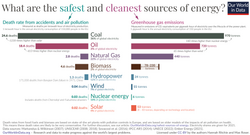
Wind power is widely recognized for its low carbon footprint. When compared to fossil fuels, it has a minimal impact on the environment. While concerns are often raised regarding bird mortality due to turbine collisions, research indicates this is a minor source of bird deaths compared to other human-caused factors.
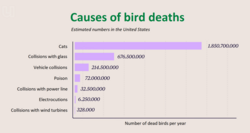
Social acceptance varies by region and political affiliation. In the United States, for example, acceptance of wind and solar facilities is generally stronger among Democrats, whereas nuclear power is more favored by Republicans. Some populations oppose wind farms based on aesthetics or the impact on local tourism.
![Acceptance of wind and solar facilities in one's community is stronger among U.S. Democrats (blue), while acceptance of nuclear power plants is stronger among U.S. Republicans (red).[147]](/images/5c/77/5c7768dfe9a510bff3debea69bdf69ca9ceb3b47bf88eb41b6df169ae60e09b2.webp)
![Wind turbines such as these, in Cumbria, England, have been opposed for a number of reasons, including aesthetics, by some sectors of the population.[159][160]](/images/d5/7b/d57b9d9553b4c14eae303f3b904df3989defec39c26a1824e493ec90fba1e536.jpg)
Despite these challenges, wind farms can coexist with other land uses, such as livestock grazing, allowing land to remain productive while generating clean energy.
![Livestock grazing near a wind turbine[109]](/images/92/cf/92cfc5cc501348bc970e81e926c53f9042b3c56a451c658c22867f47fab19c52.jpg)
Global Wind Farm Capacity Summary
The following table highlights some of the world's largest wind installations, demonstrating the massive scale of modern wind energy projects.
| Wind Farm | Capacity (MW) | Country |
|---|---|---|
| Gansu Wind Farm | 7,965 | China |
| Muppandal Wind Farm | 1,500 | India |
| Alta (Oak Creek-Mojave) | 1,320 | United States |
| Jaisalmer Wind Park | 1,064 | India |
Frequently Asked Questions
Is wind power a reliable source of electricity?
Wind power is variable, meaning it does not produce electricity at a constant rate. To make it reliable, it is integrated with energy storage systems (like batteries) or other dispatchable energy sources that can fill the gaps when wind speeds are low.
How does offshore wind differ from onshore wind?
Offshore wind farms are built in the ocean, where winds are generally stronger and more consistent, leading to higher energy production. They are more expensive to build than onshore farms but have a smaller visual impact on land.
Do wind turbines significantly harm bird populations?
While collisions do occur, they are considered a minor source of bird mortality when compared to other human-driven causes of avian death.
What is the current global trend for wind energy?
Wind energy is growing rapidly, with global capacity exceeding 800 GW. Generation has nearly tripled since 2015, driven largely by expansions in China and the United States to meet climate goals.
What is a capacity factor in wind energy?
The capacity factor is the ratio of the actual electricity generated by a wind turbine over a period of time compared to the amount it would have generated if it had operated at full rated power continuously.